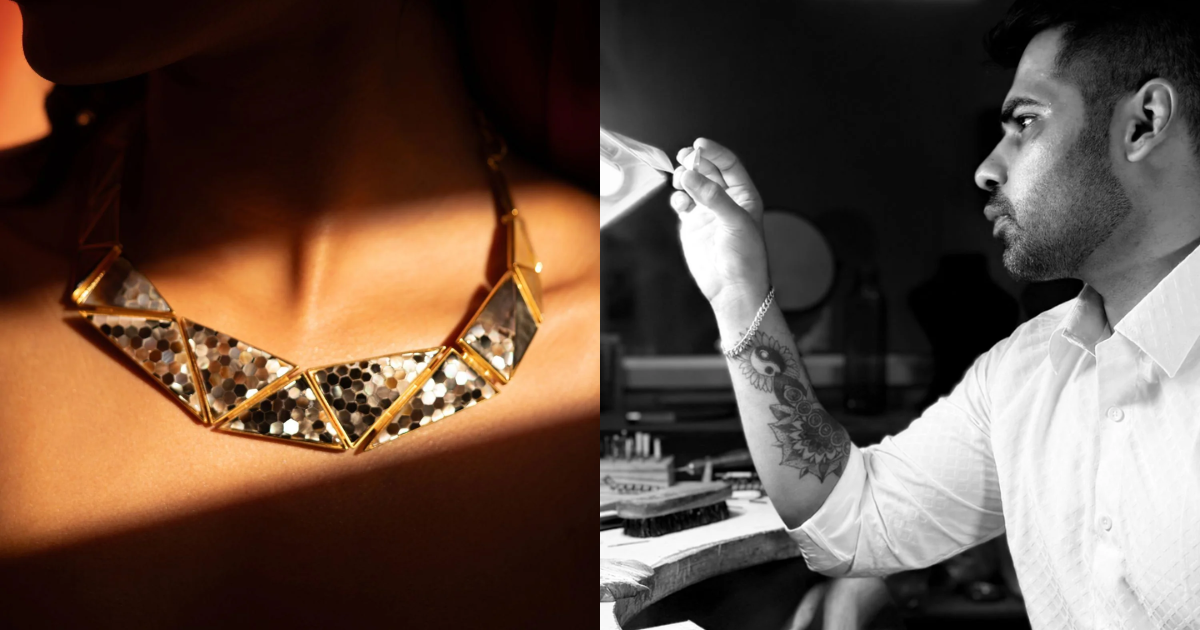
Alay Somani did not arrive at jewellery the way most designers do. Before Mhari, there was a fine-dining restaurant, a factory, a bakery — all abandoned. Before that, six years of mixed martial arts, a year spent doing modest jobs in Himachal Pradesh, and the early loss of a father whose business once ran deep in the family. Today, Mhari works out of a studio in Jaipur, crafting sculptural pieces in recycled 925 silver and 24K gold micron plating, organised not into seasonal collections but into “archetypes” — Maharani, Mardani, Mastani, Deewani — each a different register of the same design language. We spoke to Somani about everything that had to fall apart before Mhari could come together.
You come from a family where business ran deep, but you lost your father at 16 and the family business eventually ended. What did that loss teach you about building something of your own — years before you knew it would be jewellery?
I’ve always seen my father and then my mother lead the way. Even after losing papa, I knew I wanted to do something on my own. I’ve always wanted to create something, and his loss only fuelled the fire. Even though I found it late in my life, I found something worth building.
Before jewellery, you tried a fine-dining restaurant, a factory, a bakery — and walked away from all of them. What was actually missing in those ventures that you didn’t have the language for at the time?
With everything I tried before, I wasn’t creating things myself. I hired a great chef, a great manager, but I wasn’t really creating. Here at Mhari, every design is mine, my expression. That feeling is unparalleled.
You spent a year in Himachal Pradesh doing modest jobs, trying to get away from yourself. Looking back, what did that year strip away that you needed to lose before you could build anything real?
That year in Himachal took away a lot of things and gave me a huge part of myself back. It took away the parts that were superficial, the parts which were keeping me from myself. It was a long, deep dive into my own self.
Six years of mixed martial arts — fractures, cuts, a broken leg — is an unusual chapter for someone who ends up as a jewellery designer. What did fighting teach you about discipline that design school never could have?
Fighting and learning mixed martial arts have been a blessing despite all that I endured. The major takeaway was learning to solve problems in stressful situations and remain calm. Even now in business, any hurdle isn’t met like a hurdle but a passing moment. The solutions aren’t sorted in a frenzy but over meditation. Huge difference in outcomes.
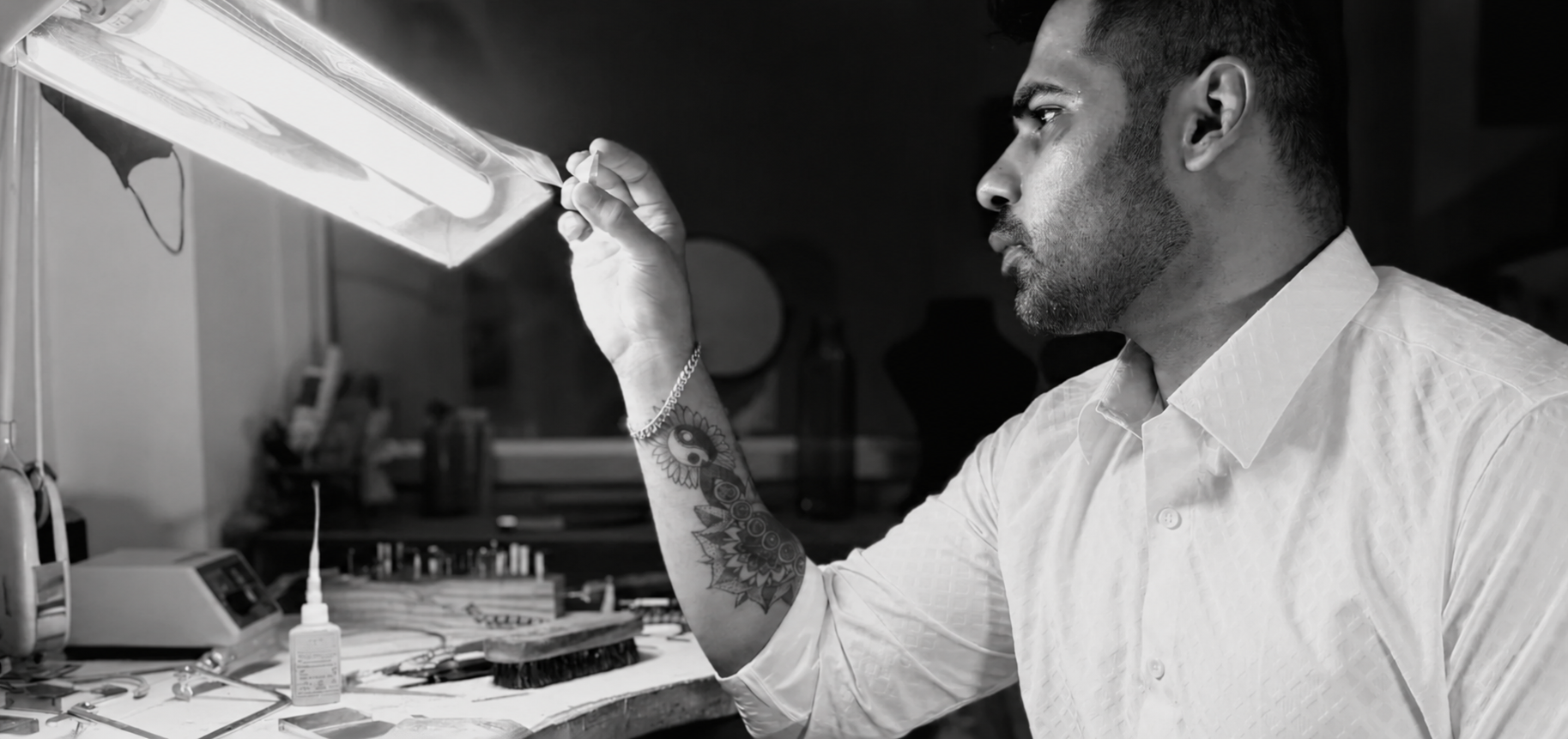
You had no formal background in jewellery when you took up managing a small setup, and it turned into two years of conceptualising and manufacturing for designers from Italy and the USA. What’s the biggest thing that an “outsider” position lets you see that trained jewellers might miss?
Working for designers from outside India, I realised people who are explicitly in designing don’t have much manufacturing knowledge, and vice versa. That’s why you see major designers getting their designs made elsewhere — they miss all the fun of creating, experimenting, bringing their own pieces to life. This feeling is the most important thing for any design to come to life the way it was intended.
You briefly pursued formal jewellery education and stepped away because conventional methodologies felt restrictive. That’s a hard thing to walk away from once you’ve started. What made you trust your own instinct over the institution?
I’ve always been an intuitive person, but here it was more of a practical decision. I realised I don’t want to work for any jewellery brand, so I have the liberty to not spend two weeks perfecting one design sketch. I could draw fifteen rough drafts in one day rather than sit with one design for fifteen days. All I needed was to draw enough so I could make my team understand my idea.
You’ve named Bvlgari, Stephen Webster, Van Cleef & Arpels and Tiffany & Co. as references — houses with decades, sometimes centuries, of design language behind them. What do you take from that lineage, and what do you deliberately refuse to inherit from it?
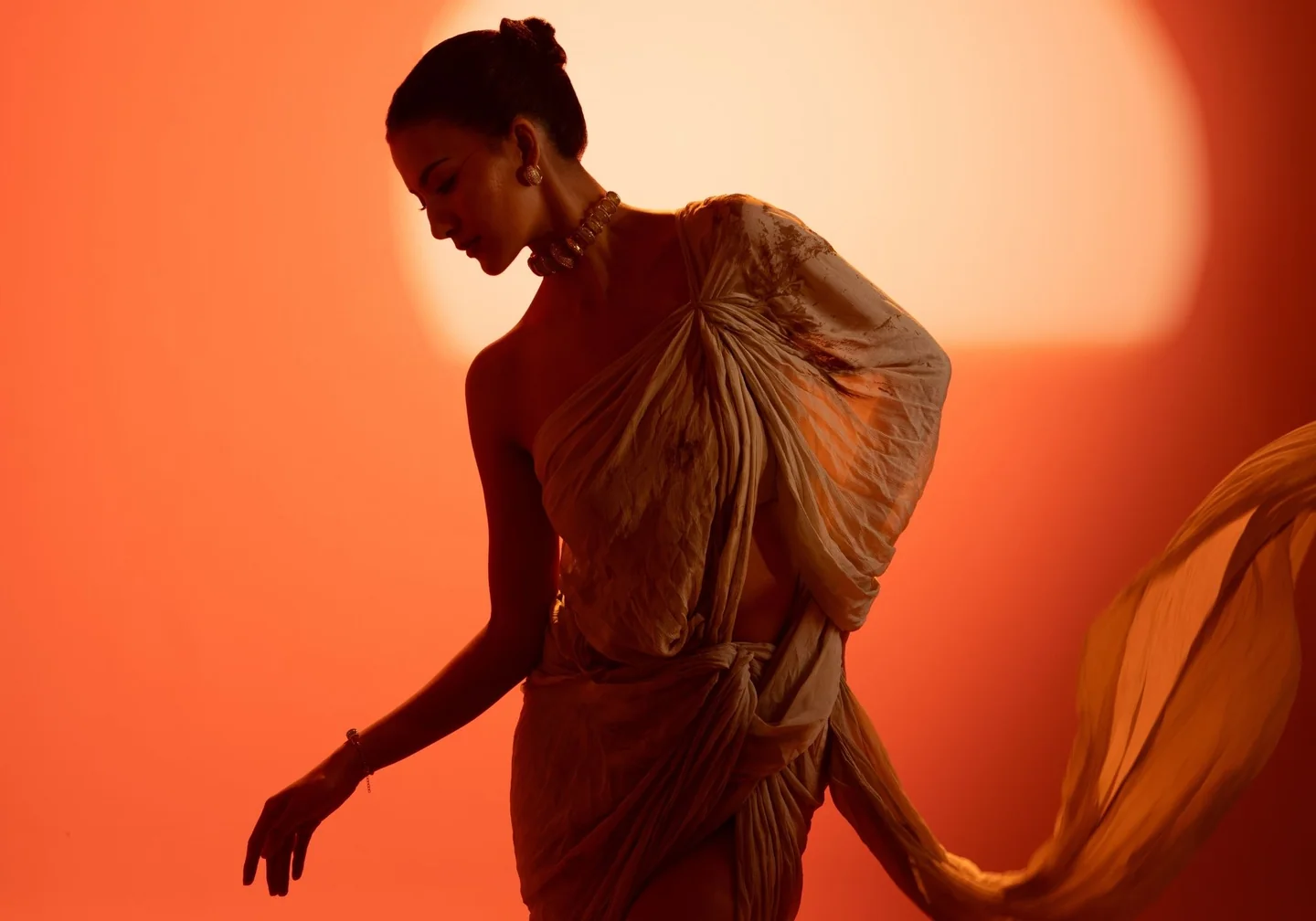
All the legacy brands out there — Tiffany, Cartier, Bvlgari, especially the ones I admire — don’t play by a certain jewellery rulebook. They mix art forms, they research other disciplines, they let their imagination run wild. That’s so exciting! The world is their playground and they have the means to execute it. But I don’t intend to take the passage of themes and collections. I don’t believe creativity works that way. In fact, I only realised it after my second collection, Ekant, that I don’t want to make any more collections — because it’s not a collection.

India has extraordinary craftsmanship and heritage, but you’ve said contemporary Indian jewellery often stays rooted in familiar motifs and forms. What’s the specific thing you saw that made you want to build a different visual language altogether?
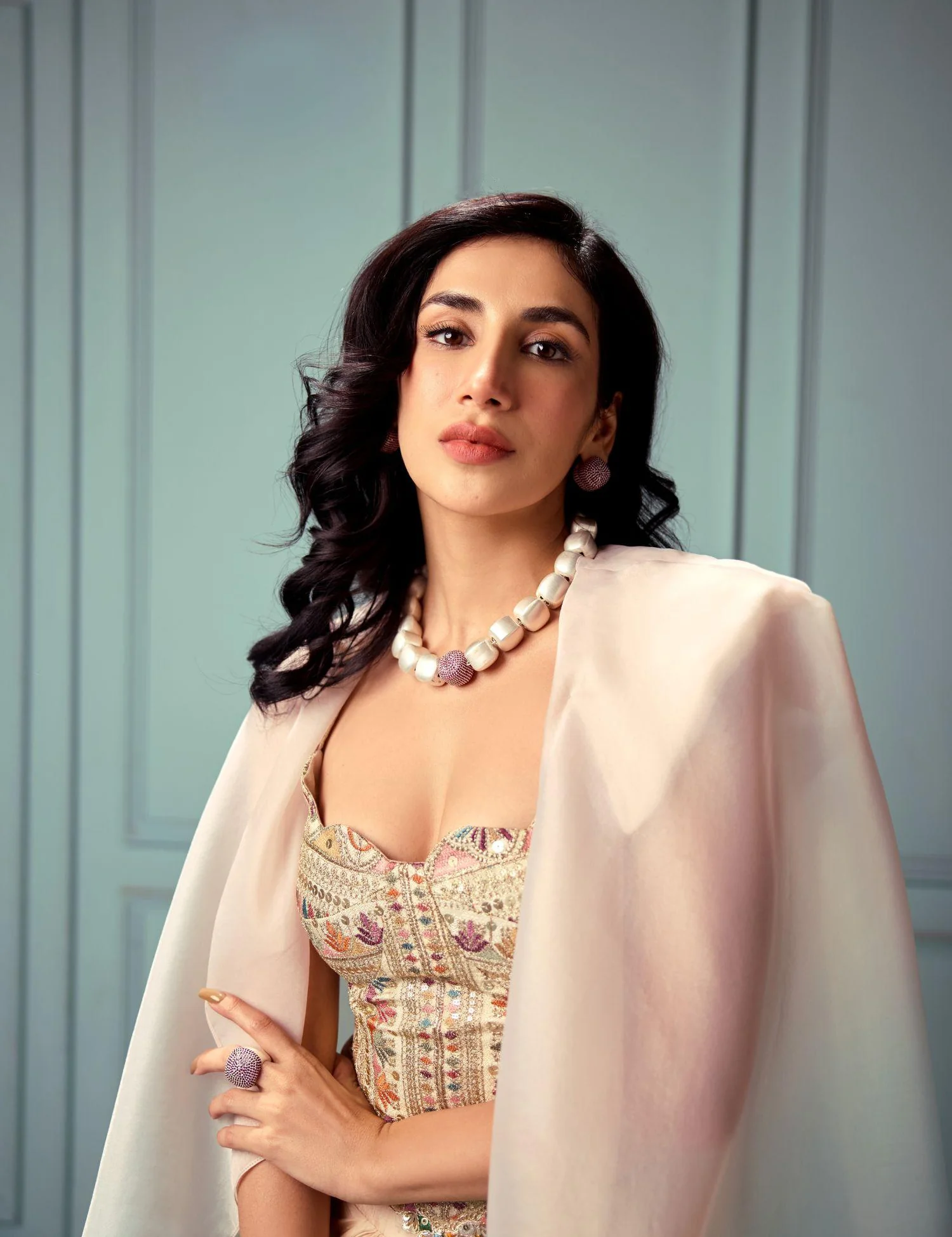
I respect Indian heritage jewellery, but I believe we need to do more with our creative language and the kind of craftsmanship that we have. We need to let designers and craftsmen do more, learn better techniques, be open to new designs, and not be stuck with the same motifs wrapped in new decoration every time — try new 3D jewellery, more motifs than just flora and fauna. That’s the only way forward.
The good part is that eventually people will understand that no matter what the metal or stone, jewellery should be made in the best quality possible. It’s so much more than an accessory — it’s an extension of how you feel about yourself. It’s hard to explain to customers why we talk about quality so much, and why our brass jewellery is priced the way it is, since photography makes everything look good until you have the actual piece in hand. The good part is that once our customers do have our jewellery in hand, they understand what we’re talking about. They get the quality of fine jewellery, the design of high jewellery, and prices near fashion jewellery.
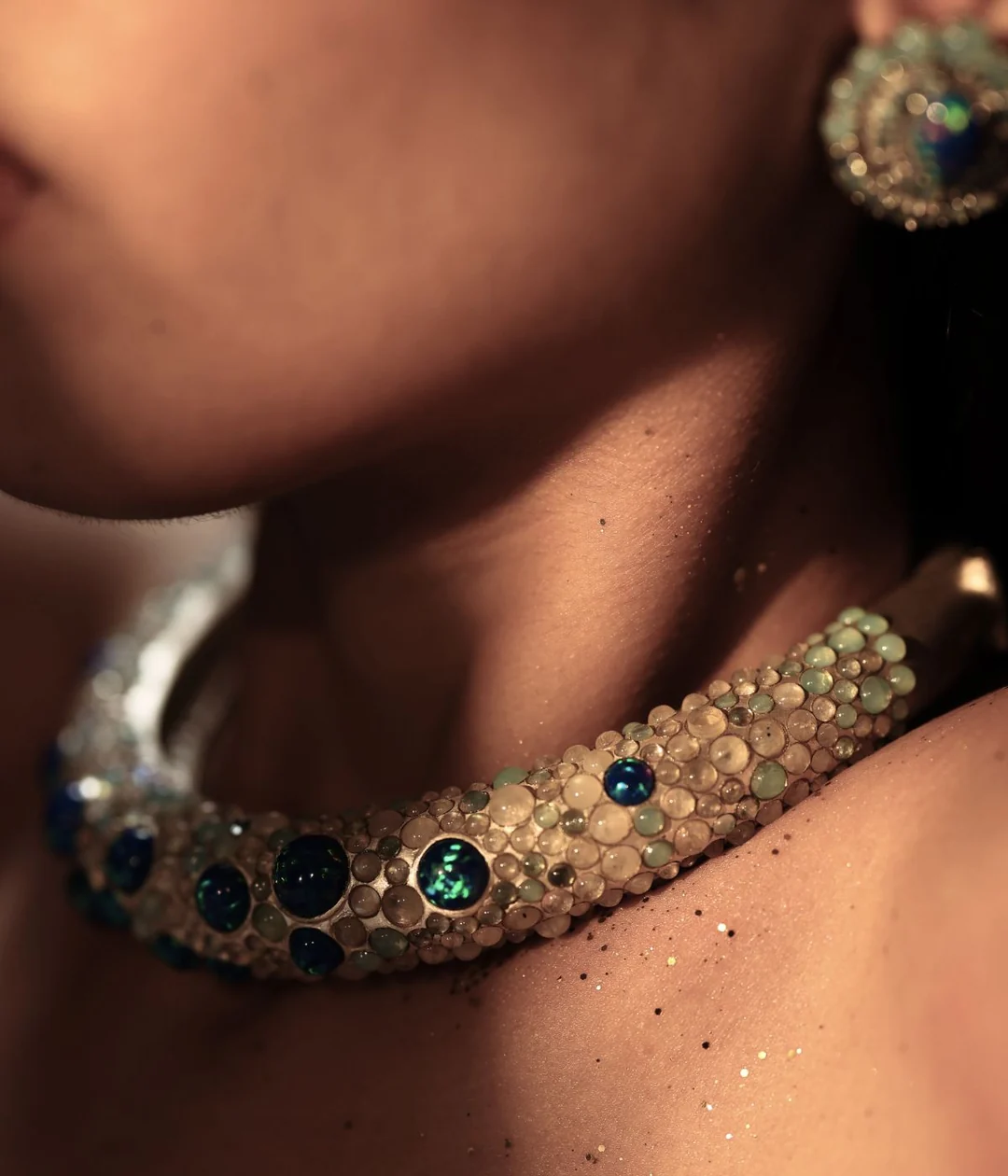
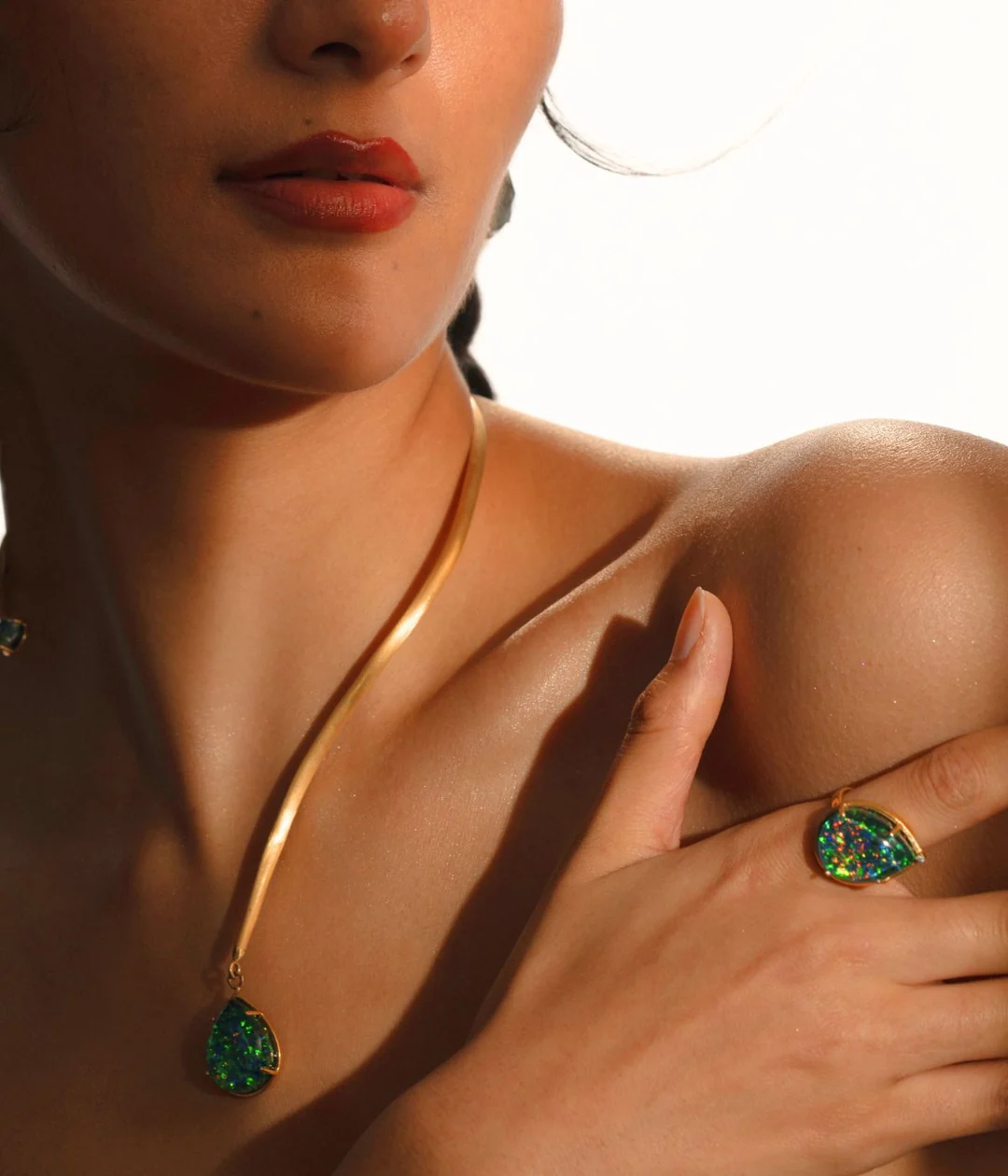
Mhari sits at the intersection of high jewellery and fashion jewellery — two worlds that don’t always speak to each other. What’s the hardest part of building a language that belongs to both without fully belonging to either?
Mhari is Alay’s expression, expressed through jewellery. My team is an expression of how I think and believe in creating. Every one of them understands my design language and has the freedom to create their own.
A year into your own studio, it’s become the centre of your creative process. If someone walked in tomorrow and asked what Mhari actually is — not the jewellery, but the philosophy — what would you tell them, and what does the studio look like five years from now?
Five years down the line, each craftsman of ours will be producing their own pieces from start to end. I want to work on select few designs every year and make high jewellery pieces. I want this studio to remain a studio, but with every person, every craftsman, becoming a Picasso in their own way.
Alay Somani didn’t train to become a jewellery designer — he unlearned his way into it, through loss, failed ventures, a year of solitude, and a fighting ring. What’s left is Mhari: a Jaipur studio that treats every piece as an original, never a collection, and every craftsman as an artist in waiting.
Follow Best List India for the culture, conversations, and ideas worth paying attention to.