There is a particular, unglamorous truth about weddings that fashion rarely bothers to sit with: that beneath the choreography and the spectacle, what is actually happening is two families learning, in real time, how to belong to each other. Anita Dongre’s new capsule, Love Is Home, the second instalment of her Festive/Winter 2026 collection, is built entirely around that truth, and it is all the more affecting for choosing intimacy over grandeur.
A Wedding, Told Through Its Quietest Moments
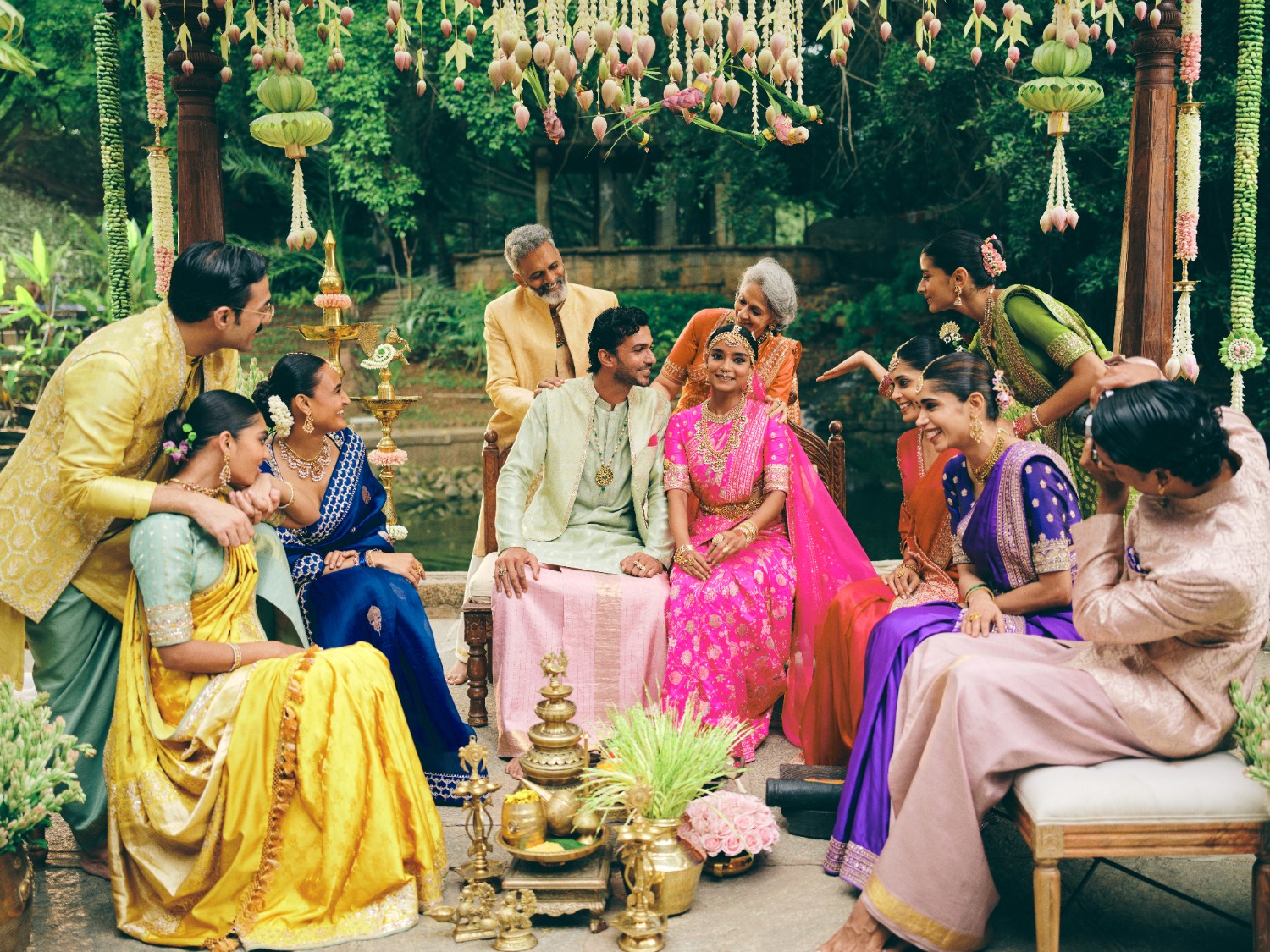
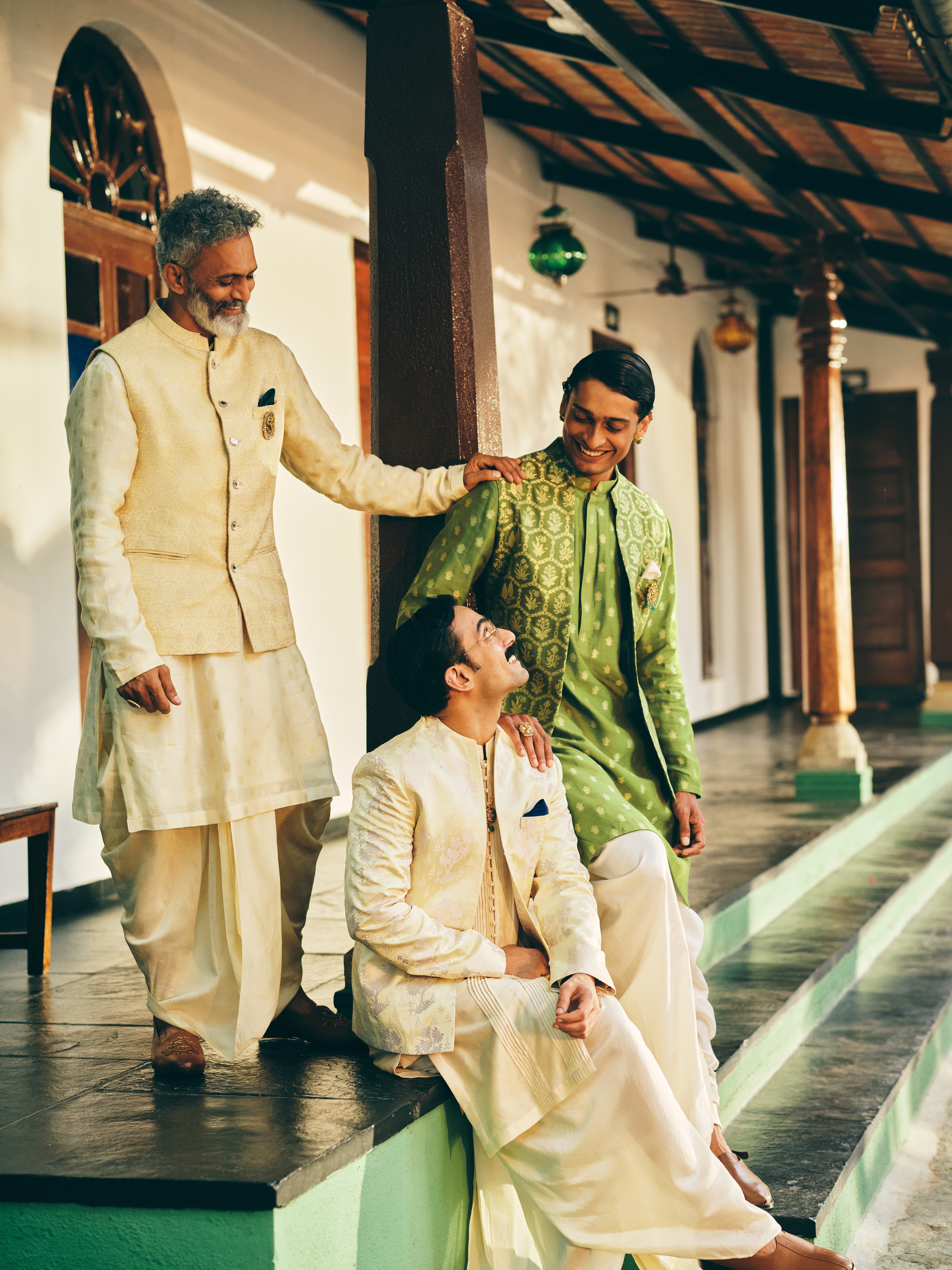
Where bridal collections typically stage the wedding itself, ceremony, procession, the bride’s grand entrance, Love Is Home looks instead at what surrounds it: sisters laughing before the festivities begin, a mother holding her child close, grandparents passing down what they know, friends slowly becoming family. Running through all of it is a recurring visual language of hands, fixing a dupatta, comforting, reaching, holding, the small, instinctive gestures through which affection actually moves between people. It is a collection more interested in the in-between moments than the main event, and that choice gives it an emotional register most festive collections don’t attempt.

Colour Drawn From Memory, Not Convention
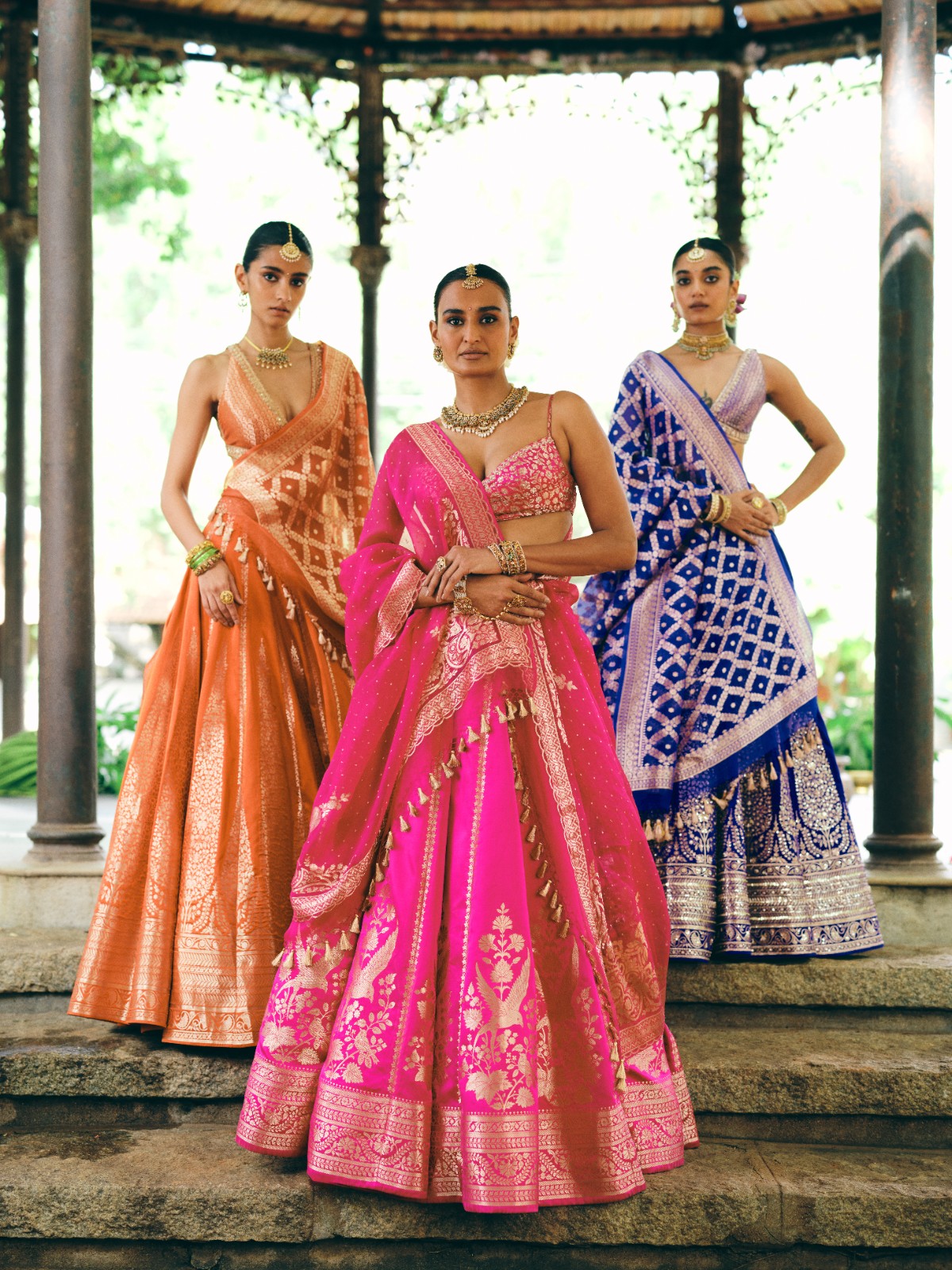
The palette leans into rani pink, amber and olive, tones Dongre describes as drawn from memory rather than trend, the kind of colours that once lived in a grandmother’s cupboard, folded into an old Benarasi nobody quite remembers the occasion for. It is a deliberate departure from convention-led colour stories, and it gives the collection a warmth that feels inherited rather than art-directed.
Five Hundred Years of Weave, Reinterpreted
At the centre of Love Is Home sits the Benarasi loom, a craft tradition that has been in conversation with time for over 500 years, originating in Benaras where silk has been woven for centuries along the Ganga. Its vocabulary of motif and technique was never written down; it survives the way most essential knowledge does, through watching, through doing, through the patience of sitting beside someone who already knows. In this collection, that vocabulary is handled with a lightness rarely associated with such a historically weighted craft. Birds appear mid-conversation across lehenga panels. Trees lean toward each other as though listening. The natural world, rendered entirely in loom-work, takes on a sense of motion within a tradition built to hold memory still.
The metaphor, once you notice it, becomes difficult to unsee: the Benarasi weave itself, warp meeting weft, individual threads crossing until something whole emerges, mirrors precisely what the collection is trying to say about two families finding their shared rhythm.
What We Carry Forward
At its core, Love Is Home is a meditation on inheritance, not of jewellery or property, but of family, memory, tradition, and the love that shapes a person long before they meet the one they choose to build a life with. Choosing a new home, the collection insists, was never about leaving the old one behind. It was always about making room for another.
Two histories. A new chapter. Two families finding their shared rhythm, two homes gently becoming one. From yours and mine, the collection concludes, to ours.
Follow Best List India for the culture, conversations, and ideas worth paying attention to.