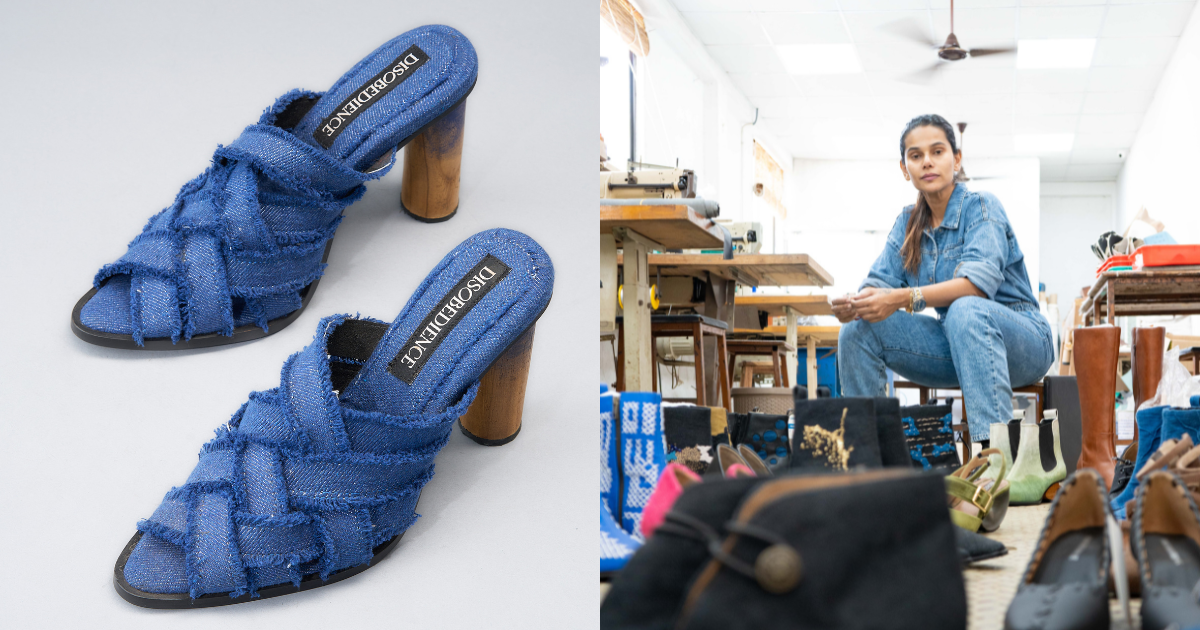
There are labels that follow the market, and there are labels that make the market uncomfortable. Disobedience, the vegan footwear brand founded by Anita Soundar in Chennai, belongs firmly to the second category. With a background in chemical engineering, a design vocabulary borrowed from architecture and attitude, and a debut collection that placed sculptural heels inspired by chess pieces and bent steel arcs on the Indian luxury footwear map, Soundar has done something quietly radical: she has made people want shoes that also happen to stand for something.
ERA 2- the label’s current collection, is generating exactly the kind of conversation that most emerging designers spend years trying to provoke. We spoke to Anita Soundar about disobedience as a founding philosophy, Chennai as an unlikely design capital, and the client who hung her shoes on the wall.
You’re a chemical engineer who founded a vegan footwear label in Chennai. Take us back to the beginning… what were you walking away from, and what were you walking towards?
I don’t think I ever walked away from chemical engineering, actually. A lot of the materials we work with, and our choices around manufacturing, have taken direct inputs from my engineering background. So it was never a departure, more a case of connecting the dots. What I did always want was to design shoes that didn’t look like anything else in the market. The way certain designer clothes can be identified from miles away — that kind of distinct design voice was one of the core founding principles of the brand. Not just another piece, but a statement one.
Most footwear designers lead with comfort and wearability. You chose architecture and attitude as your reference points. Why that vocabulary?
Our shoes are genuinely comfortable — but we never felt comfort should be marketed as a separate feature. Shoes should be comfortable; that’s a given. Somewhere in high fashion footwear, it has become normalised to be uncomfortable, and we find that strange. Comfort is the baseline, not the selling point. The more interesting conversation — the one that actually builds a brand — is about design language.
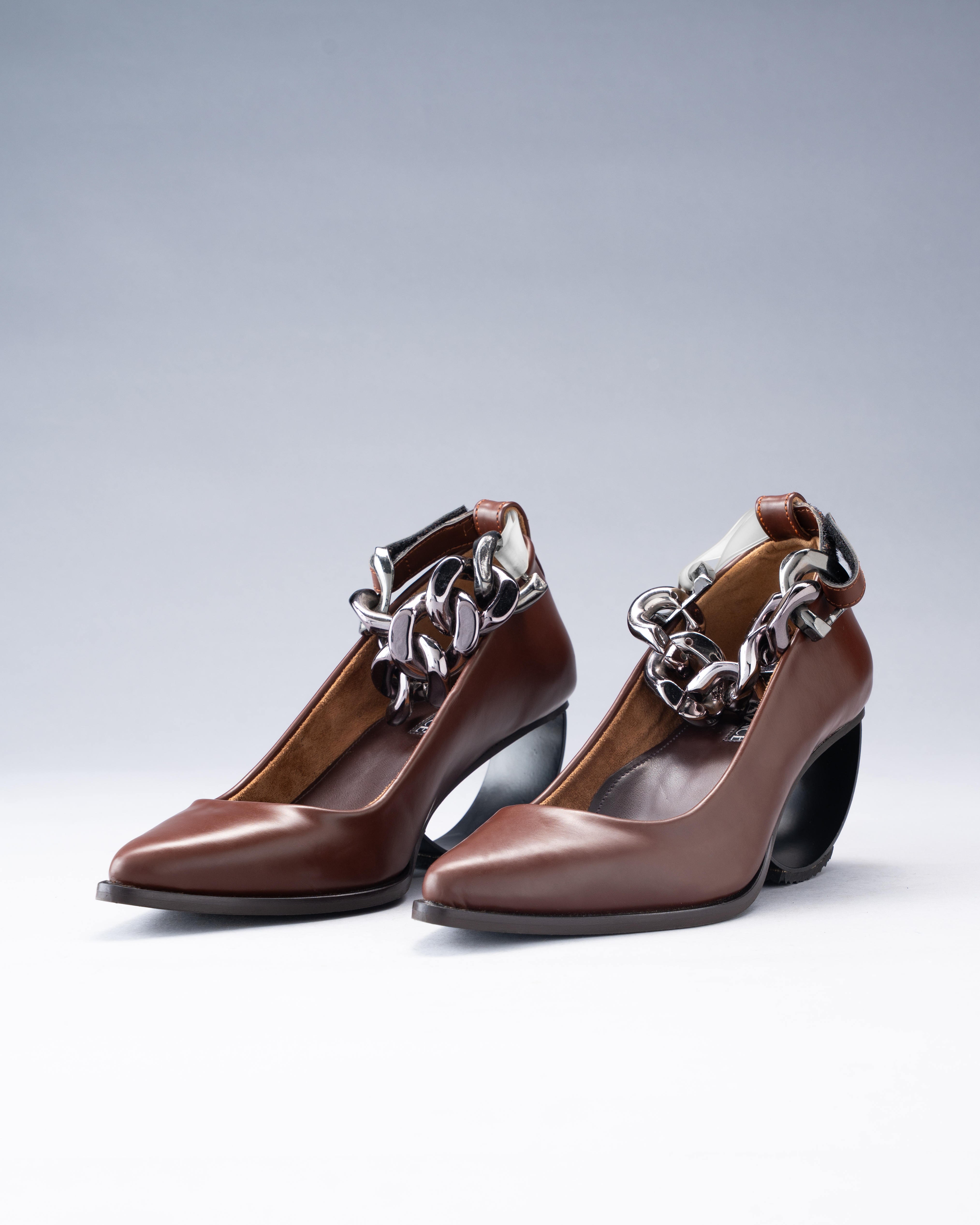
ERA 2 features sculptural heels drawn from chess pieces, spindle forms, and bent steel arcs. Where does a collection like this actually begin?
Sometimes it starts on the floor of my engineering studio or the fabrication shop. Finding different shapes and forms in industrial contexts. It has even started from the wooden motifs we find in ancestral furniture, in staircases. ERA 2 didn’t begin with a mood board — it began with objects. And the question was always: what would this look like if it became a shoe
You’ve described ERA 2 as footwear for someone who collects objects, not accessories. What is that distinction, and why does it matter to the identity of Disobedience?
We like working with people who can appreciate design and materiality. That is really the heart of it. A collector of objects brings a different sensibility — they are looking at a shoe the way they look at a piece of furniture or a sculpture. The accessory buyer wants to complete a look. The object collector wants to own something that has its own reason to exist. Those are very different relationships with a thing, and Disobedience is designed for the second kind.
Disobedience is vegan and sustainable — but you lead with design, not ethics. Was that a deliberate decision?
Always. We always wanted to make shoes that are desirable first — then comes the material story. You cannot design something bad and expect people to buy it because it was made from sustainable materials. The idea was always to make cool, high-fashion footwear that people genuinely want. The fact that it is vegan and considered in its making is part of the integrity of the brand — but it cannot be the primary pitch. Desirability has to come first.
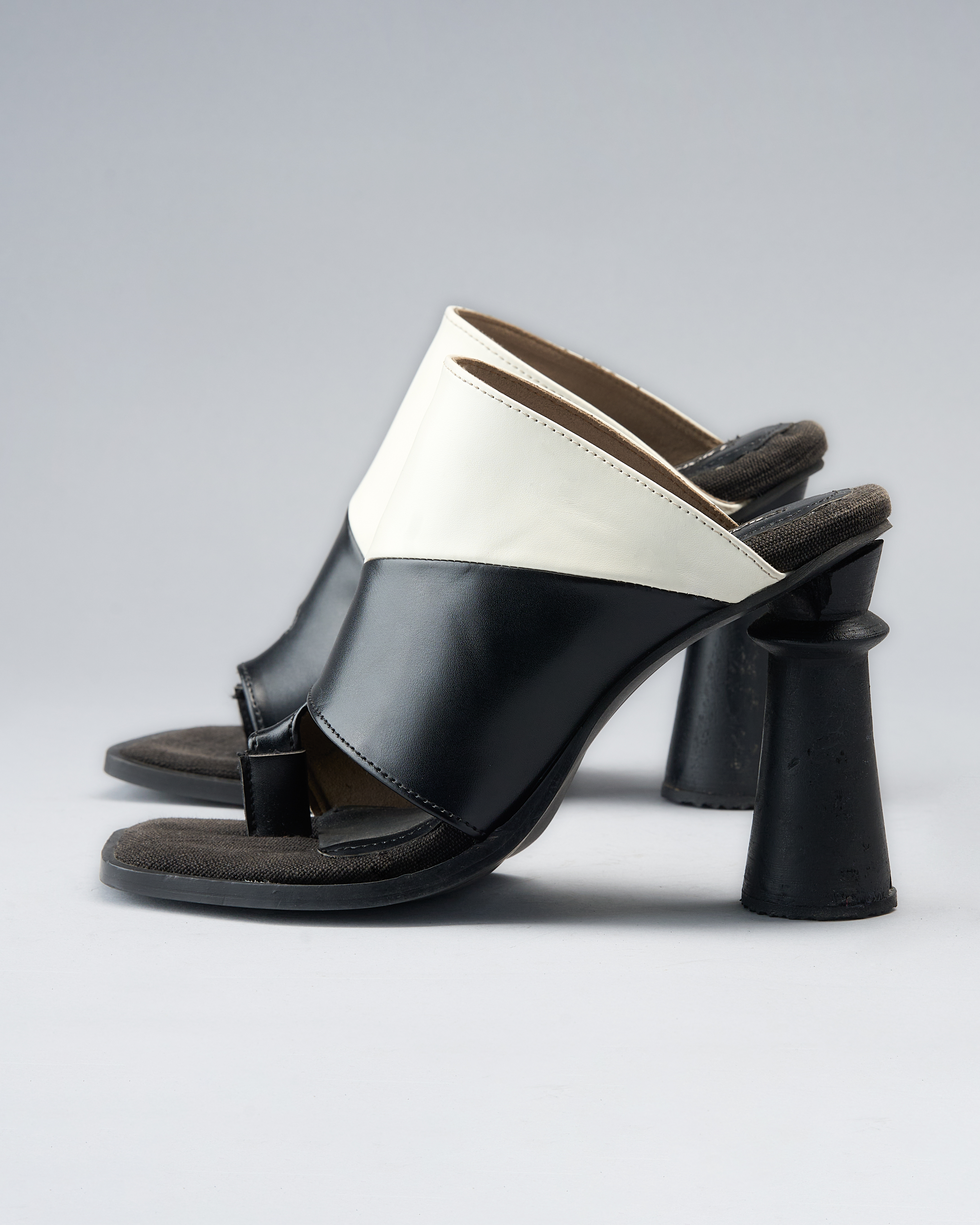
Artisan-woven vegan leather uppers, India’s craft lineage, avant-garde silhouettes — how do you hold tradition and rebellion together without one swallowing the other?
Honestly, I think it is us who are constantly labelling things and wondering how these two can coexist. In practice, they come together easily and they perform well as a shoe. Craft and contemporary design are not in opposition — they never were. We put them in opposition by how we talk about them.
Chennai is not the city people typically associate with cutting-edge footwear design. Has that worked for or against you?
Definitely for. Chennai is one of India’s biggest hubs for footwear manufacturing after Agra and Delhi. Access to skilled labour is a genuine advantage. The city gave us a manufacturing foundation that a lot of designers based elsewhere have to work much harder to build. Building from Chennai was never a disadvantage — it was simply a fact that turned into a strength.
If Disobedience were a chess piece, which one would it be?
The queen. Freedom of movement.
What is the most disobedient thing a customer has ever done in a pair of your shoes?
She hung them on the wall alongside the other art pieces she owns. She is a brilliant artist from Dehradun, and I love clients like her — she has always hyped us far more than we deserve. But that moment, a shoe becoming wall art, felt exactly right for what Disobedience is trying to be.
What is coming next — and what rules is ERA 3 going to break?
We like to push our boundaries, but we are not obsessed with it. Pushing ourselves helps us work with new materials and new forms — but that is not the only thing we do. There is always a good mix: some new material exploration, some refinement of what we already know we do well. ERA 3 will have that balance. The rules it breaks will feel inevitable in hindsight — which is, I think, the best kind of disobedience.
— Anita Soundar is the Founder and Designer of Disobedience, Chennai.
Follow The Best List India for India’s most considered edits in fashion, design, and the brands that refuse to blend in.