
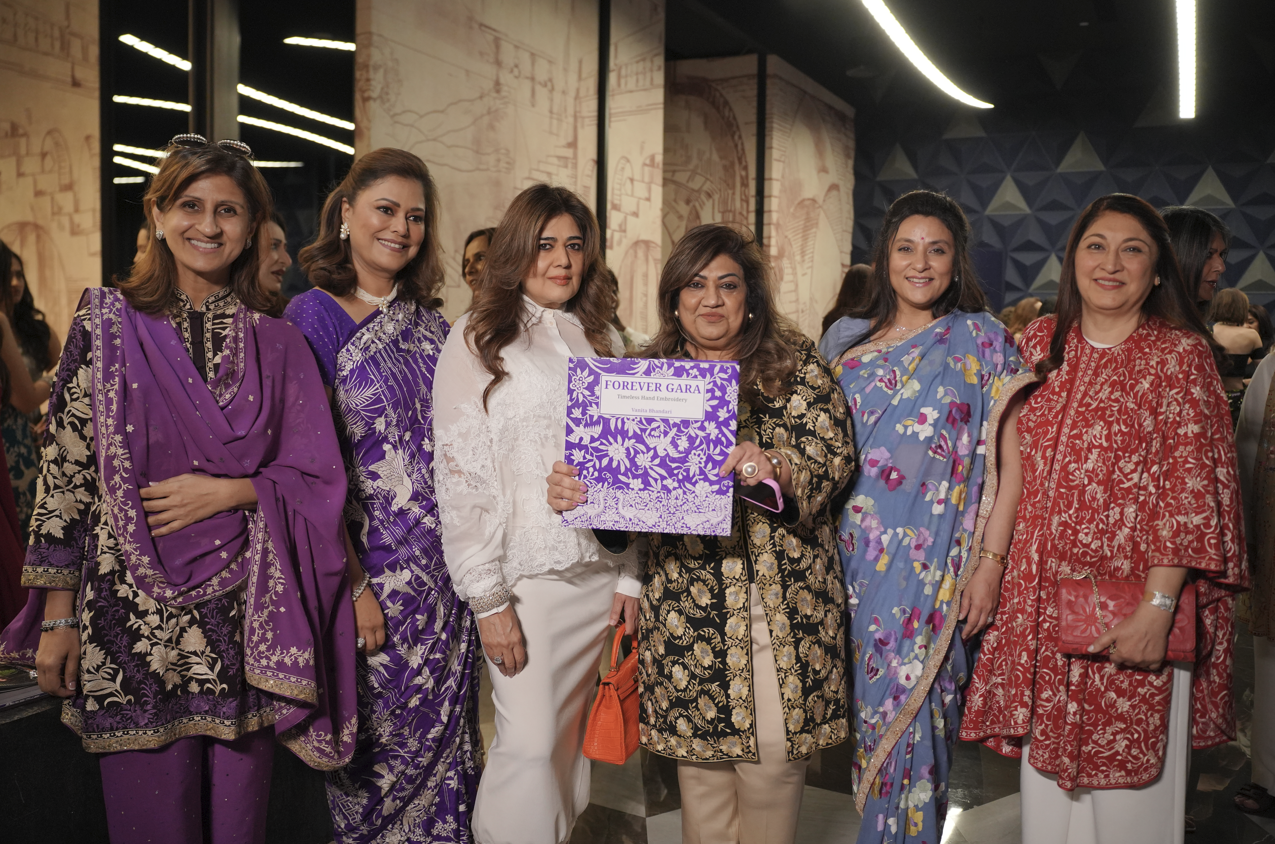
There are crafts that survive. And there are crafts that deserve to be celebrated with the kind of attention and permanence that only a beautifully made book can provide. Parsi Gara embroidery is the latter. And Forever Gara, the new coffee table book by designer and entrepreneur Vanita Bhandari, is exactly the tribute it deserves.
Launched at an intimate evening soiree at The Bay Club in Mumbai, with Pheroza Godrej as the guest of honour, the evening was attended by women dressed in Garas by Pegara, Bhandari’s label dedicated to the craft. It was, in both form and spirit, the only appropriate way to launch a book about embroidery that has clothed, adorned, and told the stories of an entire community for centuries.
The Book
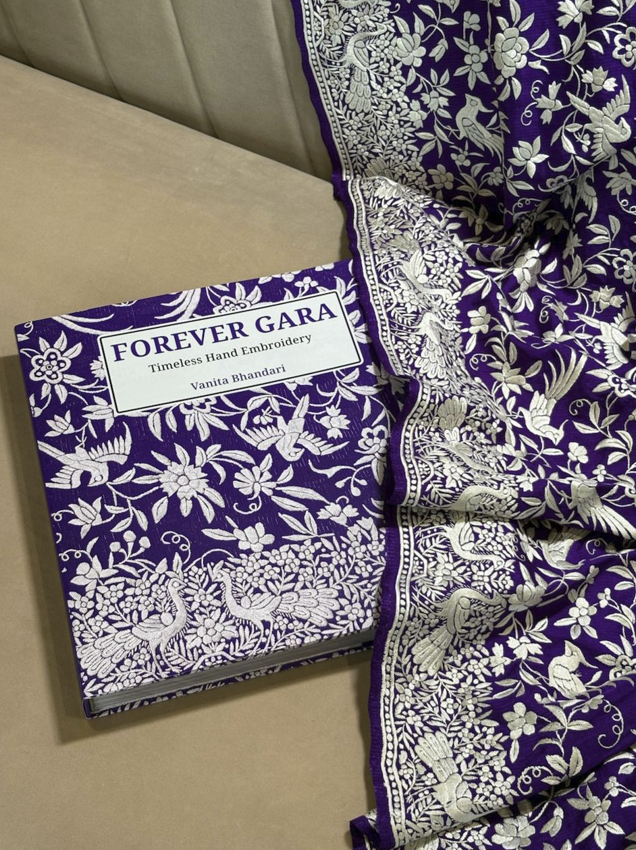
Forever Gara is not a history textbook with pictures. It is a journey. Spanning continents and centuries, the book traces the remarkable story of Gara embroidery from the historic trading routes between China and India to its place in contemporary fashion. Through richly detailed narratives and rare visual documentation, Bhandari brings alive a world of maritime trade, cultural exchange, and master artisans who transformed silk into storytelling canvases with nothing more than needle and thread.
At the heart of the book is an exceptional collection of over 200 antique kors, the embroidered borders of Gara saris, many of which may never have been seen publicly before. These kors showcase embroidery worked in silk threads, gold, and silver, rendered in motifs that speak of the craft’s extraordinary cross-cultural origins: pagodas, bridges, bamboo, birds and river scenes drawn from Chinese landscapes; trees of life, paisleys, peacocks, and fish reflecting the subcontinent’s own visual vocabulary. The result is a textile tradition that belongs fully to both worlds and to neither exclusively, shaped by centuries of trade, migration, and the Zoroastrian community’s unique place at the intersection of East and West.
The book also documents the technical repertoire of the craft with the care it deserves, walking readers through Satin Stitch, French Knot (Peking Knot), Long and Short Stitch, Stem Stitch, Crewel Stitch, Feather Stitch, Couching Stitch, Chain Stitch, and Running Stitch. For those who have always admired Garas without knowing how they are made, this section alone is worth the book.
The Story Behind It
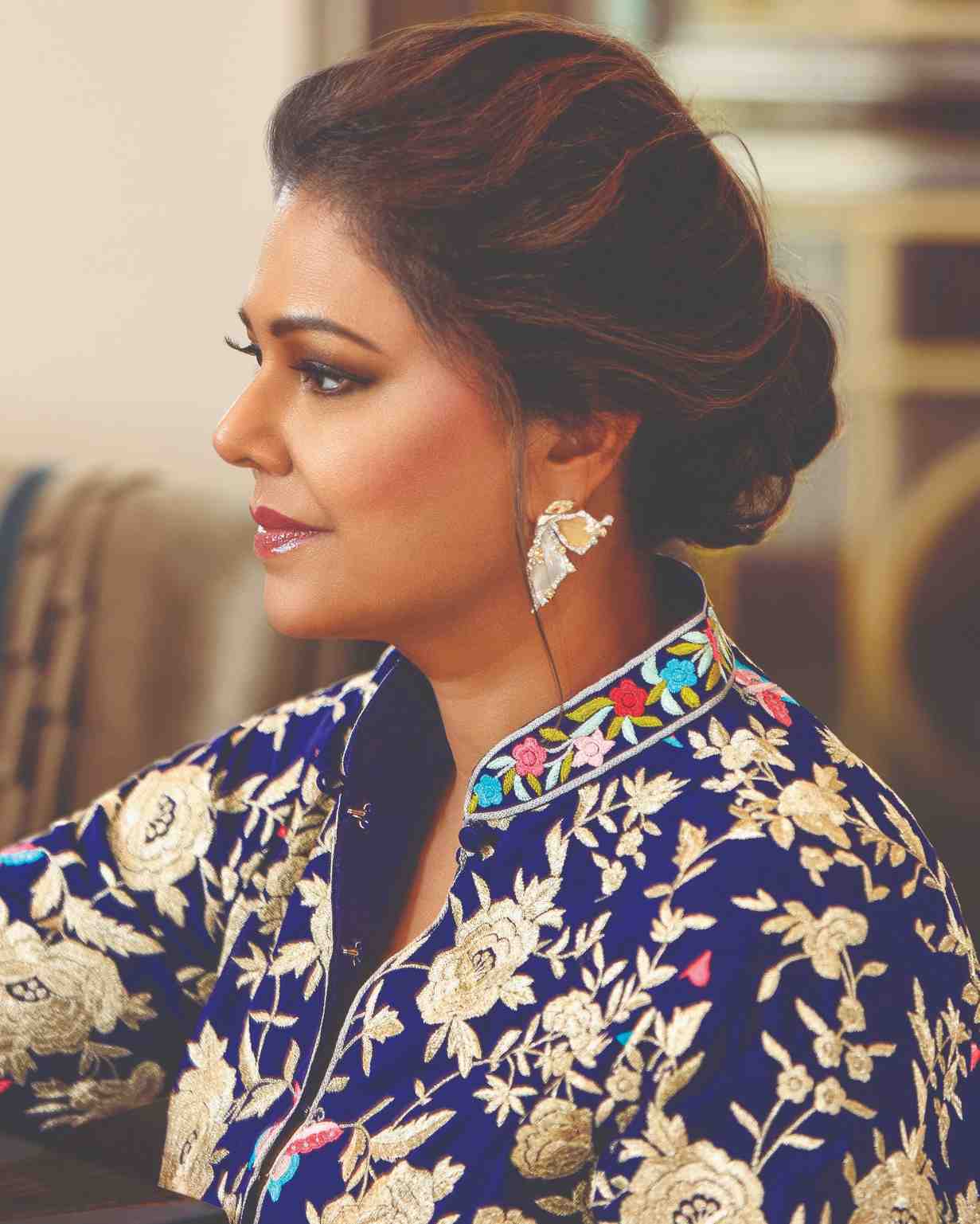
Forever Gara is dedicated to Bhandari’s mother, Perveez Aggarwal, the pioneer of Gara revival and the woman whose passion for the craft shaped her daughter’s life and work. Bhandari herself brings an unusual combination of worlds to this project: a Punjabi father and a Parsi mother, a career leading DBS Corporate Services in India’s office business spaces sector, and a parallel life as a collector, craft advocate, and the founder of Pegara, a label built around the preservation and reinterpretation of Gara embroidery.
In her own words: with Forever Gara, she wanted to create more than a book on history. She wanted to share the stories, emotions, and personal memories that have shaped her journey with the craft. Each page reflects the beauty of Gara embroidery from the dyeing and embroidering process to the remarkable repertoire of stitches, while celebrating the artisans whose skill keeps this tradition alive.
Pheroza Godrej, who wrote the book’s foreword, offered a reflection on what Garas carry beyond their visual beauty: each Gara tells its own story in colour as well as pattern. Friendship, she wrote, is like a Gara. These friendships with Garas have been made over centuries.
Why It Matters
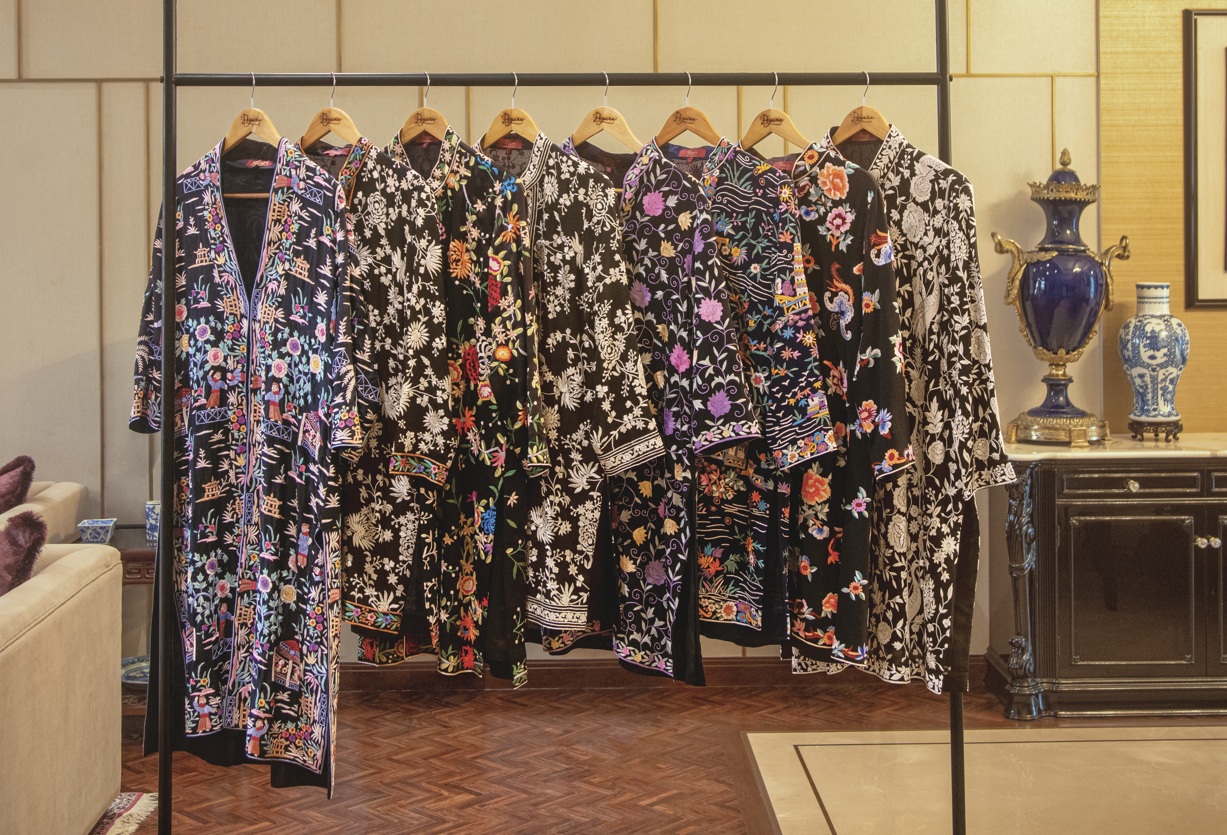
India’s textile traditions are among the most sophisticated, most varied, and most threatened in the world. Gara embroidery, with its roots in the Parsi community’s historic trade relationships with China and its evolution across generations of artisans, represents something irreplaceable: a visual record of cultural exchange that no museum catalogue or academic paper has yet fully captured.
Forever Gara changes that. It is a document, a tribute, a visual archive, and a love letter to a craft that has spent too long known only to those lucky enough to inherit a piece of it.
Echoing John Keats, Bhandari says it best herself: a thing of beauty is a joy forever. And that is why, Forever Gara.
Follow Best List India for the culture, craft, and stories worth knowing about.