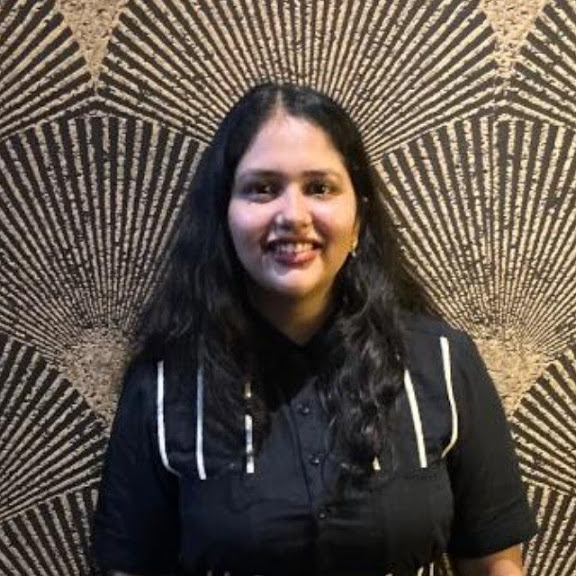

Some founders arrive at their philosophy late. Manisha Mehta, by her own account, was living hers long before she had a name for it. She was earning at 15, had bought her first car by 18, studied at USC Marshall and spent years in international jewellery exports, working with buyers across more than 25 countries, before ever designing a piece under her own name. The idea for Tenth Dimension Jewels took shape during the Goldman Sachs 10,000 Women programme at IIM Bangalore, and it has since become a maison built around a single, quietly radical proposition: that a jewel can be a physical reminder of what its wearer already believes is possible. Its signature, the Manifest Symbol, is protected by a U.S. design patent. We spoke to Mehta about self-belief, the business of beauty, and why she hopes you will recognise a Tenth Dimension piece before you ever see the name.

You were earning your own money at 15 and had bought your first car by 18, all while studying full-time. What did those early years teach you that no business school, even one as good as USC Marshall, could have?
Those years taught me self-belief and resilience before I had the vocabulary for it.
Earning at 15 and buying my first car at 18 taught me that independence begins with taking responsibility for your own choices. I learnt very early that if I wanted something, I couldn’t simply wait for the right circumstances. I had to create them.
USC Marshall taught me how to think about business strategically, but my early years taught me something more instinctive: how to trust myself, take calculated risks and keep moving even when there was no guarantee of the outcome.
That mindset has stayed with me. Entrepreneurship, especially building a luxury brand from India, requires both: the discipline to understand the numbers and the courage to believe in something before the market validates it.
Long before Tenth Dimension Jewels existed, you say you were “unknowingly living its philosophy.” Looking back, what’s the earliest moment you can point to where you were manifesting something, without having a name for it yet?
I think I was manifesting long before I knew the word.
Looking back, there is a pattern in my life: whenever I had a clear picture of something I wanted, I didn’t just wish for it. I began behaving like the person who could create it.
Whether it was becoming financially independent at a young age, pursuing an international education, building relationships across countries or eventually creating my own jewellery maison, there was always a strong internal conviction before there was an external reality.
That is what manifestation means to me. It isn’t simply wishing for something. It is clarity followed by belief, action and persistence.
Tenth Dimension gave that philosophy a language.
Your journey started in international exports, working with buyers across 25+ countries, long before you designed a single piece under your own name. What did that side of the business teach you about luxury and craftsmanship that a designer coming from a purely creative background might never learn?
Working across 25+ countries gave me an education that was incredibly difficult to replicate in a classroom.
I understood buyers from different cultures, markets and price points. I learnt how people make purchasing decisions, what creates trust, how relationships are built over time and, importantly, why craftsmanship alone isn’t enough: the product also needs a story, positioning and emotional relevance.
It also taught me to look at jewellery from the other side of the table. Before I became a designer, I understood the business of jewellery.
Today, that combination is central to Tenth Dimension. I want every piece to have the beauty of a design object, the precision of fine jewellery and the emotional depth of something that a person can genuinely connect with.
The idea for Tenth Dimension Jewels was born during the Goldman Sachs 10,000 Women program at IIM Bangalore. What happened in that room that turned “I understand this industry” into “I need to build something of my own in it”?
The program gave me the space to step outside the day-to-day business and ask myself a much bigger question: What do I actually want to create?
I realised that I had spent years understanding the jewellery industry from the perspective of trade, exports and buyers, but I hadn’t yet created something that carried my own point of view.
That was the turning point.
I didn’t want to build just another jewellery brand. I wanted to create a maison around an idea: the idea that jewellery could become deeply personal, symbolic and intentional.
The concept of the Tenth Dimension came from that desire to explore something beyond what is immediately visible. And manifestation became the philosophy connecting the designs, the wearer and the intention behind the jewel.
“Wear the Power to Manifest” is a bold promise for a piece of jewellery to carry. How do you design something, a physical, wearable object, that’s meant to hold that much emotional weight for the person wearing it?
I don’t believe jewellery alone creates someone’s destiny. I believe it can become a physical reminder of what they already believe is possible.
That distinction is very important to me.
When someone wears a Tenth Dimension jewel, I want them to have a moment of connection with their own intention. Perhaps it represents love, courage, abundance, transformation or a new beginning.
So the design process begins with an emotion or an idea, and then I ask: How can I translate something invisible into something tangible?
Through geometry, gemstones, symbolism, proportion and craftsmanship, we create an object that can carry that meaning.
The jewel becomes a talisman, not because it promises magic, but because it reminds you of your own power.


Your designs are patented and tied to specific ideas, love, courage, abundance, new beginnings. Walk us through how one of those ideas actually becomes a piece: where does the emotion end and the design process begin?
For me, the emotion actually comes first.
Take the idea of manifestation itself. I wanted a symbol that could represent intention becoming reality, something that wasn’t merely decorative, but could become recognisable as a language of the brand.
That thinking led to the creation of our Manifest Symbol, which has been protected through a U.S. design patent.
From there, the creative process becomes very disciplined. I explore geometry, symmetry, negative space, proportion and how the symbol interacts with diamonds and gemstones.
So there is a constant dialogue between emotion and engineering.
The final piece needs to make you feel something, but it also needs to be beautifully resolved as jewellery.
You’re Founder and Creative Director, which means you’re living in both the business and the art at once. Where do those two roles pull against each other the most, and how do you decide which one wins?
They pull against each other all the time.
The entrepreneur in me asks: Does this make business sense? Who is the customer? What is the price point? Can we produce it consistently?
The creative director in me sometimes wants to say: Forget all of that, this is beautiful. Let’s make it.
I think the answer lies somewhere between the two.
I don’t want Tenth Dimension to become commercial at the expense of its identity. At the same time, I don’t believe creativity exists in a vacuum.
The business has to protect the creativity, and the creativity has to give the business a reason to exist.
Ultimately, if a design is truly distinctive and feels intrinsically Tenth Dimension, I will find a way to build the business around it.
You still collaborate with international buyers through Infitrust International, even as you build your own maison. What does staying close to that global trade side teach you that building the brand in isolation wouldn’t?
It keeps me connected to the real world.
Building a luxury maison can become very inward-looking if you aren’t careful. Working internationally keeps me exposed to changing consumer behaviour, global aesthetics, different retail environments and what buyers in different markets are responding to.
It also reminds me that luxury is global, but desire is personal.
A customer in one part of the world may connect with a piece for completely different reasons from someone elsewhere.
That global perspective is something I want to retain as Tenth Dimension grows. My ambition is not simply to take an Indian jewellery brand overseas. It is to build an internationally admired luxury maison from India, with a point of view that can travel.

If Tenth Dimension Jewels were a single piece, not your bestseller, but the one that most captures what “manifestation” actually means to you personally, which one would it be, and why?
It would have to be the Manifest Symbol.
For me, it is the DNA of Tenth Dimension.
It represents the idea that something begins as an intention, almost invisible, and through belief, action and persistence, becomes real.
That is essentially my own entrepreneurial journey.
I also love that the symbol can be interpreted differently by different people. One person may see it as a symbol of abundance, another as courage, love, transformation or a new beginning.
That openness is important because manifestation is deeply individual.
The jewel doesn’t tell you what to manifest. It asks you: What do you want to manifest?
Your vision is a globally admired luxury jewellery maison built from India. What does that actually look like on the day you know you’ve arrived, and what’s the one thing about the brand that has to stay exactly the same, no matter how big it gets?
I don’t think I will ever feel that I’ve completely “arrived.” There will always be another level to build towards.
But I will know we are on the right path when Tenth Dimension is recognised globally not simply as an Indian jewellery brand, but as a distinctive luxury maison with an unmistakable point of view.
I want someone to see a piece and know it is Tenth Dimension before seeing the name.
But there is one thing that can never change: the meaning behind the jewel.
As we grow, the scale can change. The markets can change. The team can change. The collections can evolve.
But the belief that jewellery can be deeply personal, that it can hold intention, identity and emotion, must remain.
I want every jewel to give its wearer a moment of connection with what they are capable of manifesting.
What stays with you after speaking to Manisha Mehta is how little she asks of the jewel and how much she asks of the wearer. There are no promises of magic here, only a carefully engineered object designed to hold a thought still long enough for someone to act on it. It is a philosophy shaped by two very different educations: one in boardrooms and buyer meetings across 25 countries, the other in the stubborn, early habit of behaving like the person who could make a thing real. That combination, disciplined enough to be patented and personal enough to mean something different to everyone who wears it, is what gives Tenth Dimension its quiet authority. If the maison reaches the global recognition she is building towards, it will be because the jewel never stopped asking the same simple question: what do you want to manifest?
Follow Best List India for the culture, conversations, and ideas worth paying attention to.