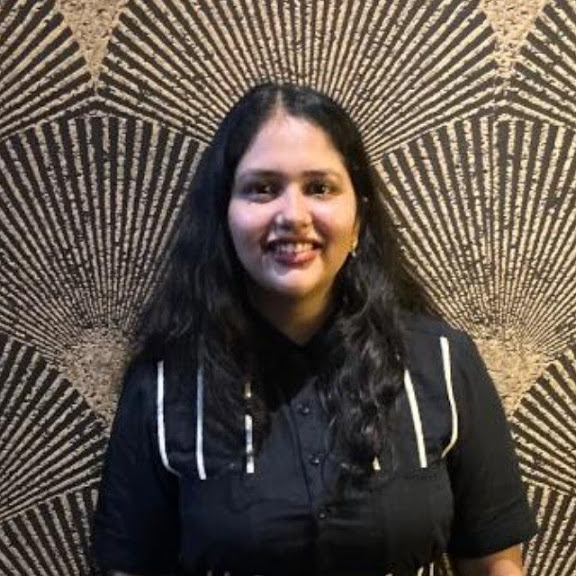
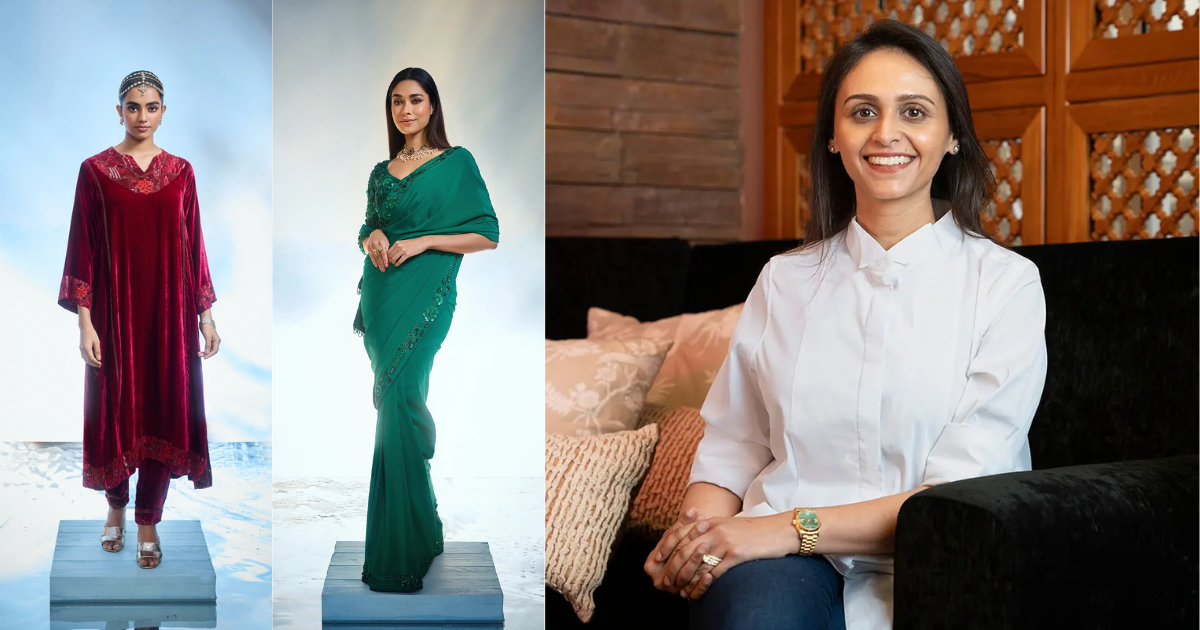
There is a particular kind of designer who arrives not in a hurry but in full. Someone who has spent years watching, absorbing, and understanding before deciding it is time to speak. Mrunal Khimji is that designer. Nearly two decades of running Mrunal’s Boutique in Muscat, championing Indian designers in the Gulf, observing what women actually want from their clothes and how those wants evolve over a lifetime, all of that came before a single piece under her own name reached the market.
The Mrunal Khimji Label, built on conscious luxury, slow fashion, and the conviction that women deserve clothes that do not put them in a box, is now making its way to India. A homecoming in every sense. We spoke with her about what the journey taught her, why she names her collections in poetry, and what comes next.
Your creative journey moved from FIT in New York to Muscat to India. What has creating across geographies done to your design eye?
I have been very fortunate to experience design across different parts of the world, and that exposure has shaped my design eye in a way that feels quite instinctive now. Having lived between New York, Muscat, and India, I have been exposed to very different cultures, ways of living, and approaches to dressing. You start to notice the small things: how people put themselves together, what feels natural in one place versus another.
Over time, it teaches you to design beyond just one sensibility. You are not confined to a single point of view. You begin to blend, adapt, and create styles that feel more versatile and layered. That kind of exposure stays with you, and it naturally reflects in the way you think and create.
You spent nearly two decades championing other designers before launching your own label. What did those years of curating teach you about what you yourself wanted to say?
Spending nearly two decades working so closely with different designers, you realise very quickly that everyone has something to teach you. Each one brings a completely different perspective, whether it is their approach to craft, their understanding of their customer, or simply how they choose to express themselves. For me, learning from peers has been one of the most valuable forms of education.
It also gave me a very clear understanding of market dynamics: what people are drawn to, how preferences evolve, and how important it is to stay authentic while still being relevant. Being around such varied talent builds a deep respect for individuality. Everyone has their own strength, their own voice. Over time, that clarity stays with you. It helped me understand what I value in design, and eventually, what I wanted my own label to stand for.

The label is built on the idea of women without labels. In an industry still obsessed with categories, where did that conviction come from?
It comes from something very simple, something life teaches you often: that change is the only constant. Nothing about us stays the same over time. Our bodies change, our lifestyles change, even the way we see ourselves evolves. I have never understood why clothing should be fixed when we are not.
The idea of women without labels comes from wanting to create pieces that do not box you in. There is no one way to wear something, no one person it is meant for. It is about giving women the space to interpret, to adapt, and to feel comfortable in who they are at that moment.
Your debut collection was called Lehren, meaning waves. Your second, Zuhur, meaning flowers in Arabic. There is poetry to how you name and conceive your work. What does it feel like when a collection finds its own identity?
Nature has always been my biggest source of inspiration. It offers the most effortless sense of colour, balance, and detail. Every collection begins with a thought, a concept, or sometimes just an element from nature that I am drawn to, which I then translate into handcrafted pieces.
Lehren came from the movement of waves: the way they rise and fall in a quiet, rhythmic pattern, never still, yet never chaotic. Zuhur was about the delicate bloom of flowers, soft and gradual in its expression. Somewhere along the process, there is a moment where everything begins to come together and the collection takes on a life of its own. It feels instinctive, almost poetic. Nature has always been, and will continue to be, my greatest inspiration and my favourite colour palette.

You celebrate weaves like Uppada, Kanjivaram, Paithani, and Jamdani. What do you want the woman wearing your pieces to understand about the hands that made them?
Handloom has always been a big part of my personal life. I truly believe no garment can match the soul and beauty of a handwoven saree. There is a depth and art to it that is impossible to replicate. My family has supported this craftsmanship for generations, and it is something I have grown up valuing deeply.
More than anything, I want every woman who wears my designs to recognise and appreciate the skilled hands, the patience, and the centuries-old traditions behind each piece. That connection between the wearer and the maker is something I hold very close, and it shapes every creative and sourcing decision we make.
Conscious luxury and slow fashion are words that get used a lot right now. What do they actually mean in practice when you are making every creative and business decision?
For me, it is about being intentional. We have made a conscious choice to keep our collections smaller and more considered. There is no pressure to constantly add more. What matters is that what we create feels right. Whether it is a simple piece or something more detailed, the focus is always on craftsmanship.
I do not believe in creating just to fill space. In a world where people often feel they need to be needed, we create pieces that you simply feel drawn to adopt. That distinction matters enormously to how we work.
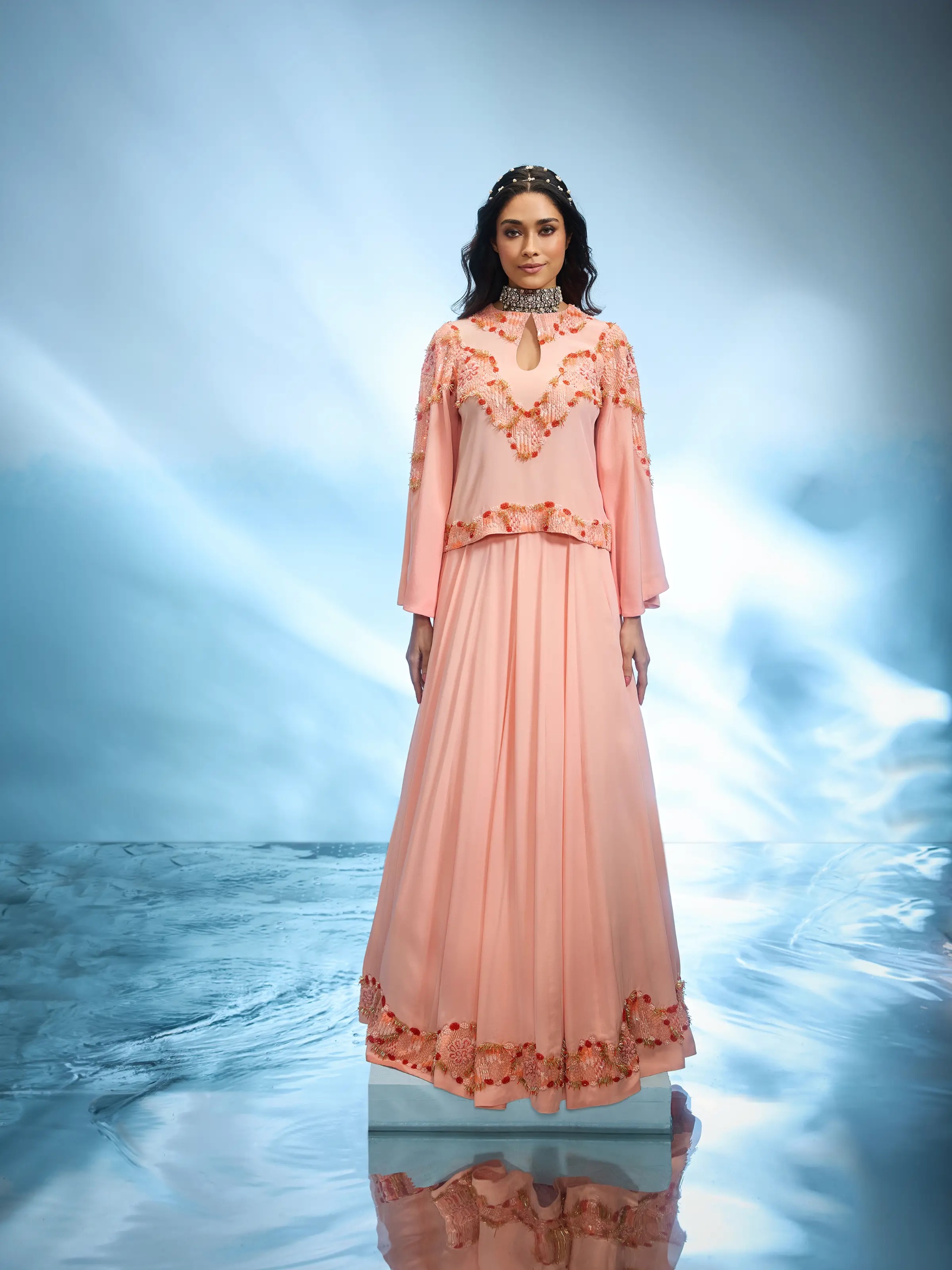
Your label bridges Indian and Arab aesthetics in a way that feels entirely natural. How do you hold two such distinct visual cultures in a single silhouette without losing either?
To me, the two have always felt naturally connected. There is a long history of shared influences, whether in textiles, detailing, or silhouettes. Having lived between both, it does not feel like combining two different worlds but rather working within something that already overlaps. That makes the process feel quite organic. It is not forced or overly thought through. It comes from familiarity and comfort with both cultures, which makes the final piece feel balanced.
If your label were a textile, not just a fabric but a feeling, which one would it be?
It would be something soft and fluid: cotton, crepe, or georgette. I am always drawn to fabrics that feel easy, that move well with the body. There is a quiet beauty in that kind of softness. It does not try too hard, but it still feels complete. That is very much how I approach design. I want the piece to feel natural when you wear it.
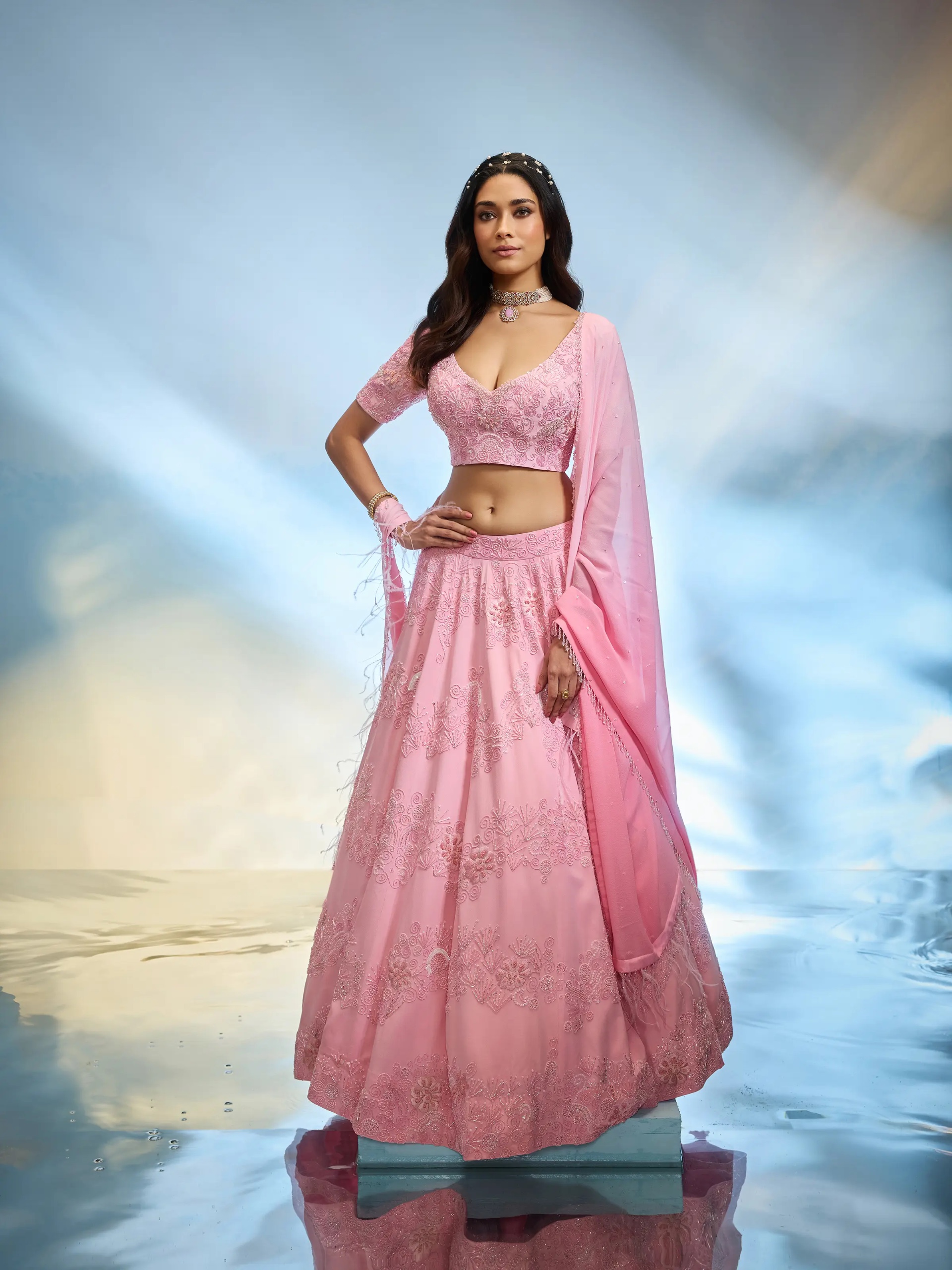
Launching in India is described as a homecoming. What does it feel like to bring this work back to the communities and craft traditions that inspired it?
It feels very emotional and overwhelming, in the best way. India has always been such a strong source of inspiration for me, even when I was working elsewhere. To now bring the label here feels like returning to something familiar and meaningful. It feels like home.
There is a sense of gratitude that comes with it: being able to create and share this work in the same space that has influenced so much of it. It does not feel like a new beginning. It feels like a continuation.
What comes next from the Mrunal Khimji Label, and what do you hope it quietly changes about the way women think about what they wear?
The next collection is inspired by the idea of an inner fire: that quiet, steady strength every woman carries within her. It is not always visible, but it is always there.
I do not believe design needs to change women. If anything, it should support them. I hope the pieces find a place in their lives in an effortless way, reflecting who they are, moving with them, and allowing them to feel entirely like themselves. The vision is to grow into something larger and more meaningful, building thoughtfully and taking it to bigger and better places while staying entirely true to what we stand for.
Follow Best List India for the designers, labels, and conversations worth knowing about.