
There is a particular kind of anxiety that comes with the word fusion. Years of bad menus have trained us well: the unnecessary mango in the sashimi, the dal that somehow found its way into a pasta, the chef who confused collision with conversation. You arrive with your guard up. You scan the menu with low expectations. And then something arrives at the table that makes you put your phone down, lean forward, and actually pay attention.
Inja does that. Repeatedly. Across an entire meal.
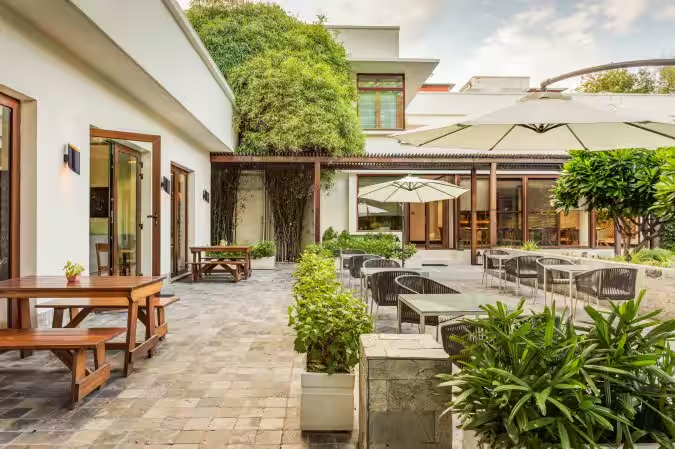
Tucked inside The Manor Hotel in Friends Colony West, in one of New Delhi’s leafier, quieter neighbourhoods, Inja is not trying to be the loudest restaurant in the city. It does not need to be. The food does that work with a precision and confidence that most fine dining rooms spend years trying to achieve.
The Name, The Idea
IN from India. JA from Japan. The portmanteau is clean and the concept behind it is cleaner still. Two cuisines that seem, on paper, entirely incompatible: one defined by heat, spice, complexity, and depth; the other by restraint, subtlety, raw precision, and a near-spiritual relationship with technique. What Chef Adwait Anantwar has spent years arguing, and what Inja proves dish by dish, is that these two traditions are not opposites. They are complements. Waiting for someone with enough skill and enough courage to introduce them properly.
Anantwar conceived the idea during the lockdown, inspired by years spent working under Chef Himanshu Saini in Dubai, developing a deep understanding of Japanese technique and marrying it in his imagination with the bold, complex flavour profiles he grew up with in Nagpur. The result is not a restaurant that compromises between two cuisines. It is a restaurant that finds the place where both cuisines are already, quietly, pointing toward each other.
The Room
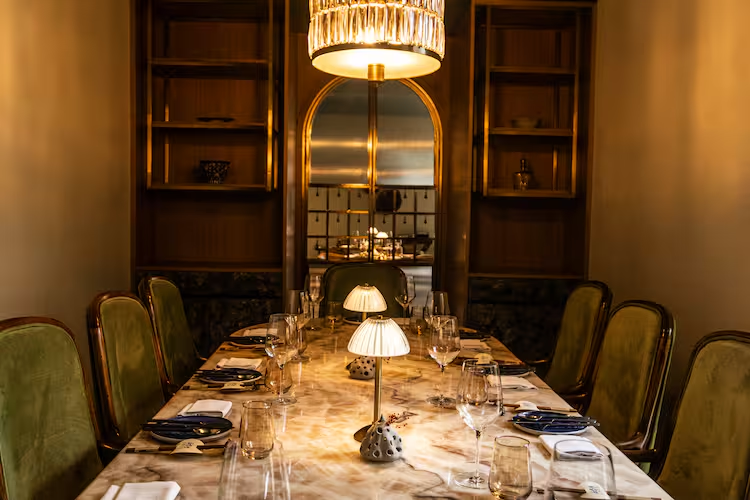
The interior is its own argument for the concept. Japanese minimalism, wooden surfaces, natural stone, clean lines, and bonsai provide the bones of the space. Laid over that: peacock-hued fabrics, Mughal trinkets, pops of colour, lime wash materials, and the Itajime Shibori framework in Indian silk that frames the room. It is a space that feels considered without feeling constructed. Warm, unhurried, and built for a long meal.
The sixty-odd covers fill up quickly. Book ahead. This is not the kind of restaurant that has empty tables on a Friday night.
What Arrives at the Table
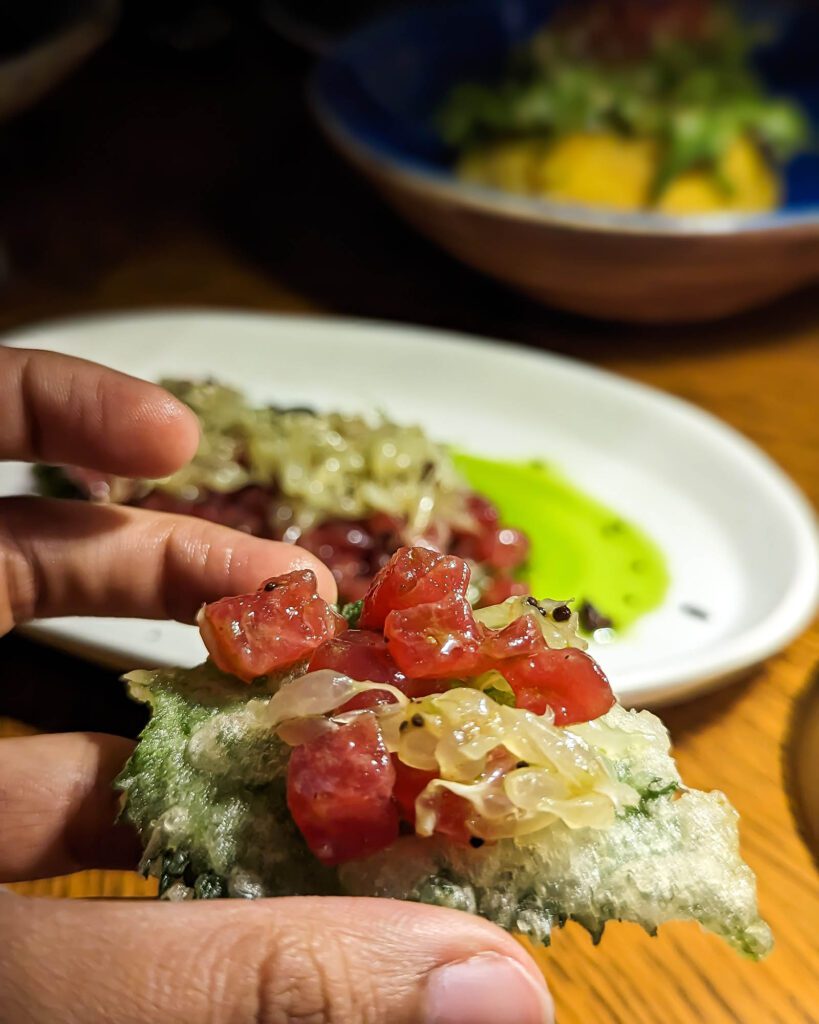
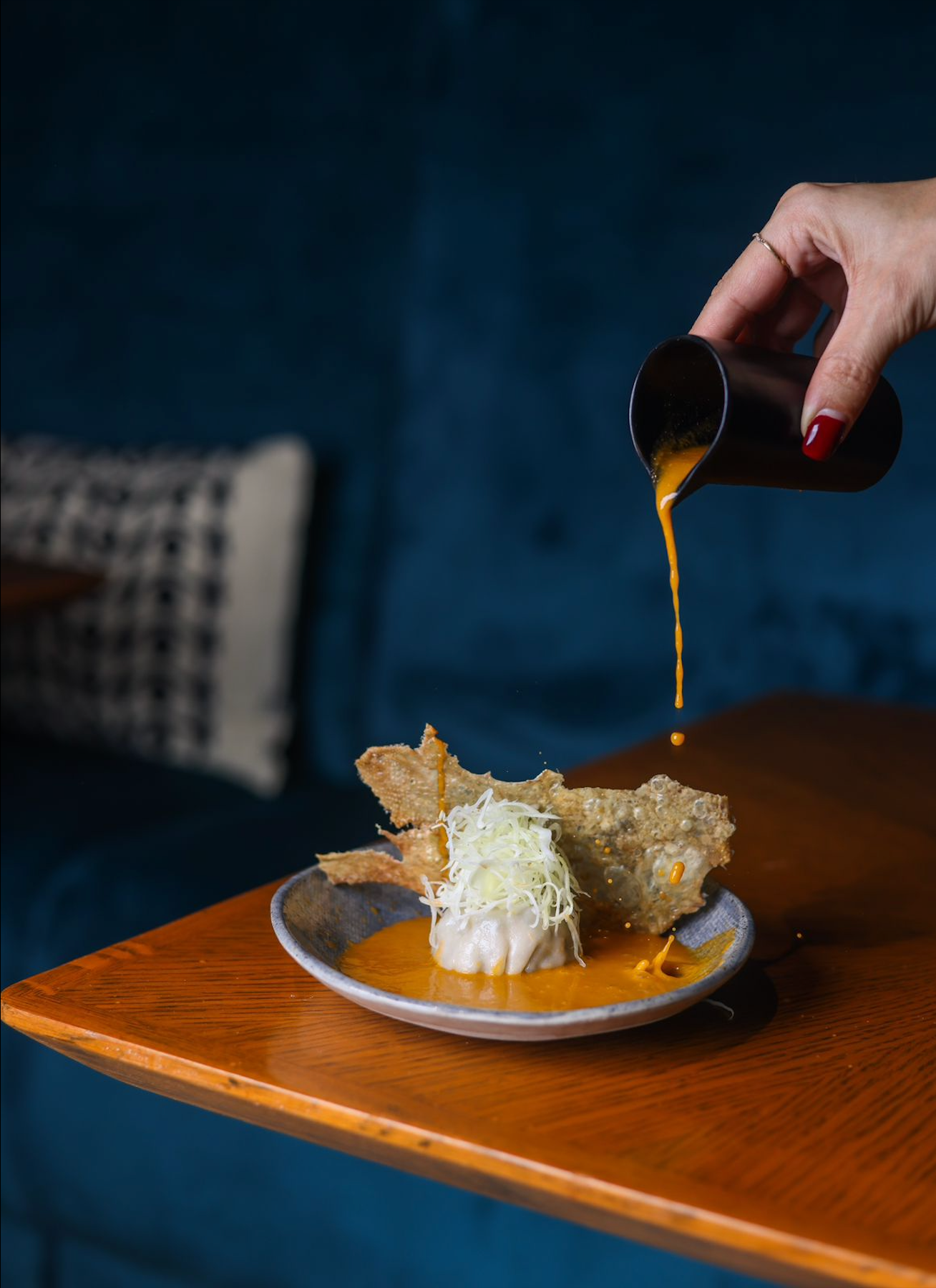
Begin with the Shiso Leaf Tuna and Pomelo Chaat. It is, genuinely, one of the best first bites in Delhi right now: shiso leaf tempura, chilled tuna, pomelo, tamarind ponzu, texture and crunch and brightness in a single mouthful. It does everything a good opening dish should do. It tells you exactly what kind of evening you are in for.
The Alaskan King Crab Raj Kachori is the dish people come back for. King Alaskan crab, flown in from Japan, stuffed into a thin, impossibly crisp kachori, topped with avocado espuma, touches of mango, furikake chutney, seaweed, and salmon roe. At Rs 4,850 it is the most expensive dish on the menu. It is also, unambiguously, worth it. One bite and the case for everything Inja is trying to do is made in full.
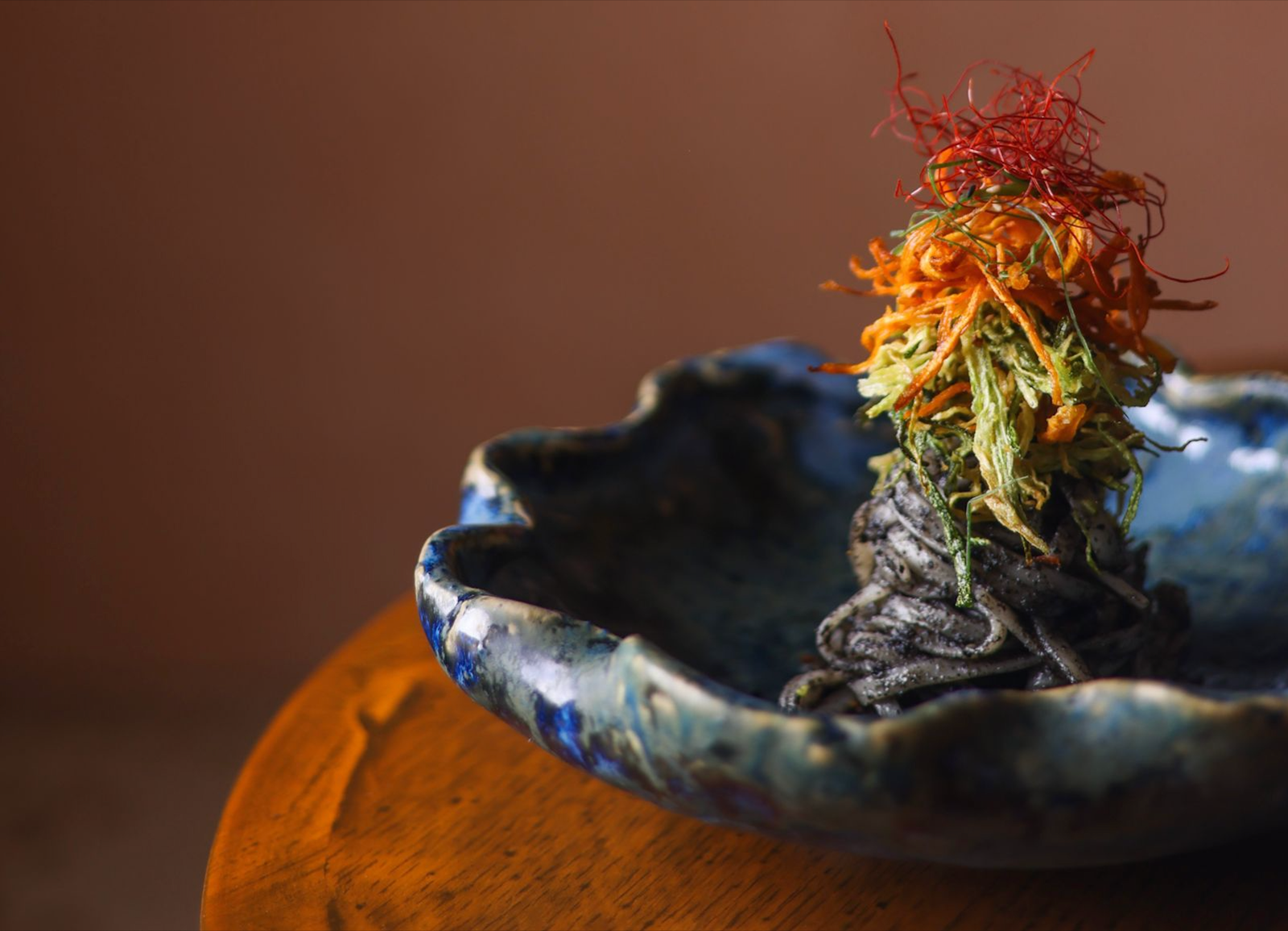
The Hokkaido Scallops Panta Bhat transforms a humble Bengali dish of fermented overnight rice into a vehicle for torched Hokkaido scallops, kombu oil, and pickled cucumber. The Gobhi 65 Maki, which sounds like it should not work and absolutely does, uses crisp curry leaves as tanuki for the maki wrapper, turning a South Indian party snack into something unexpectedly elegant. The Tantamen Ramen Pandhra Rassa arrives as housemade noodles in a light coconut chicken broth that carries the soul of a Maharashtrian kitchen while speaking the language of a Tokyo ramen shop.
And then there is the bread course: Mangalore buns with filter coffee butter. A sentence so perfect it almost does not need a dish around it.
The Cocktails
The Panch Indri cocktail list, designed by Supradeep Dey and inspired by the five senses, is its own reason to arrive early and linger late. Each cocktail weaves Indian spices and Japanese elements into something visually stunning and aromatically layered. They are potent without being aggressive, and each one arrives with a note of freshness, citrus, a spice addition, something that keeps the palate awake.
The Chef and the Context
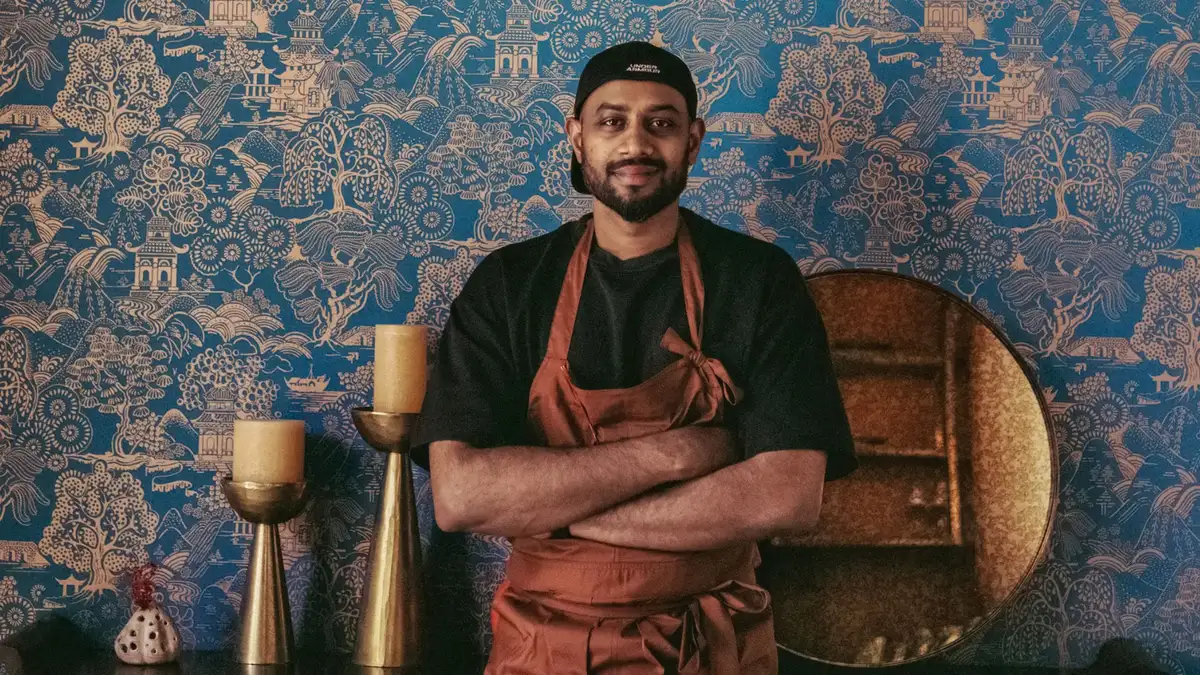
Adwait Anantwar is 32 years old, born in Nagpur, trained in India, shaped in Dubai, and returned to his home country to build something that did not exist here yet. He was recognised as one of India’s Top 30 Chefs 2024 by Culinary Culture. He comes out to talk to tables. He explains the story behind dishes with the ease of someone who has told those stories a hundred times and still means every word.
Inja is the debut India venture for Dubai-based Atelier House Hospitality, in collaboration with Manav Thadani of Hotelivate. That it opened at The Manor, the same address that once housed Indian Accent, is either a coincidence or a statement. Possibly both.
The Verdict
Delhi has no shortage of restaurants trying to do interesting things with Indian food. Very few of them have the technical foundation, the philosophical clarity, and the sheer cooking skill to pull it off at this level. Inja is the rare kind of restaurant where the concept and the execution are in complete, unhurried agreement with each other.
Go for the tasting menu if you can. Let the kitchen decide the order. Trust Chef Adwait entirely. And the next time someone says fusion, remember that the word can mean compromise or it can mean conversation. At Inja, it has always meant the latter.
Follow Best List India for the restaurants, stays, and experiences worth knowing about.