There is a version of the monsoon that most travel planning treats as a problem to be avoided, the cancelled beach holiday, the washed-out itinerary, the refund requested from a resort that was always going to be better in December. And then there is the version that the people who have actually been to the right places in the right rain understand: the monsoon as the most atmospheric, most intimate, most visually extraordinary season in which India can be experienced.
The difference between those two versions is almost entirely a matter of where you go.
The properties that earn their place in a monsoon edit are not simply the ones that remain open during the season, though that is a starting point. They are the ones whose essential character is revealed rather than obscured by the rain: the forest lodge that becomes something else entirely when the mist comes down and the birdsong changes register, the hillside property whose view improves with every cloud that crosses it, the heritage hotel whose thick walls and interior courtyards come into their own precisely when the weather outside becomes an event in itself.
These are six of them!
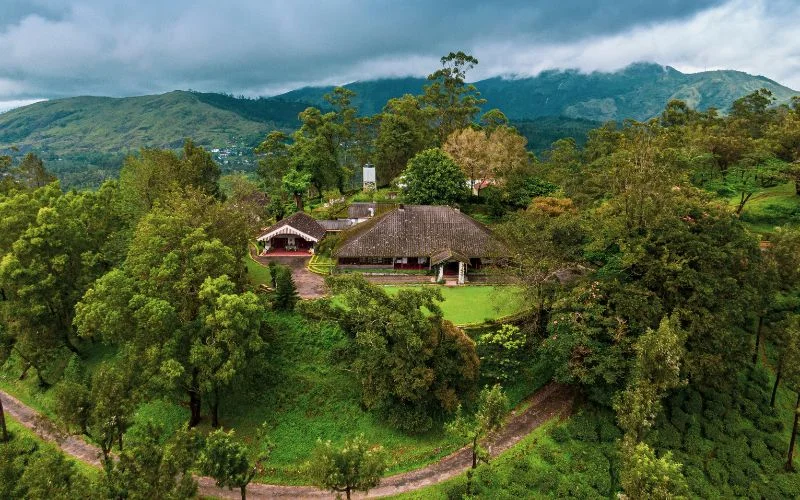
Sinna Dorai’s Bungalow, Valparai, Tamil Nadu
The Anamalai Hills of Tamil Nadu receive some of the heaviest rainfall in the subcontinent, and Sinna Dorai’s Bungalow, a colonial-era planter’s residence on a working tea estate above Valparai, is most completely itself during it. Six guests at a time, which is the maximum the bungalow accommodates, is not a constraint here but a curatorial decision: the property is designed around the particular quality of attention that only a very small guest list makes possible.
The monsoon version of this stay involves sitting on a verandah while the rain moves across the estate in visible walls, watching the tea bushes disappear and reappear in the mist, and understanding, with some immediacy, why the planters who built these bungalows in the hill country were in no particular hurry to return to the plains. The birding, for which the Anamalai Hills are extraordinary in any season, reaches a different level of intensity during the monsoon, when species that are difficult to locate in the dry months become more accessible. The bungalow’s cook produces food of a quality that is entirely disproportionate to the property’s remote setting, which is another quality it shares with the best planter-era hospitality.
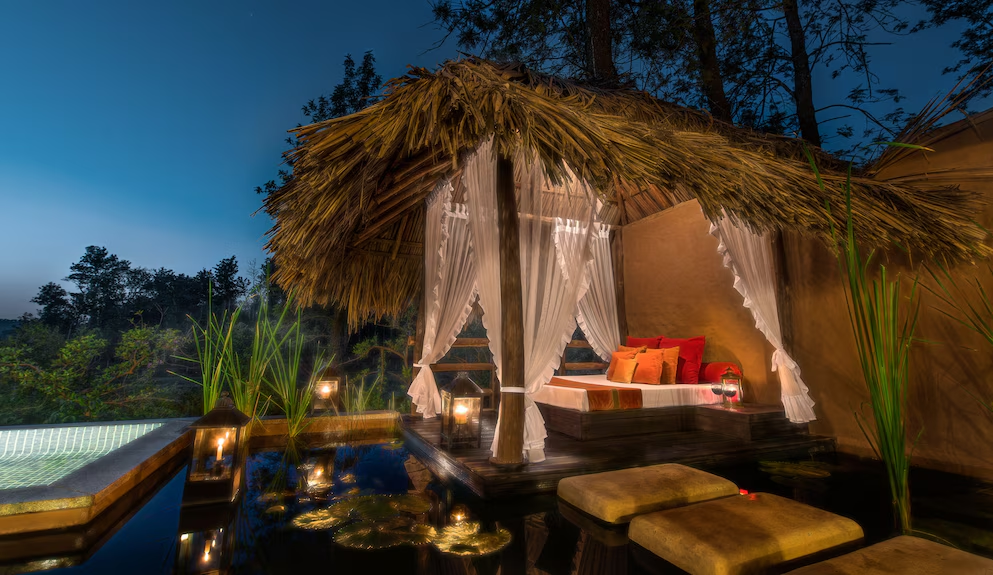
Evolve Back, Coorg, Karnataka
Coorg receives its monsoon with the particular enthusiasm of a landscape that has been waiting for it. The coffee estates turn an almost implausible shade of green. The waterfalls that are intermittent features of the landscape in other seasons become full-throated and omnipresent. The air carries the particular combination of coffee blossom and wet earth that is unique to this part of Karnataka and that no description fully captures.
Evolve Back in Coorg understands its landscape in the way that only the best resort properties do: not as a backdrop to be photographed but as the primary experience to be organised around. The private pool villas, each one set within the estate with sufficient privacy to feel genuinely isolated, are designed for exactly the kind of monsoon afternoon that should not be spent doing anything in particular. The spa programme, which draws from local traditions with more intelligence than the generic Ayurveda menu that most Coorg properties default to, is the appropriate response to a morning that the rain has made outdoor exploration impractical.
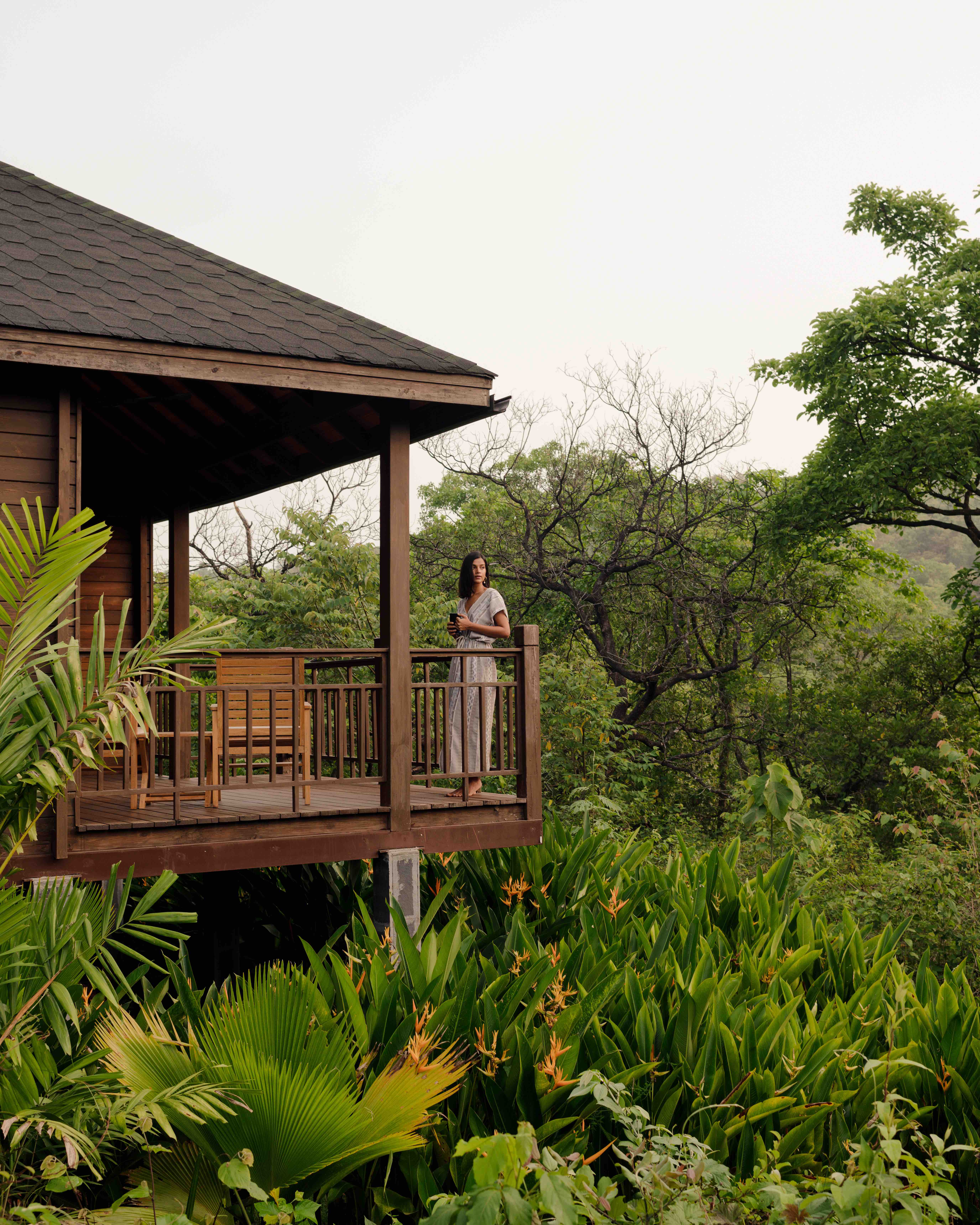
The Postcard Hideaway, Goa
The Goa that most people know, the one of beach clubs, sun loungers, and the particular social energy of December, is not the Goa that belongs to the monsoon. The monsoon Goa belongs to the Portuguese-era architecture, the laterite walls darkened by rain, the paddy fields that appear where the dry season showed only red earth, the coastline emptied of everything except the extraordinary drama of the Arabian Sea working itself into a state.
The Postcard Hideaway, a small and carefully considered property in North Goa, takes the monsoon seriously as a season worth designing for. The property’s architecture draws from the Goan vernacular in a way that comes into its own in the rain: covered verandahs, thick walls, the quality of shade and shelter that the old Goan house was built around precisely because it understood what six months of sun and three months of monsoon actually required. The surrounding lanes, emptied of the tourist traffic that defines the season on either side of July and August, become navigable in a way that makes the region feel like it belongs to itself again.
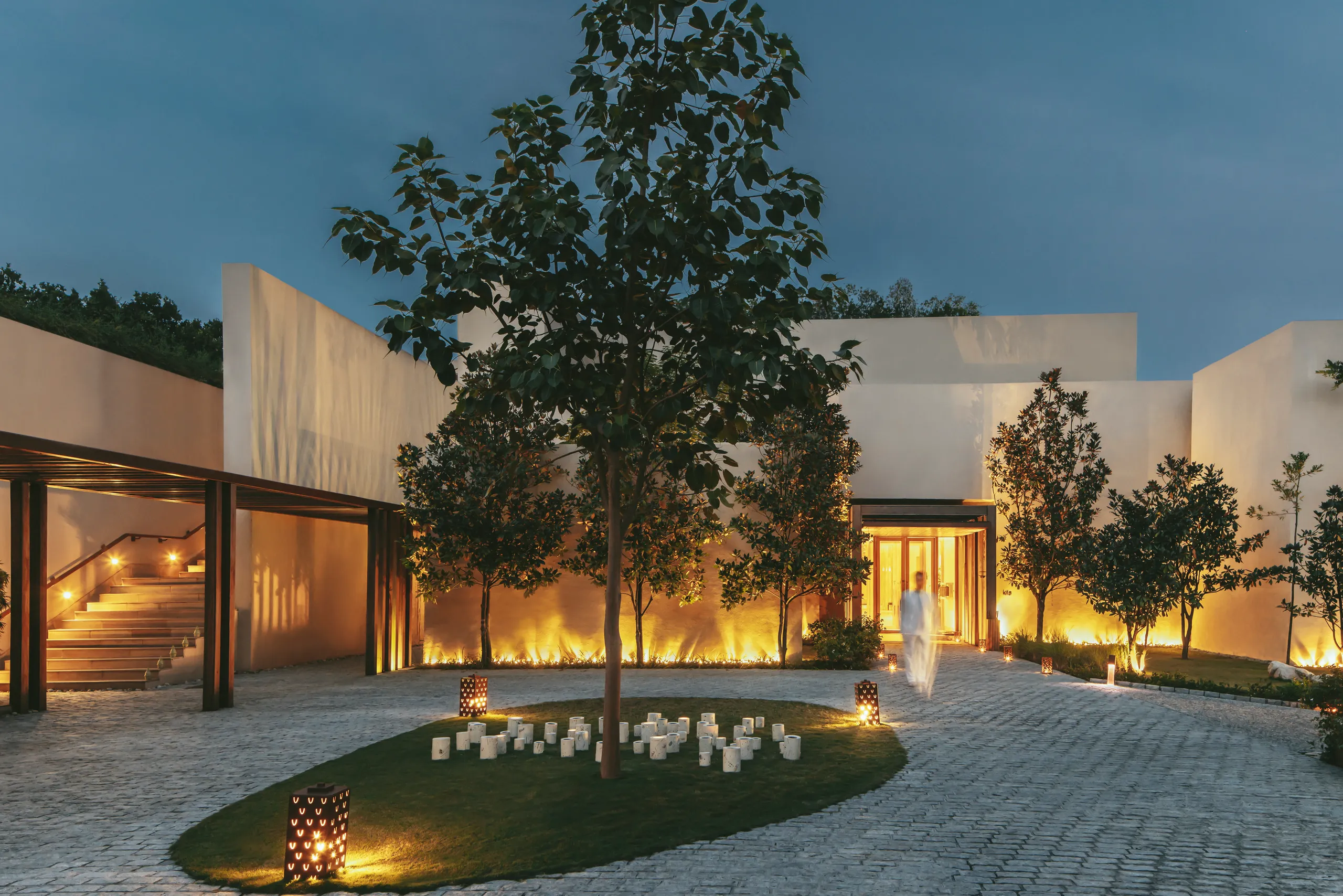
Six Senses Vana, Dehradun, Uttarakhand
Uttarakhand’s monsoon is a specific and extraordinary thing. The foothills of the Himalayas receive the season with a theatrical intensity that the plains cannot approximate: waterfalls appear on slopes that were dry stone two weeks earlier, the sal forests turn a green so saturated it looks artificial, and the quality of the air, cool and rain-washed and carrying the particular oxygen density of high-altitude forest, produces a physical sense of wellbeing that is almost immediately noticeable.
Vana, the wellness retreat outside Dehradun that has built its reputation on a genuinely rigorous and personalised approach to the Ayurveda and healing traditions of the subcontinent, is designed for exactly this kind of weather. The forest setting that surrounds the property comes into full expression during the monsoon, with the walking trails through the sal forest producing encounters with the landscape that the drier months cannot replicate. The retreat’s architecture, all pale stone and warm wood and carefully considered proportions, holds the rain outside without denying it: from within the treatment rooms and the dining spaces and the private suites, the monsoon is a presence rather than an intrusion, and it is a presence that deepens rather than compromises the experience of being here.
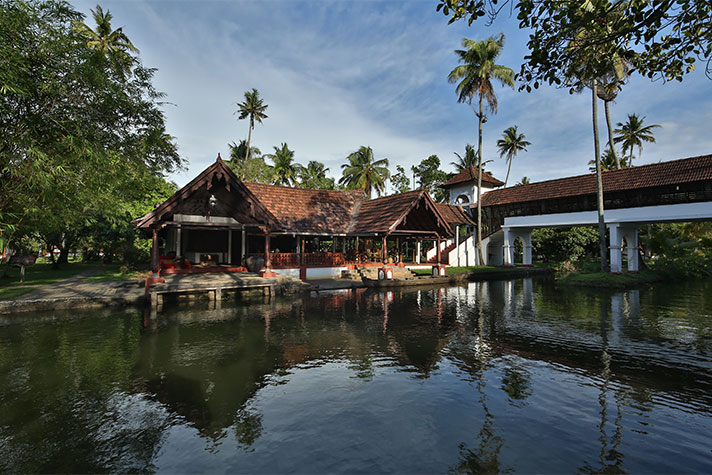
CGH Earth’s Coconut Lagoon, Kumarakom, Kerala
Kerala’s backwaters during the monsoon constitute one of the more extraordinary natural spectacles available on the Indian subcontinent. The paddy fields flood. The waterways widen. The coconut palms bend in configurations that look composed. The light, diffused through cloud and rain, produces a quality of softness that the hard sunshine of December cannot approach.
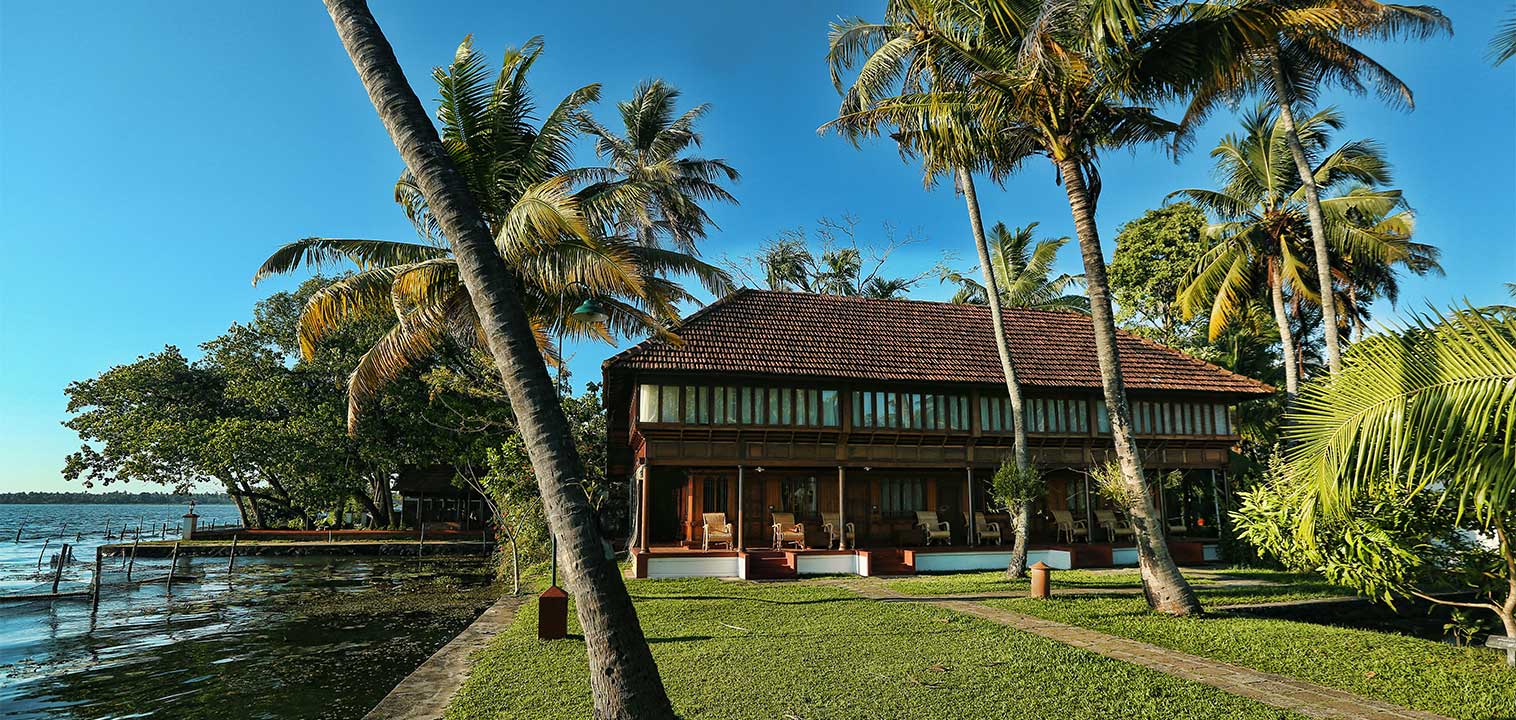
Coconut Lagoon, the CGH Earth property on Vembanad Lake at Kumarakom, is one of the few places in India where the argument for arriving in the rain is stronger than the argument for arriving in any other season. The property, accessible only by boat from the road, has the quality of a place that exists slightly outside normal time, and the monsoon intensifies that quality considerably. The heritage Kerala tharavad houses that form the accommodation have been relocated to the property and restored with the intelligence that CGH Earth brings consistently to its heritage properties, and they are most atmospherically themselves when the rain is drumming on their tiled roofs and the backwaters are visible through every window in their full, swollen, monsoon-season glory.
The Ayurveda programme at Coconut Lagoon is, according to the traditions of the practice itself, most effective during the monsoon, when the humidity opens the pores and the body is considered most receptive to treatment. Whether or not one subscribes to that reasoning, the experience of a properly administered Ayurvedic treatment on a rainy afternoon in a restored Kerala house above a flooded backwater is a sufficiently complete argument for the season on its own terms.
Shakti 360° Leti, Uttarakhand
High in the Kumaon Himalayas, at an altitude that puts the monsoon cloud formations level with rather than above you, Shakti 360° Leti occupies a position that requires a helicopter or a considerable walk to reach and that repays both with the kind of view that most people only encounter in edited photography.
The monsoon version of this stay is for those whose relationship with dramatic weather is one of genuine appetite rather than tolerance. The clouds move through the valley below the property in real time, obscuring and revealing the peaks and ridgelines on a schedule of their own. The rain, when it comes, comes decisively. The intervals between, when the light breaks through and the landscape below is washed and luminous and entirely still, produce the particular quality of silence that high altitude and post-rain atmosphere combine to create.
The six stone and timber cottages that make up the property are, by design, oriented entirely toward the view, and the monsoon gives that view its most dynamic and least predictable expression. The local walking routes, modified for the season, take guests through rhododendron and oak forest in conditions that the dry months cannot replicate. This is not a property that softens the experience of being in the mountains. It is a property that deepens it, and the monsoon is the season in which the depth is most available.
What Monsoon Travel Actually Is
The case for the monsoon hotel edit is ultimately the same as the case for any form of deliberate travel: that the quality of attention you bring to a place determines the quality of what you receive from it, and that the seasons most people avoid are frequently the ones that reward the most careful attention.
The rain in Kerala is not a problem with the Kerala holiday. It is the Kerala holiday. The mist in Coorg is not a disappointment in lieu of the sunshine. It is the thing that makes the coffee estate what it is. The cloud moving through the Kumaon valley is not a visual obstruction. It is, quite simply, one of the more beautiful things available to a person willing to be in the right place to see it.
The properties in this edit exist to make that case not in theory but in practice: as places where the monsoon is not weathered but inhabited, not survived but experienced, not a footnote to the season but the whole point of it.
Follow Best List India for the culture, conversations, and ideas worth paying attention to.