
There is a version of the frequent traveller that the airline industry’s marketing has spent decades constructing: the effortlessly composed professional who moves between time zones without visible consequence, who arrives in Tokyo looking like they left London an hour ago, who has somehow resolved the fundamental biological contradiction of being a human body asked to perform across twelve hours of time difference as though time zones were a matter of administrative inconvenience rather than physiological reality.
That person does not exist. What exists instead is a growing community of serious travellers who have accepted the physical costs of frequent movement and built, around that acceptance, an increasingly sophisticated set of recovery rituals that make the cost manageable and the experience, eventually, sustainable.
The wellness concierge is not a hotel amenity. It is a mindset: the understanding that the body which travels is an instrument requiring as much attention as the schedule it is being asked to keep. Here is what the most considered frequent travellers have worked out, and exactly where they are going to do it.
The Jet Lag Reckoning
Jet lag is so commonplace in the vocabulary of frequent travel that most people have stopped taking it seriously as a physiological event, which is precisely why it continues to undermine them. The disruption of the circadian rhythm produced by crossing multiple time zones is not simply tiredness. It is a systemic dysregulation of the body’s most fundamental biological clock, affecting sleep, digestion, cognitive function, immune response, and emotional regulation simultaneously.
The travellers managing it most effectively are the ones who have stopped treating jet lag as something to push through and started treating it as something to prepare for. Light is the most powerful tool available: strategic exposure to bright light in the morning hours of the destination time zone, and deliberate avoidance of it in the evening, accelerates adaptation with a reliability that no supplement has matched.
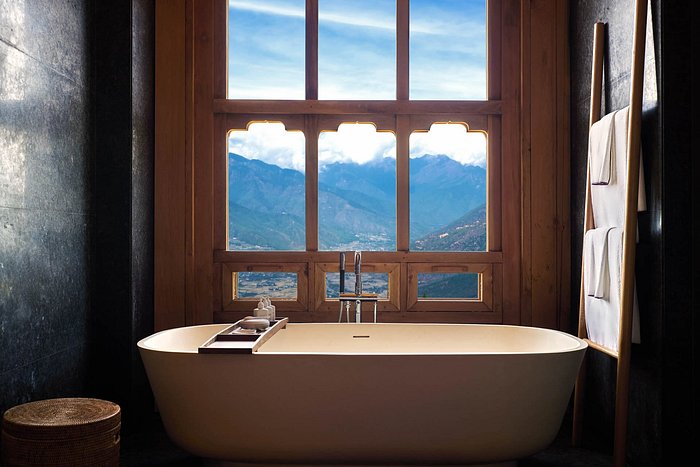
Six Senses Bhutan
Where to reset: Six Senses properties, which operate across India, Bhutan, the Maldives, and beyond, have built a proprietary jet lag programme that combines circadian rhythm assessment with light therapy, sleep coaching, and targeted nutrition to accelerate adaptation across time zones. Guests receive a personalised protocol on arrival, which is the only approach to jet lag that the research consistently supports.
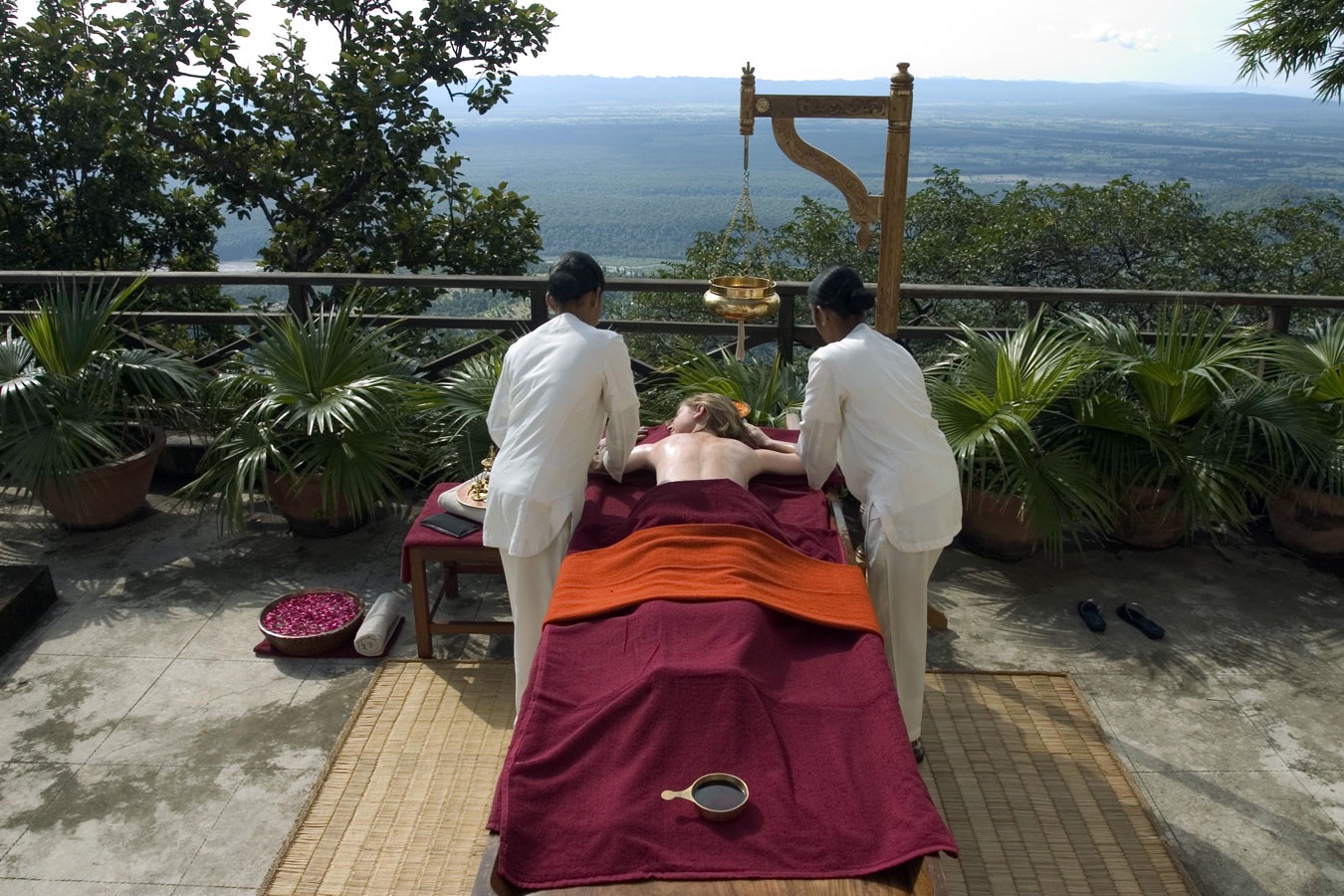
Ananda in the Himalayas
Ananda in the Himalayas, the award-winning destination spa in Uttarakhand, offers its Panchakarma Detox programme specifically for the traveller whose circadian system has been disrupted by extended international movement, combining dietary intervention with Ayurvedic treatment to address the systemic rather than symptomatic dimension of the problem.
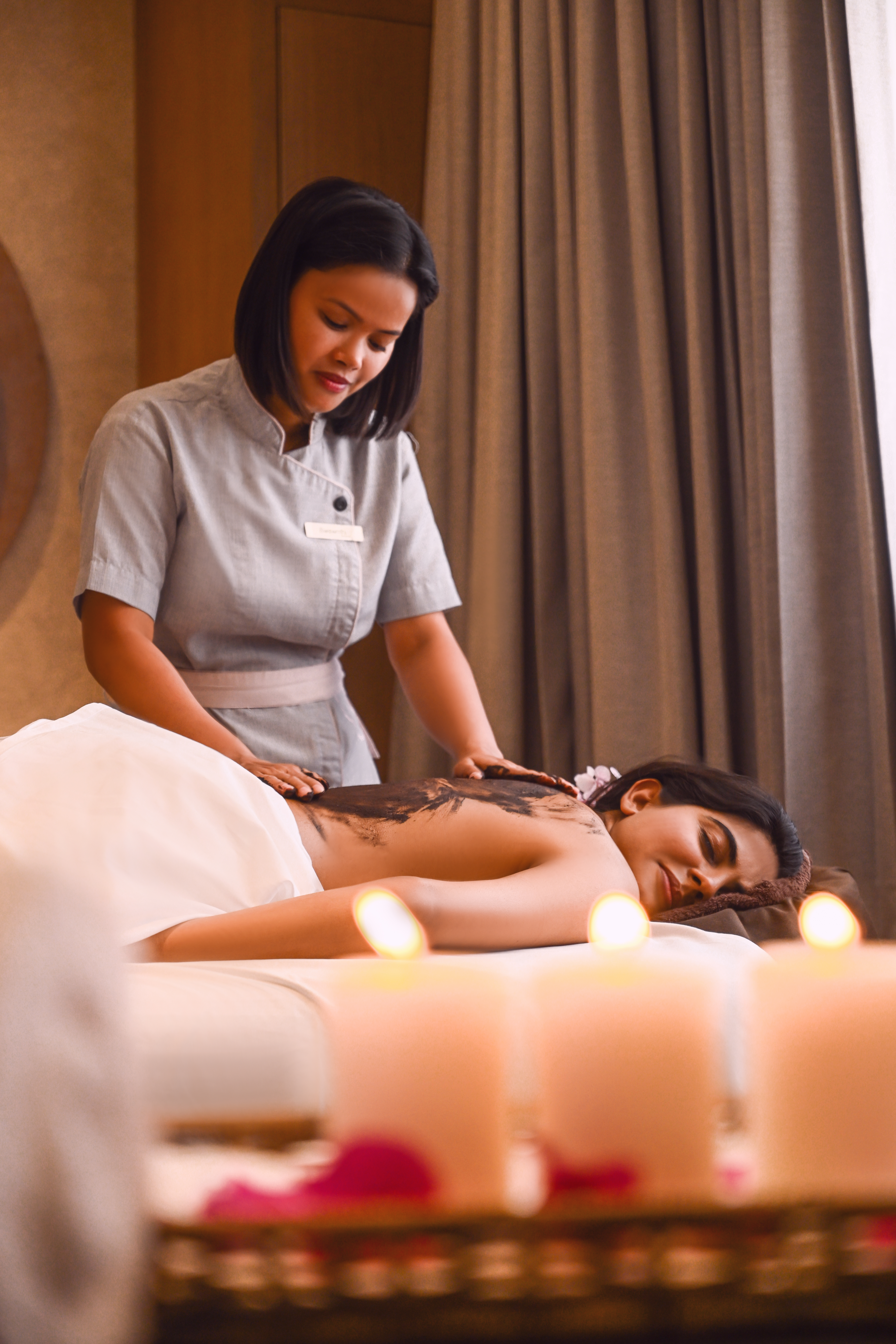
Mulberry Shades Bengaluru Nandi Hills
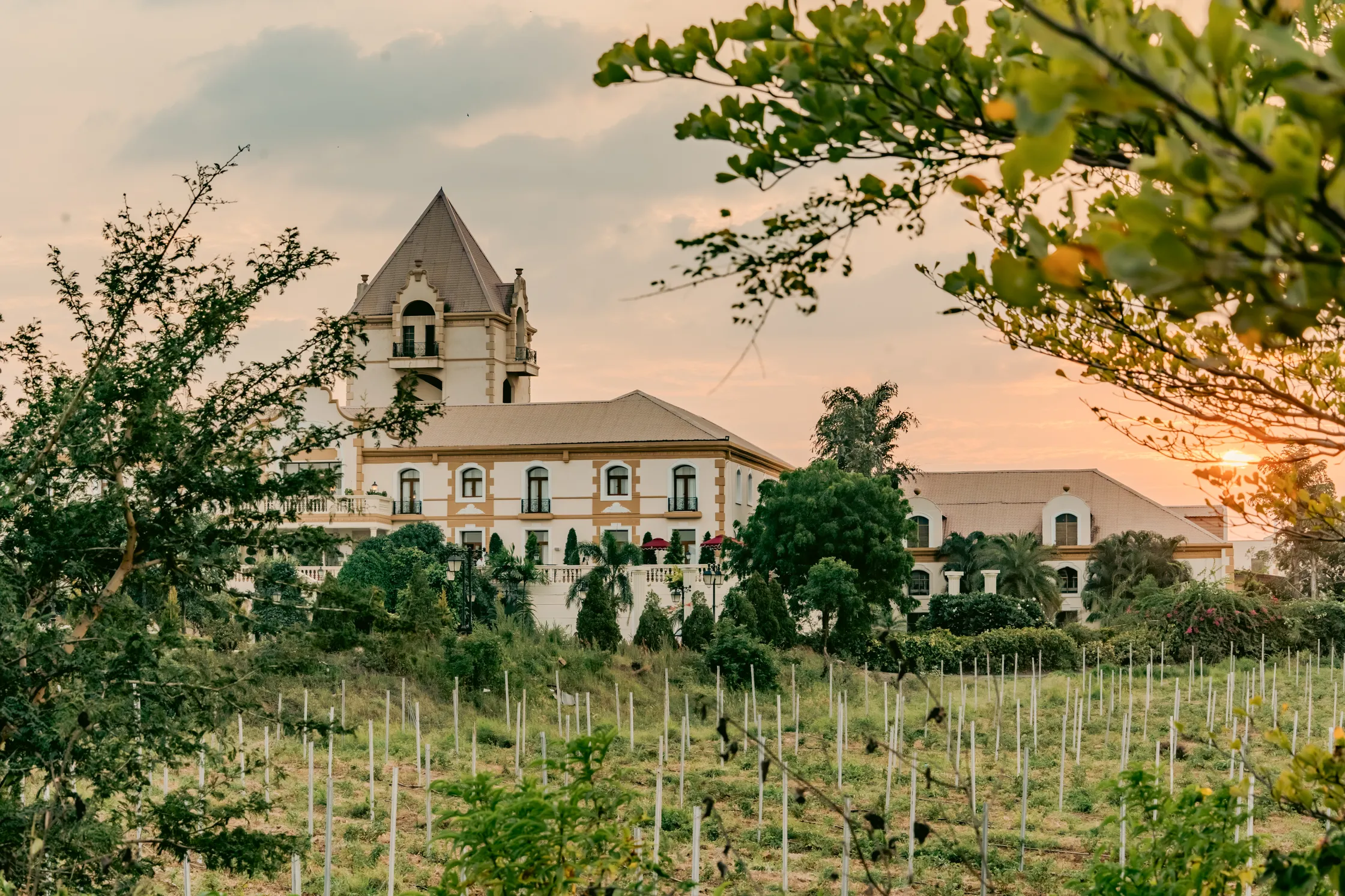
Just 30 minutes from Kempegowda International Airport, Mulberry Shades Bengaluru Nandi Hills, A Tribute Portfolio Resort, reimagines wellness as a journey, not a single spa appointment, making it a convenient boutique escape for frequent travellers. At its heart is Ksema Spa, offering Turkish and Moroccan Hammam rituals that blend steam, cleansing therapies and hydrothermal experiences to restore the body after long flights and hectic schedules, while the journey extends into the resort’s natural surroundings, with morning Vinyasa and Hatha Yoga on the terrace overlooking Nandi Hills, and Yin Yoga, meditation, Gua Sha and sound bath sessions inviting guests to slow down, rooted in mindfulness that makes Mulberry Shades a sanctuary where travellers leave genuinely reset, not just well-rested.
The Sleep Architecture
Sleep in transit is not the same as sleep in a bed, and the traveller who has spent fourteen hours convincing themselves that their business class flat bed constitutes rest is operating under a misapprehension that will catch up with them approximately forty-eight hours after landing.
The Ayurvedic tradition, which has understood the relationship between the nervous system and sleep quality for considerably longer than Western wellness culture has been paying attention, prescribes specific interventions for the traveller whose vata, the physiological constitution associated with movement, air, and instability, has been chronically aggravated by excessive travel. The result is a nervous system that has forgotten how to stop preparing for the next thing, and the rituals that address it are those that create the physiological conditions for genuine rest rather than simply its simulation.
Where to reset: Vana Retreat in Dehradun, which holds the World’s Best Wellness Retreat and operates one of the most rigorously evidence-based wellness programmes in Asia, offers a Sleep Restoration programme that combines Ayurvedic Shirodhara, in which warm oil is poured in a continuous stream over the forehead to calm the nervous system, with Yoga Nidra, a guided body scan practice that produces the physiological markers of deep sleep in a waking state. The combination, applied over a minimum three-night stay, produces sleep quality improvements that guests consistently report as the most significant restoration available to them.
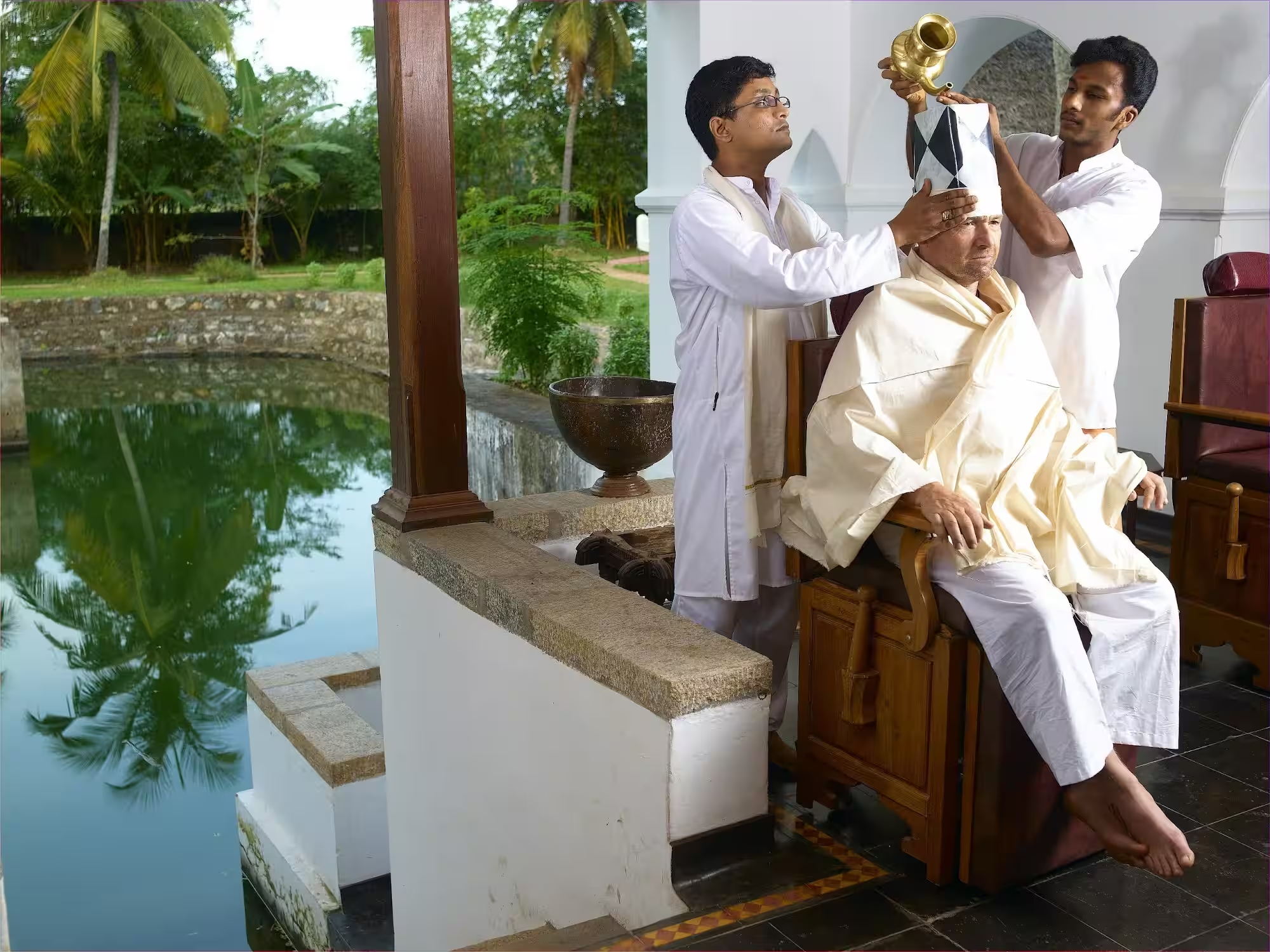
Kalari Kovilakom in Kollengode
Kalari Kovilakom in Kollengode, Kerala, the palace retreat that requires a minimum nine-night commitment and prohibits devices in treatment spaces, builds its entire programme around the Ayurvedic principle that genuine healing requires genuine withdrawal from stimulation, and its sleep restoration results reflect that seriousness.
The Skin Conversation
Cabin air at thirty-five thousand feet has a humidity level of approximately ten to fifteen percent, lower than the Sahara Desert on a dry day. The skin of the frequent traveller is being subjected, on a regular basis, to conditions of dehydration that its biology was not designed to manage, and most in-flight skincare routines are inadequate to the scale of that challenge.
Post-flight, the priority is barrier repair alongside rehydration: the skin’s protective function is compromised by the combination of dehydration, recycled air, and the immune challenges of a crowded aircraft, and the ritual that addresses it most effectively is the one that supports the barrier rather than simply the surface.

Taj Lake Palace Spa
Where to reset: The spa at Taj Lake Palace in Udaipur, which has received the World Luxury Spa Award for best hotel spa in India, offers a Jal Mahal Facial that draws from traditional Indian botanical traditions to address the specific pattern of dehydration and barrier disruption produced by long-haul travel, using cold-pressed oils and indigenous plant extracts with a specificity of ingredient intelligence that generic luxury spa facials rarely achieve.

ESPA at Resorts World Sentosa
For the traveller transiting through Singapore, the ESPA at Resorts World Sentosa has built its Jet Lag Recovery Facial around the specific needs of the long-haul traveller, combining lymphatic drainage with deep hydration and a heat therapy component that accelerates the absorption of actives in a way that standard facial massage cannot replicate. The hammam tradition, most accessible at the award-winning spa at Armani Hotel Dubai, with its systematic removal of accumulated dead skin followed by warm oil application, is one of the most effective post-flight skin reset rituals available to the traveller passing through the Gulf.
The Body That Travels
The musculoskeletal consequences of frequent travel are less discussed than jet lag or skin dehydration but are, for the traveller who moves through airports and aircraft and hotel rooms with sufficient regularity, equally significant. The combination of extended sitting, carrying luggage, sleeping in unfamiliar beds, and the postural compromises of long-haul flying produces a pattern of chronic tension and compression that accumulates across trips in ways that become noticeable as stiffness, reduced range of motion, and the particular physical unease that frequent travellers often describe as feeling wrong in their body after a long trip.
Where to reset: Ananda in the Himalayas, which has held the World’s Best Destination Spa designation from Travel and Leisure for multiple consecutive years, offers a Stress and Burnout Programme specifically designed for the high-frequency traveller, combining daily Ayurvedic massage with targeted yoga therapy and hydrotherapy to address what the programme identifies as the three-part damage of frequent travel: structural, hormonal, and neurological.

Kairali Ayurvedic Health Village in Palakkad, Kerala
The Kairali Ayurvedic Health Village in Palakkad, Kerala, which has treated guests from over seventy countries and won awards from the Ministry of Tourism for excellence in wellness tourism, specialises in the Pizhichil treatment, a four-handed warm oil pour applied to the full body for up to an hour, which produces a depth of muscular release that conventional massage does not approach. For the traveller whose schedule allows only a single treatment rather than a programme, the ninety-minute Abhyanga at any serious Ayurvedic spa, in which warm sesame oil is applied with long strokes specifically calibrated for vata pacification, is the single most effective physical recovery intervention available within a transit stay.
The Mental Recovery
The least discussed and most significant cost of frequent travel is the cognitive and emotional one: the accumulation of minor decisions, navigational demands, social performances, and environmental novelties that depletes the mental resources of the frequent traveller in ways that are difficult to articulate but immediately recognisable in the form of reduced patience, impaired creativity, and the particular flatness that descends after a certain number of consecutive travel days.
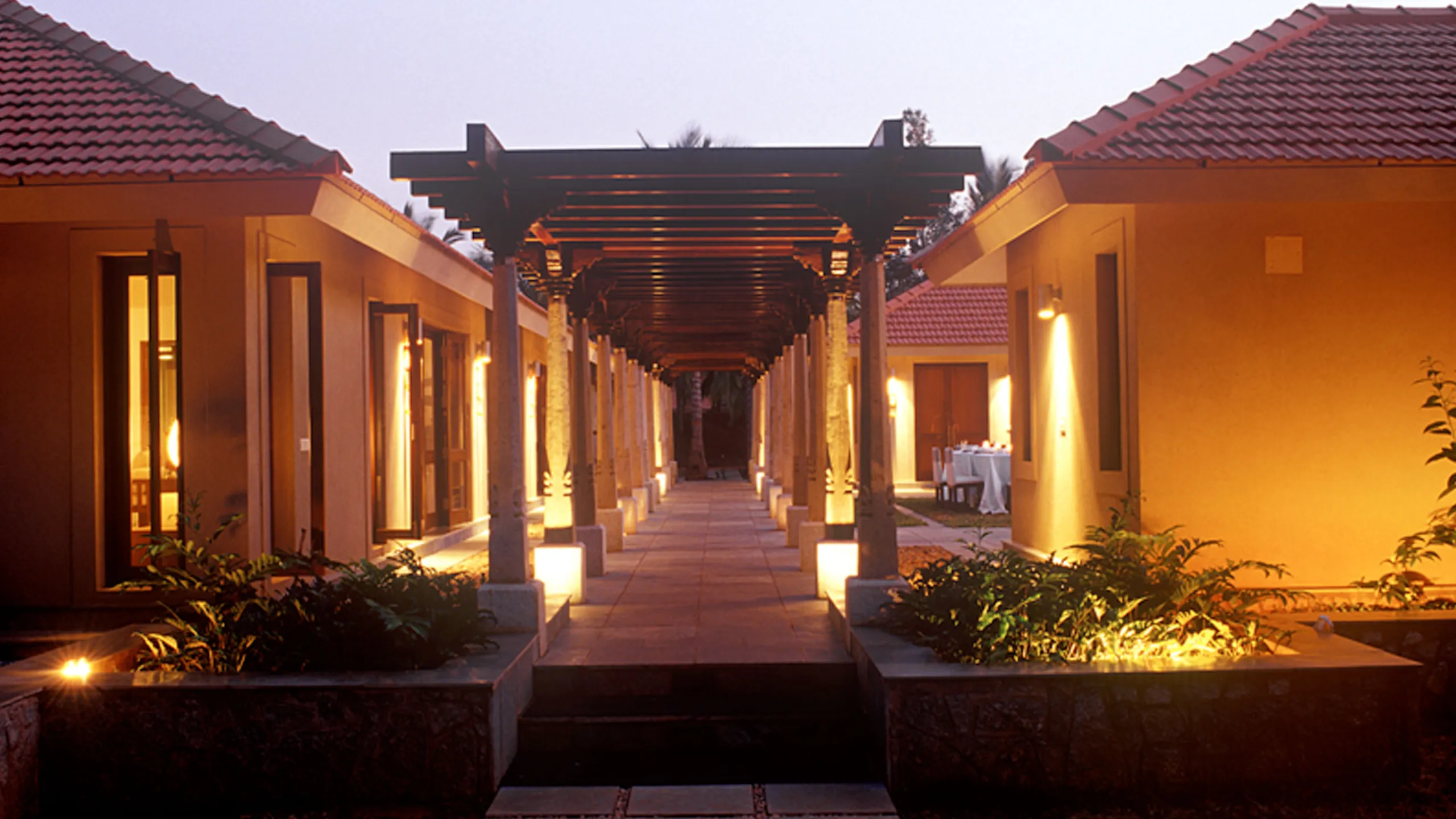
Shreyas Retreat near Bengaluru
Where to reset: Shreyas Retreat near Bengaluru, which holds the World’s Best Yoga Retreat designation from Condé Nast Traveller and operates on a philosophy of digital minimalism combined with intensive pranayama and meditation practice, offers a Mind Detox Programme specifically structured for the executive traveller whose cognitive fatigue has reached the point where more information and more stimulation cannot resolve it. The programme’s defining feature is what it removes rather than what it adds: no devices, no schedules, no social obligations, and a structured sequence of breathwork, meditation, and silence that allows the nervous system to genuinely discharge accumulated arousal rather than simply suppress it.
Vana’s Mind programme, which combines clinical psychology consultation with contemplative practice and somatic work, is the most comprehensive offering available in India for the frequent traveller whose mental fatigue has crossed the threshold from tiredness into something that requires more than a holiday to address. The retreat’s policy of assessing each guest’s starting point before prescribing any intervention means that the programme is built around what the individual actually needs rather than a wellness menu applied uniformly regardless of the guest’s specific condition.
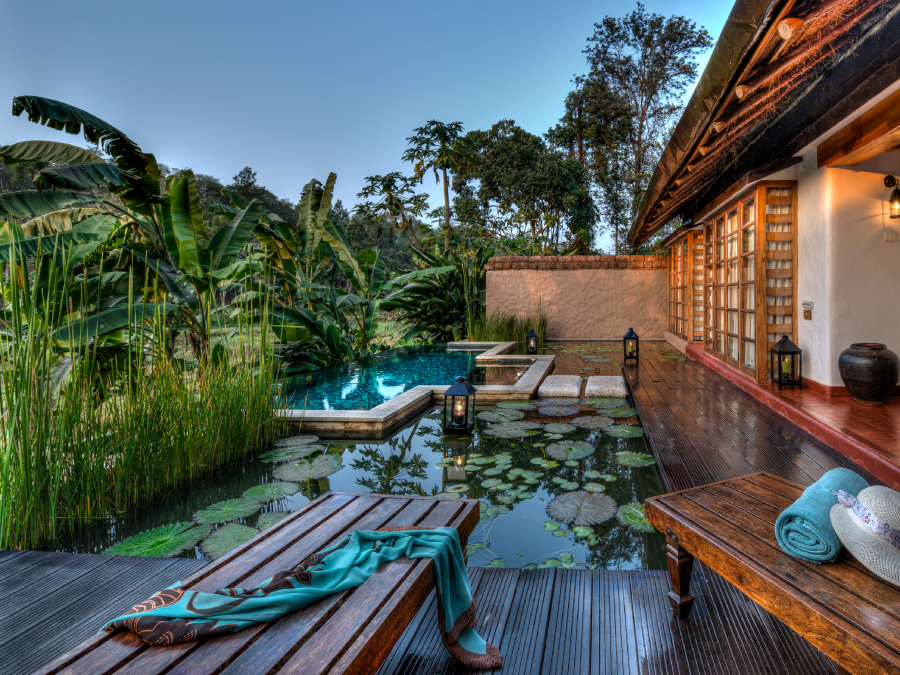
Evolve Back in Coorg
For the traveller whose schedule does not permit a retreat stay, the Forest Bathing walk available at properties like The Serai in Bandipur or Evolve Back in Coorg, guided immersion in a forested environment with specific attention to sensory engagement rather than physical exertion, produces measurable reductions in cortisol and blood pressure in sessions as short as ninety minutes, and represents the most accessible entry point into genuine mental recovery available without a programme commitment.
The Recovery Kit: Five Products Worth Travelling With
The rituals above require the right destinations and the right time. These five products require only a carry-on.

Kama Ayurveda’s Abhyanga Massage Oil is the most portable version of the full-body oil ritual that every serious Ayurvedic spa builds its recovery programme around. The cold-pressed sesame and herb-infused formula, applied with long strokes to the full body before a shower, addresses vata aggravation, the physiological state of excess movement and instability that Ayurveda identifies as the root cause of travel fatigue, with a directness that any amount of in-flight moisturiser cannot approach. This is the product that the traveller who has tried everything and still felt wrong after a long trip has usually not yet tried.

Forest Essentials’ Soundarya Radiance Cream solves the post-flight skin problem more effectively than most dedicated recovery products, combining 24-carat gold, pearl, and a roster of Ayurvedic botanicals in a formula dense enough to repair barrier function overnight. Applied as the last step of a stripped-back skincare routine on the first night in a new location, it produces the skin that should have arrived with you.
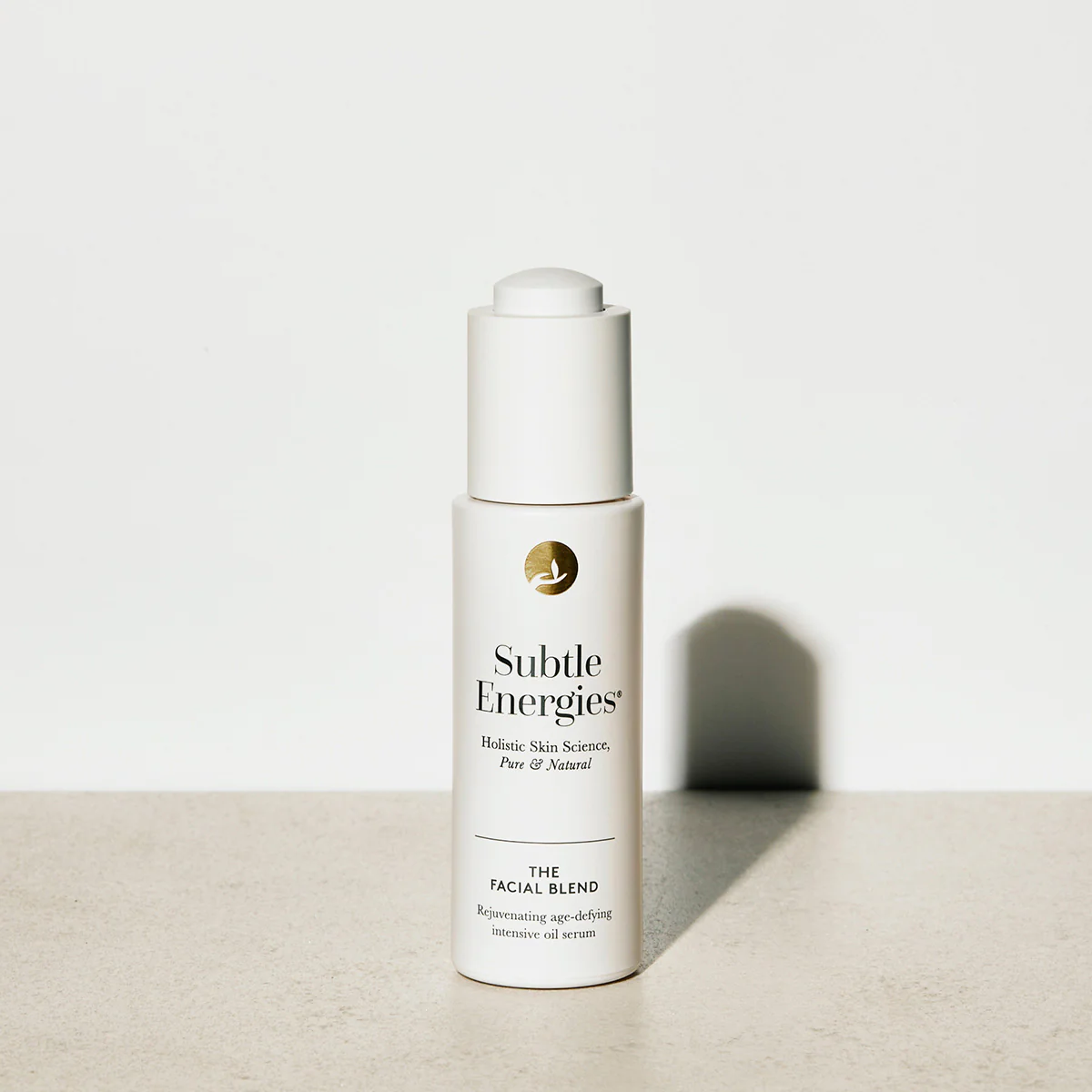
Subtle Energies’ Signature Facial Blend has become one of the more quietly influential products in the Indian luxury wellness market, built around a formulation philosophy that draws from Ayurvedic tradition while operating to the quality standards of European luxury skincare. The Rose and Jasmine variant, which addresses the specific pattern of sensitivity and dehydration produced by cabin air, is the facial oil that the most considered travellers reach for in the first twenty-four hours after a long-haul flight, when the skin needs something that works with its compromised state rather than asking more of it.

Shankara’s Deep Pore Cleansing Clay Mask addresses what accumulates on the skin during transit with a specificity of formulation that the generic cleansing products available at most hotel spas cannot match. The combination of kaolin clay, neem, and turmeric draws out what recycled air and environmental pollutants deposit without stripping the barrier that the cabin has already compromised. Applied for ten minutes on arrival, before the rest of the recovery routine, it resets the skin’s surface in a way that makes everything applied afterward more effective.

Long journeys, changing climates and extended hours in air-conditioned spaces can leave skin feeling dry and looking tired. Oriflame’s Waunt Super Recover Whipped Day Cream is designed to replenish and moisturise the skin for up to 24 hours with its plush, whipped texture that melts into the skin for an instant moisture boost. Formulated with HydroSphere Technology, Oak extract and responsibly sourced Omega-9 Algae Oil, it helps soothe and calm the skin while delivering deep, long-lasting hydration. The vegan formula also provides a primer-like blurring effect that instantly covers red skin tones, helping create a more even-looking complexion while preparing the skin for makeup or leaving it looking naturally refreshed.
The Integrated Recovery
What distinguishes the frequent traveller who manages their wellbeing effectively from the one who is perpetually recovering is not the quality of their intentions but the systematisation of their rituals. The recovery practices described here are not individually complex. Collectively, they constitute a system: a set of interventions applied consistently across the different phases of the travel cycle, from preparation through transit to arrival, that maintains the body and mind at a level of function that the travel schedule alone would erode.
The properties and programmes that support this system most effectively share a quality that the wellness industry describes in various ways but that amounts to the same thing: the understanding that genuine recovery is not a service to be delivered but a process to be supported, and that the most luxurious thing a wellness property can offer is not the most elaborate treatment menu but the most intelligent one.
That intelligence, applied to the specific and well-documented damage that frequent travel produces, is what the wellness concierge actually provides. Not the promise of effortlessness, but the tools to make the effort sustainable.
Follow Best List India for the culture, conversations, and ideas worth paying attention to.