There are festivals with complicated dress codes, occasions that require research and references and a working knowledge of regional embroidery traditions before the wardrobe question can be approached with any confidence. And then there is Onam, which gives you two colours and trusts you to do something beautiful with them.
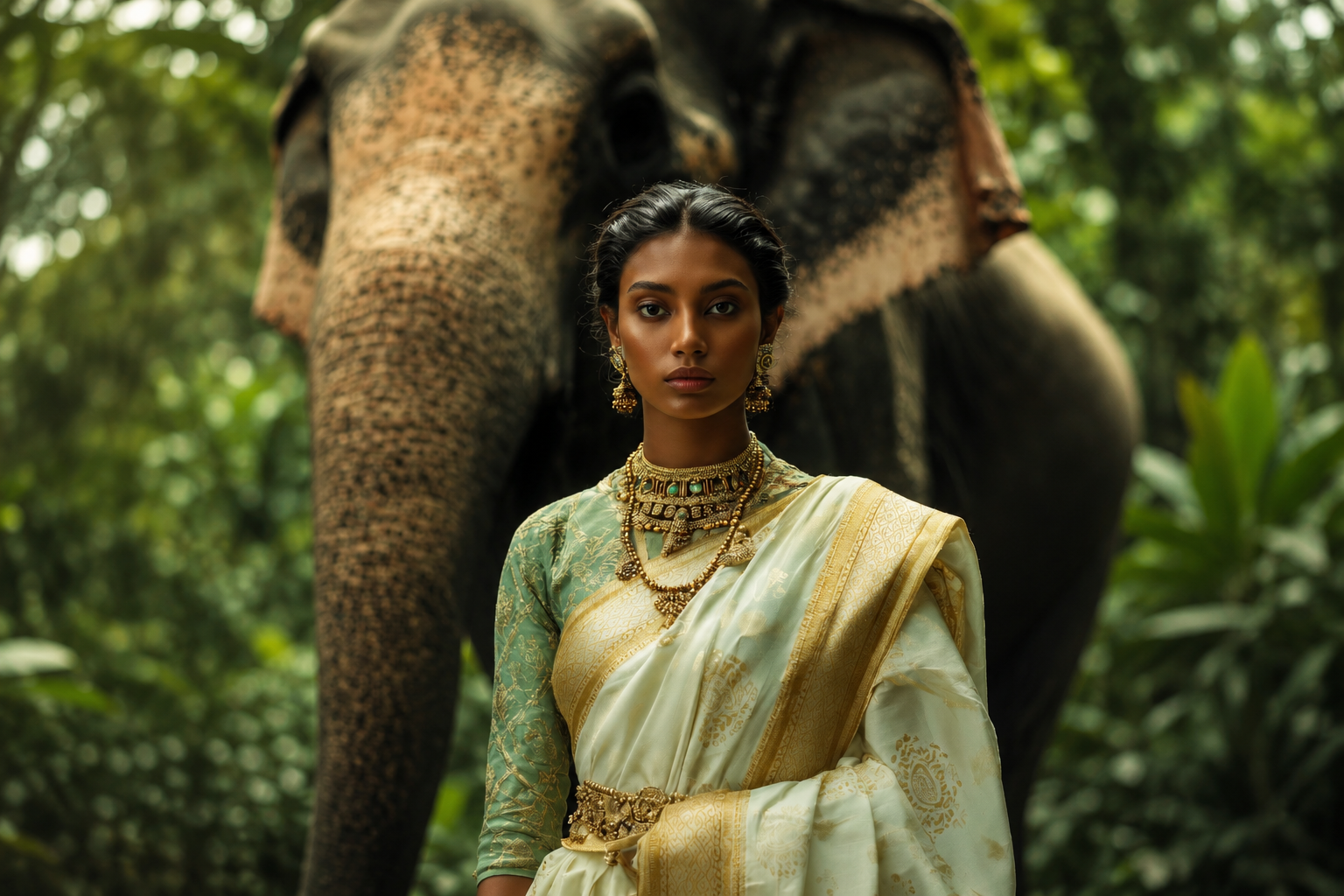
White and gold. Kasavu and cream. The palette of Kerala’s most beloved festival is, on the surface, the simplest brief in Indian occasion dressing. What makes it endlessly interesting is what happens within that simplicity: the quality of the weave, the weight of the gold border, the way the fabric falls, the specific ivory that flatters rather than washes out, the zari that catches the light in a room full of diyas without overwhelming it. Onam dressing is an exercise in the proposition that constraints produce creativity, and the people who dress for it best are the ones who have understood that working within a tradition is not a limitation but a framework worth taking seriously.
In 2026, that framework is being worked with more sophistication than perhaps any previous generation has brought to it.
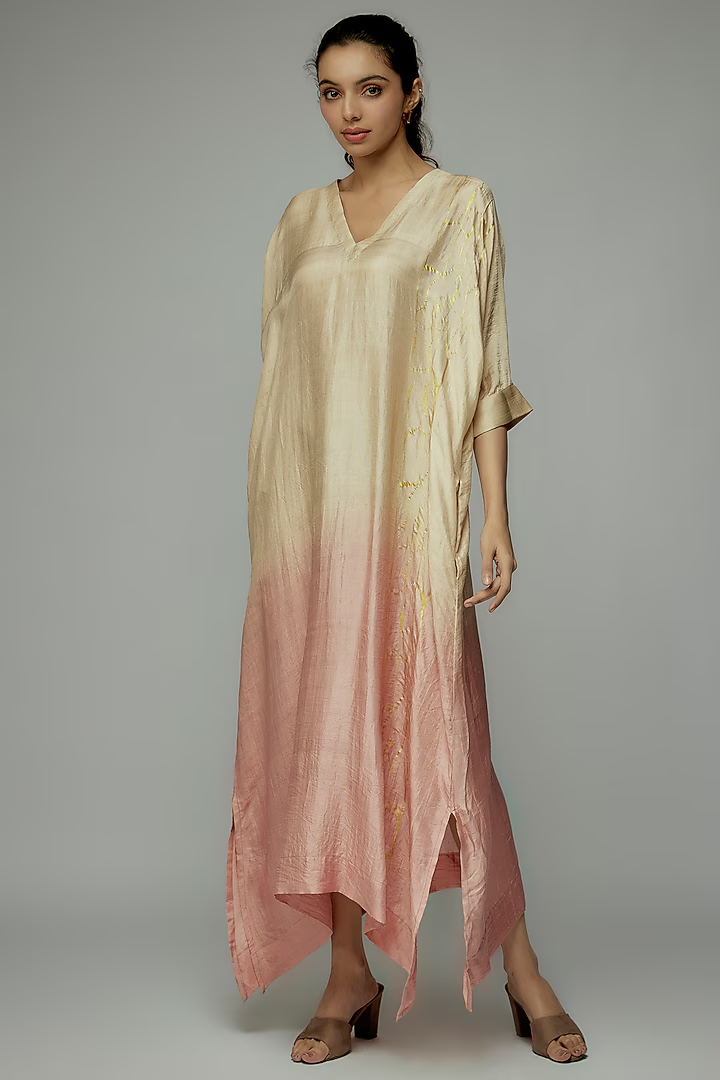
Inkpickle Gold Pure Mulberry Silk Handspun Screen Printed Ombre Kimono Dress
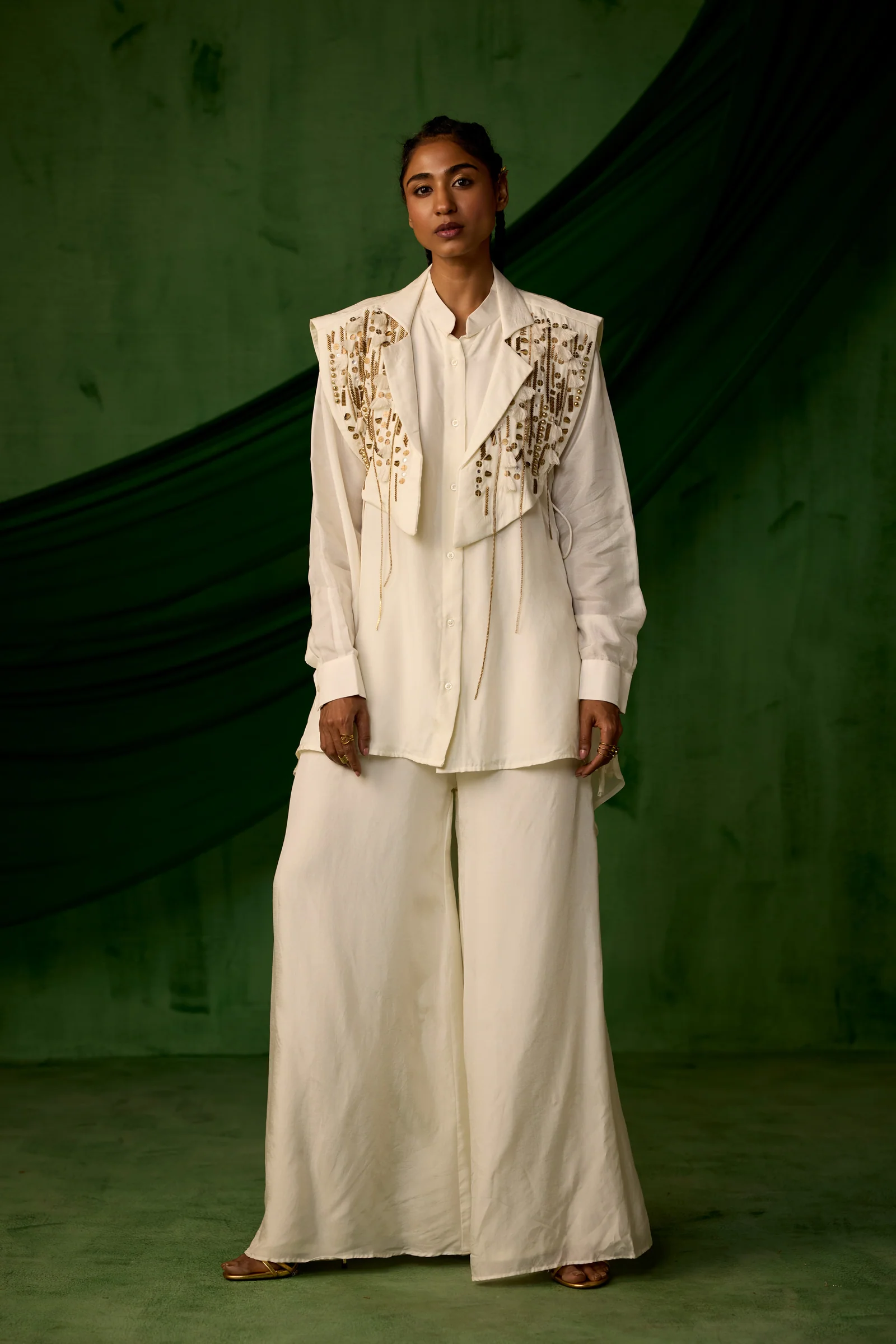
Pratap Sons Heritage Classic White Embellished Chinon Silk Co-Ord Set
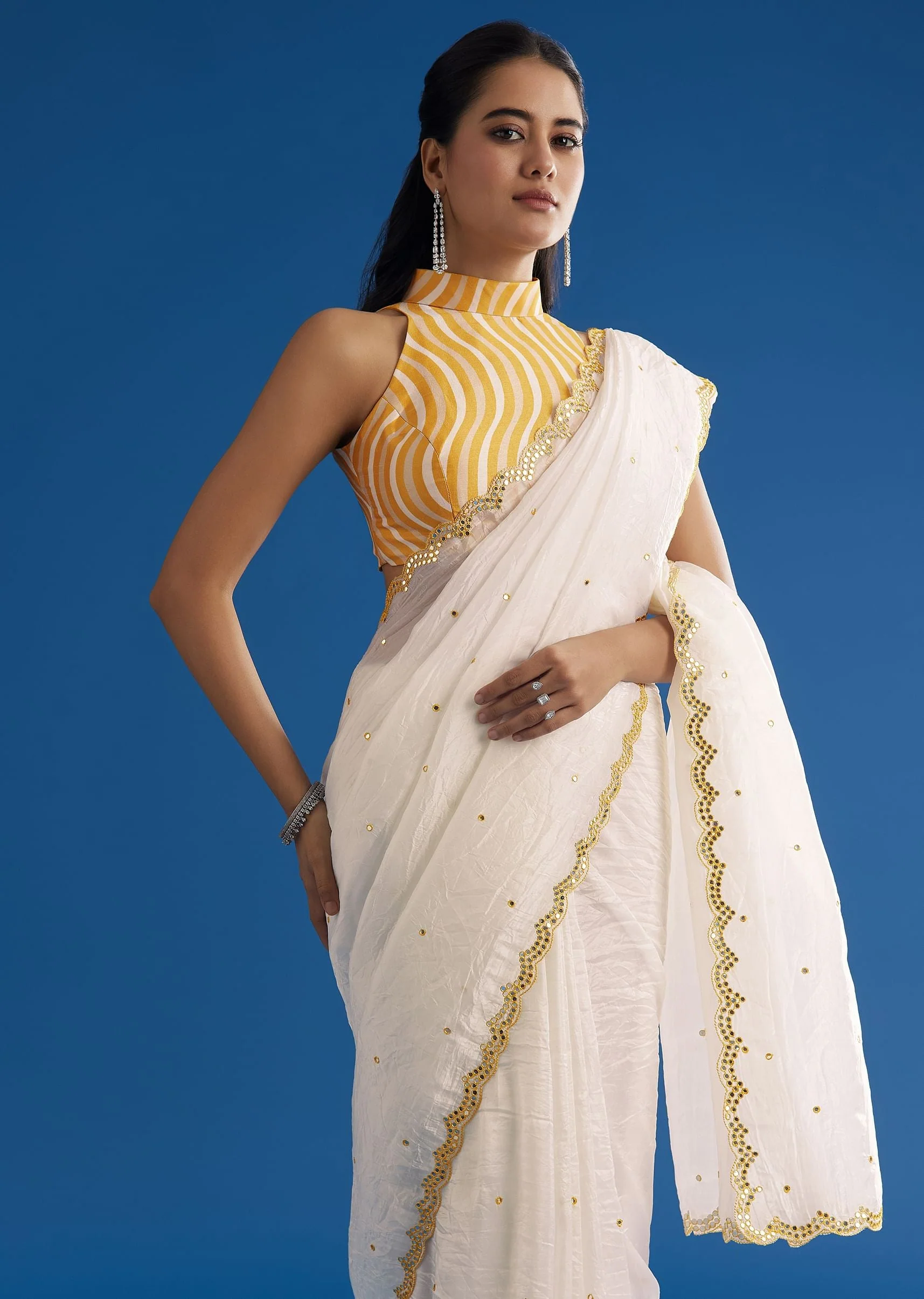
KALKI White Crepe Silk Saree With Mirror Scallop Contrast Border And Yellow Blouse
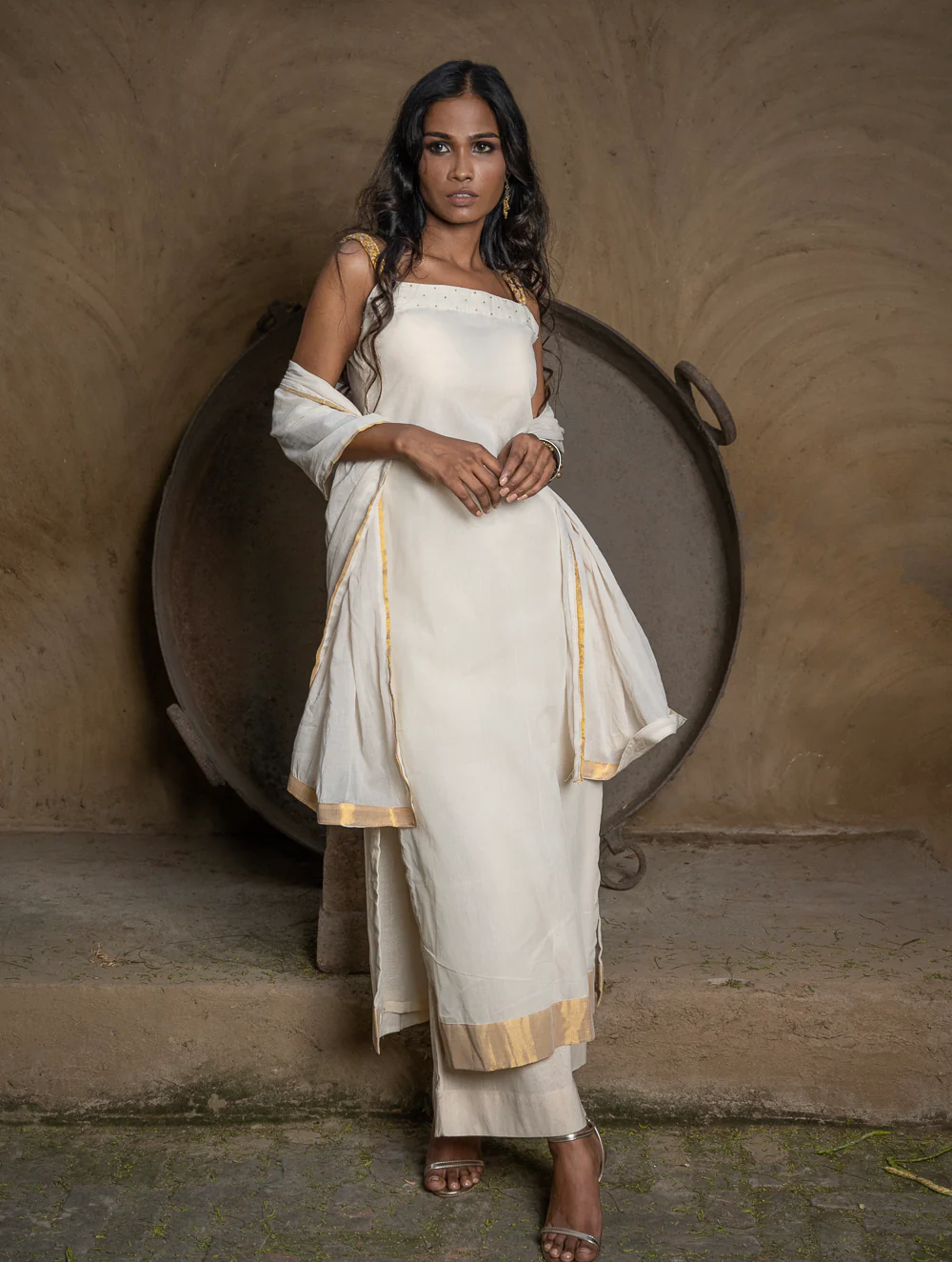
The India Craft House Kerala Kasavu Cotton & Zari Ethnic Set
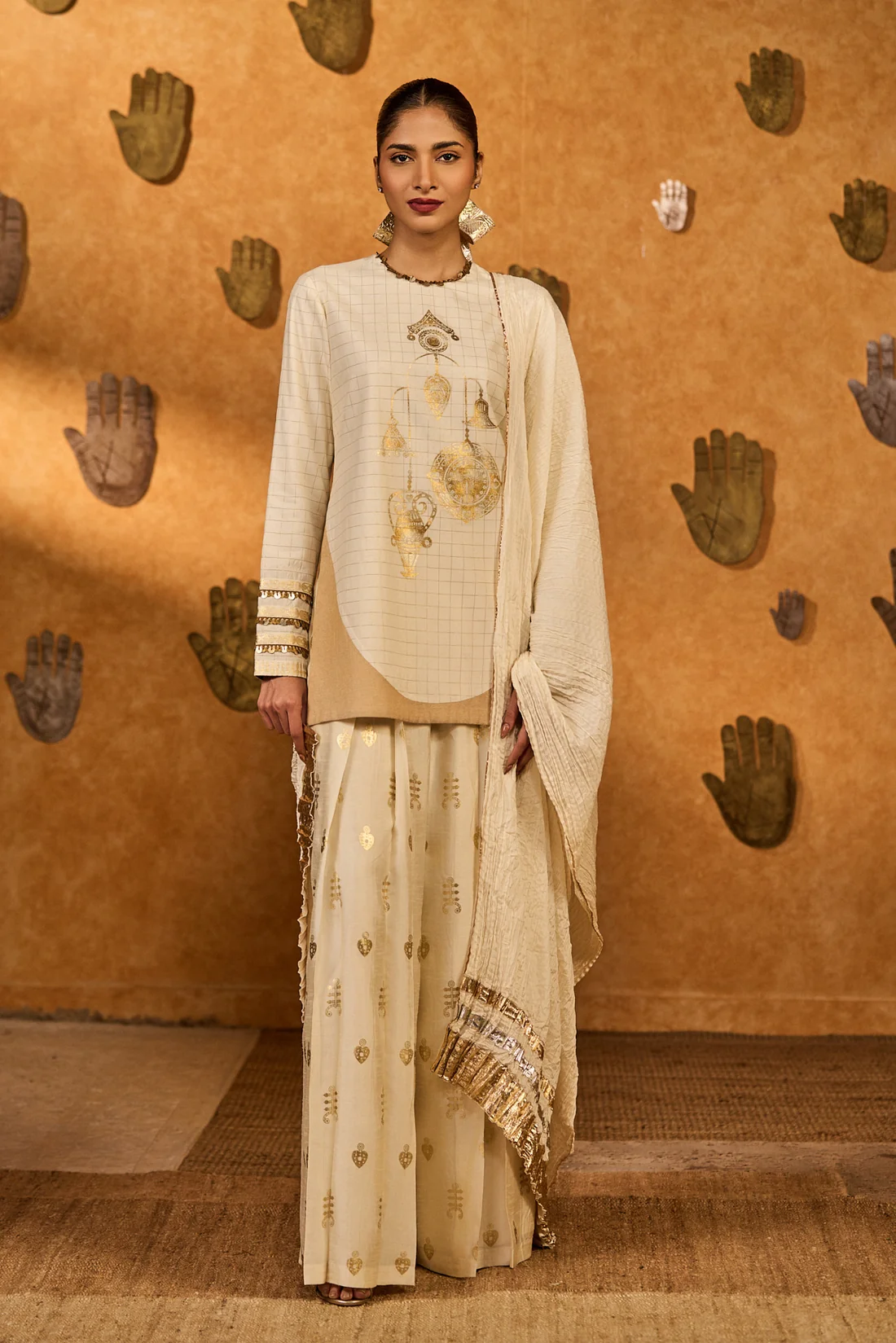
Masaba Ivory Trinklet Tree Set
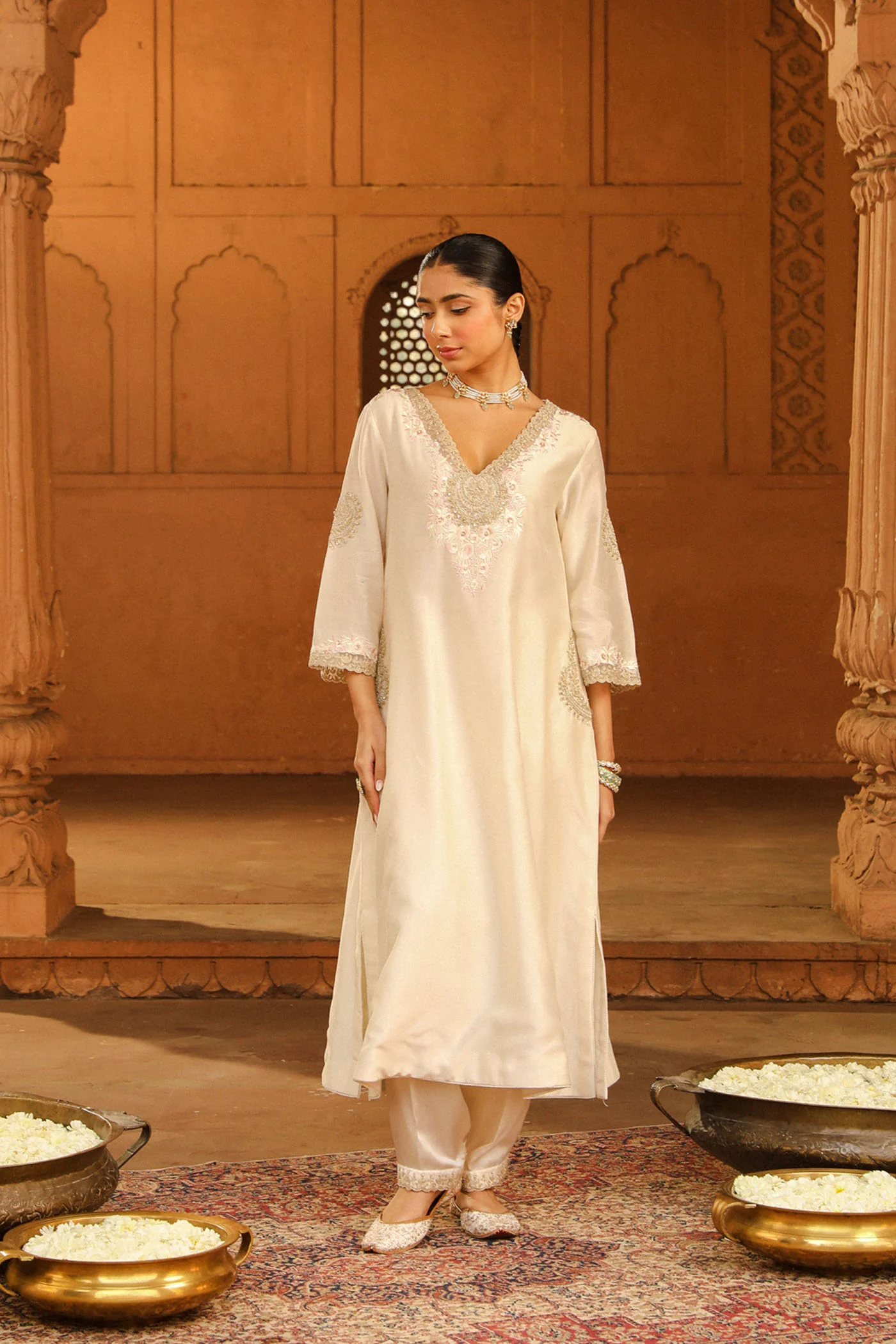
Sheetal Batra Akira Daisy Ivory Long Choga With Salwar
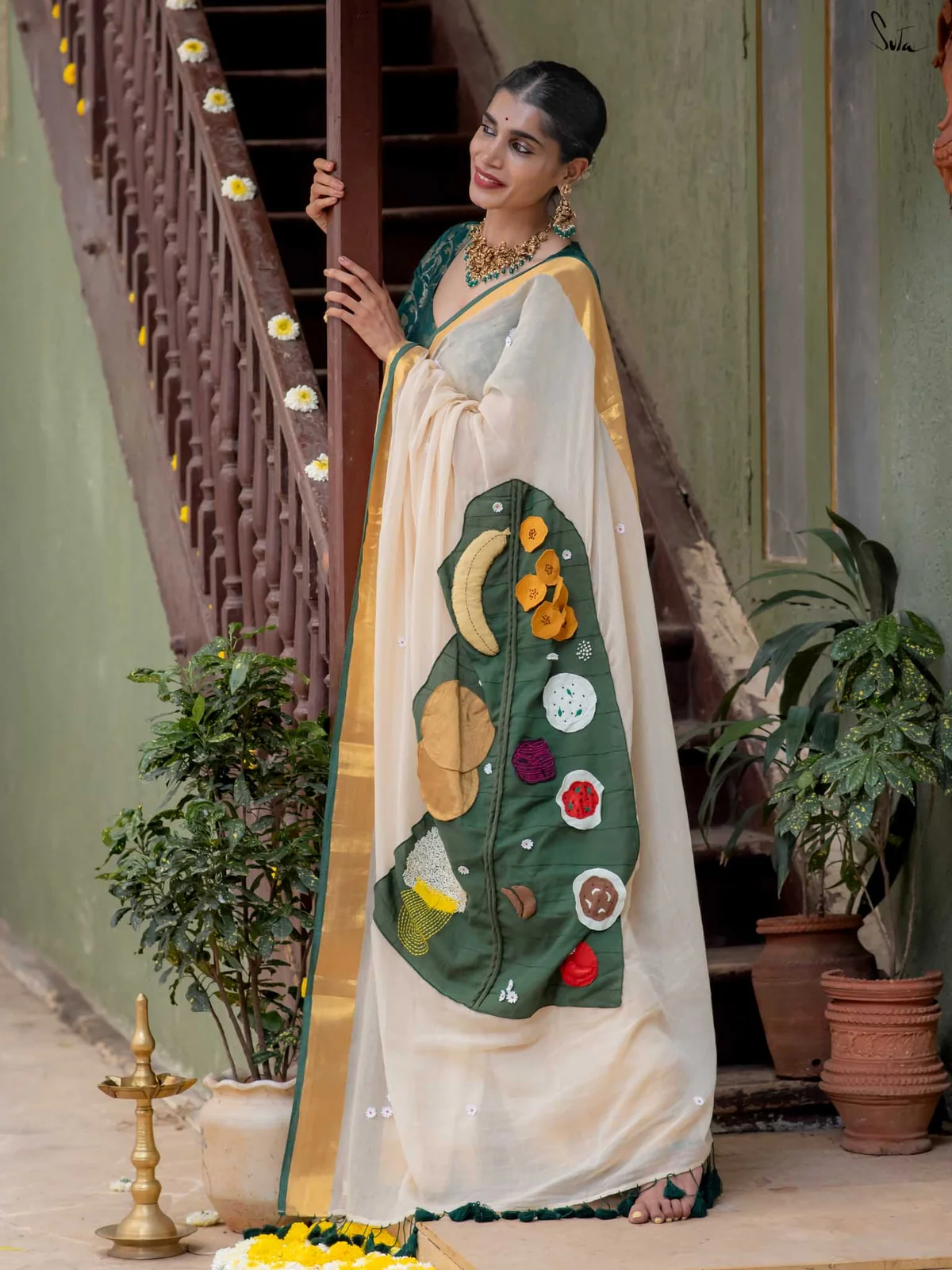
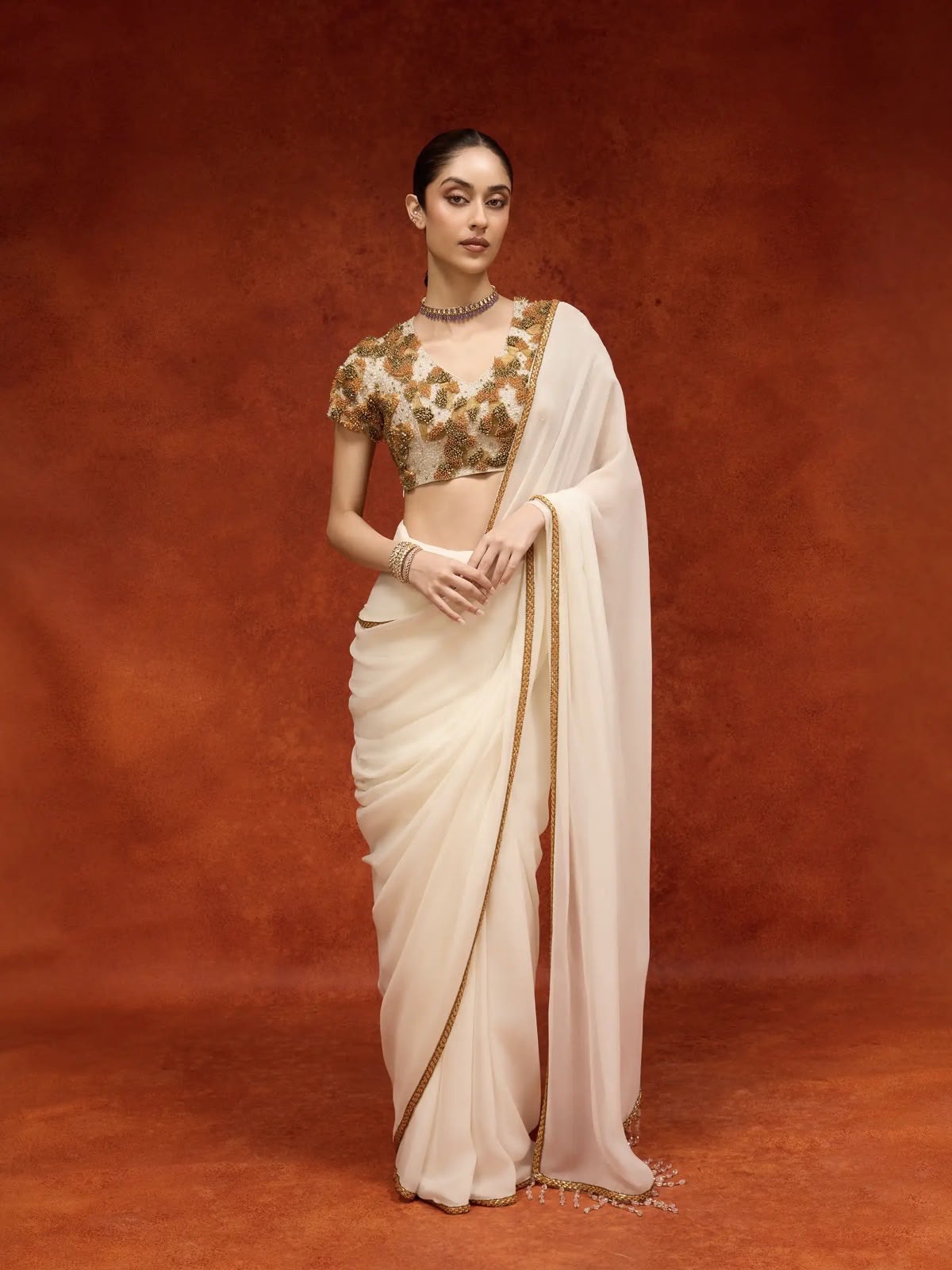
Mrunal Khimji Saree with Embroidered Blouse
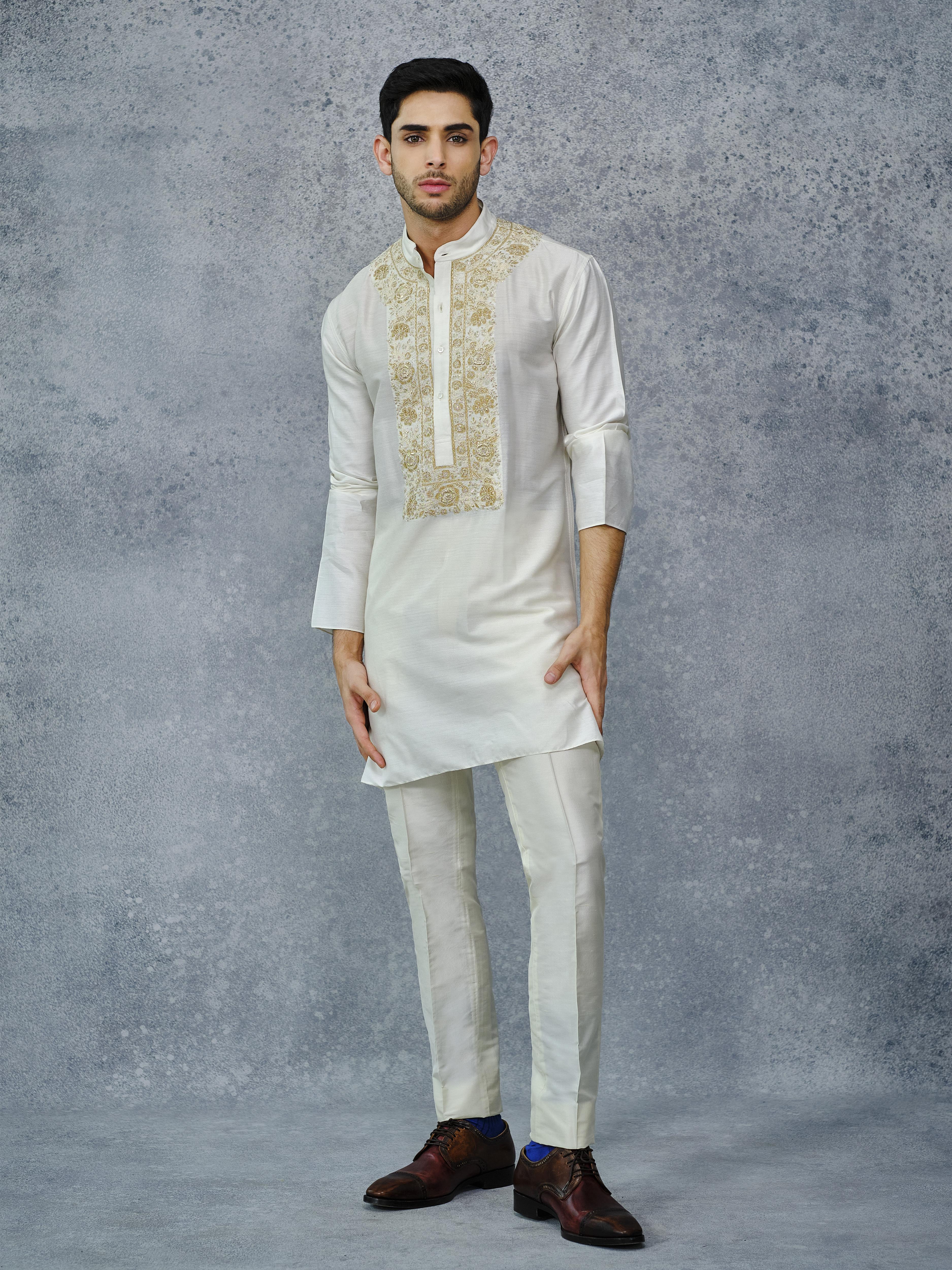
RAGHAVENDRA RATHORE JODHPUR Monochrome Elegance Kurta
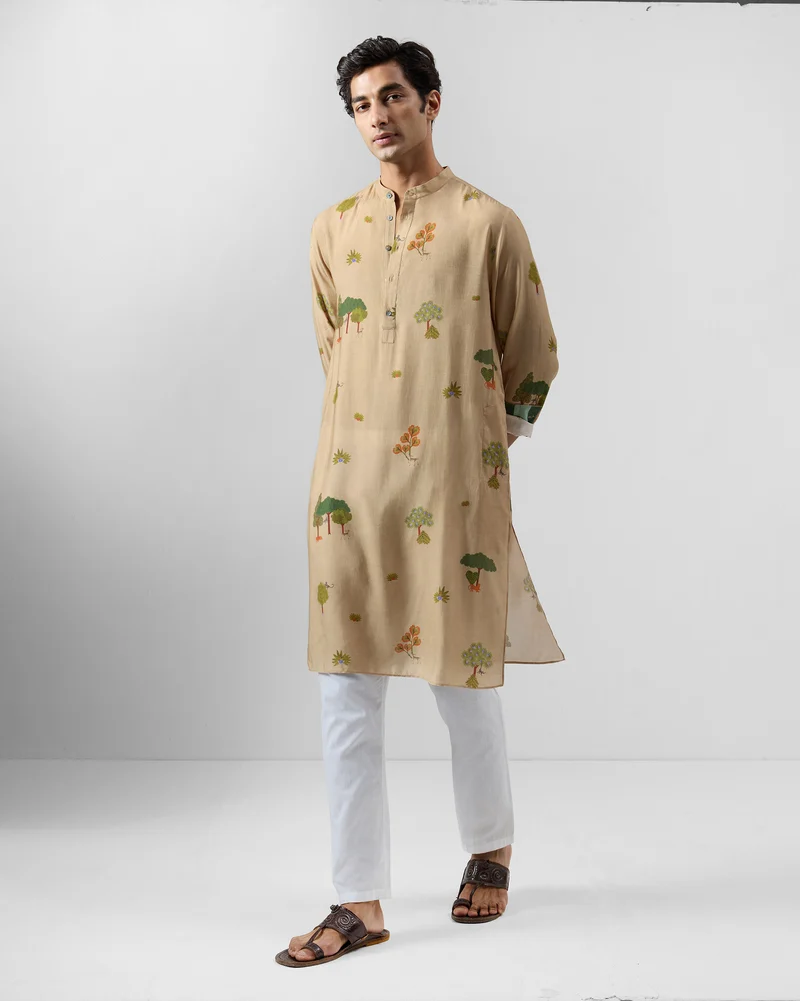
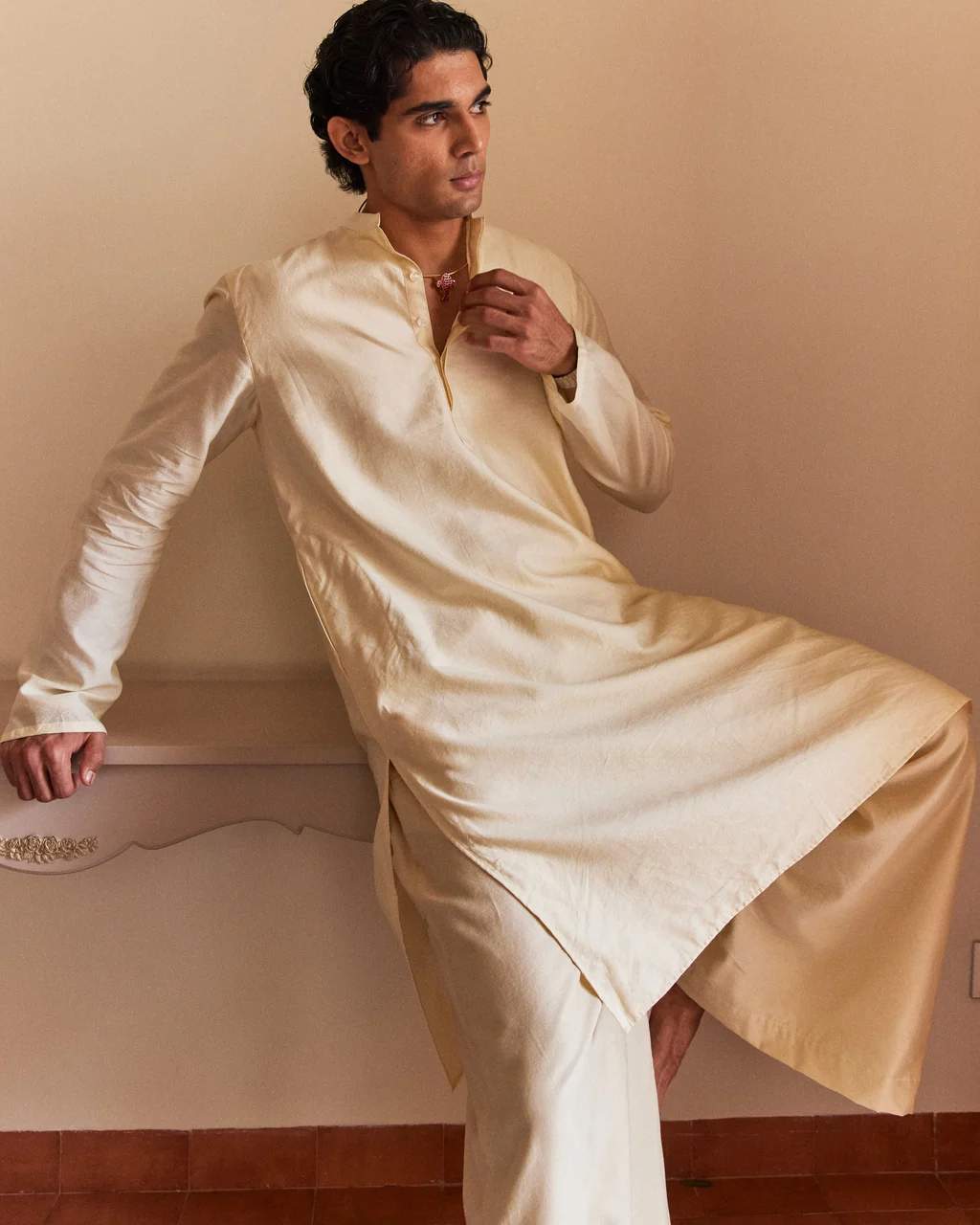
Tuti Off white Pure Chanderi Men’s Kurta
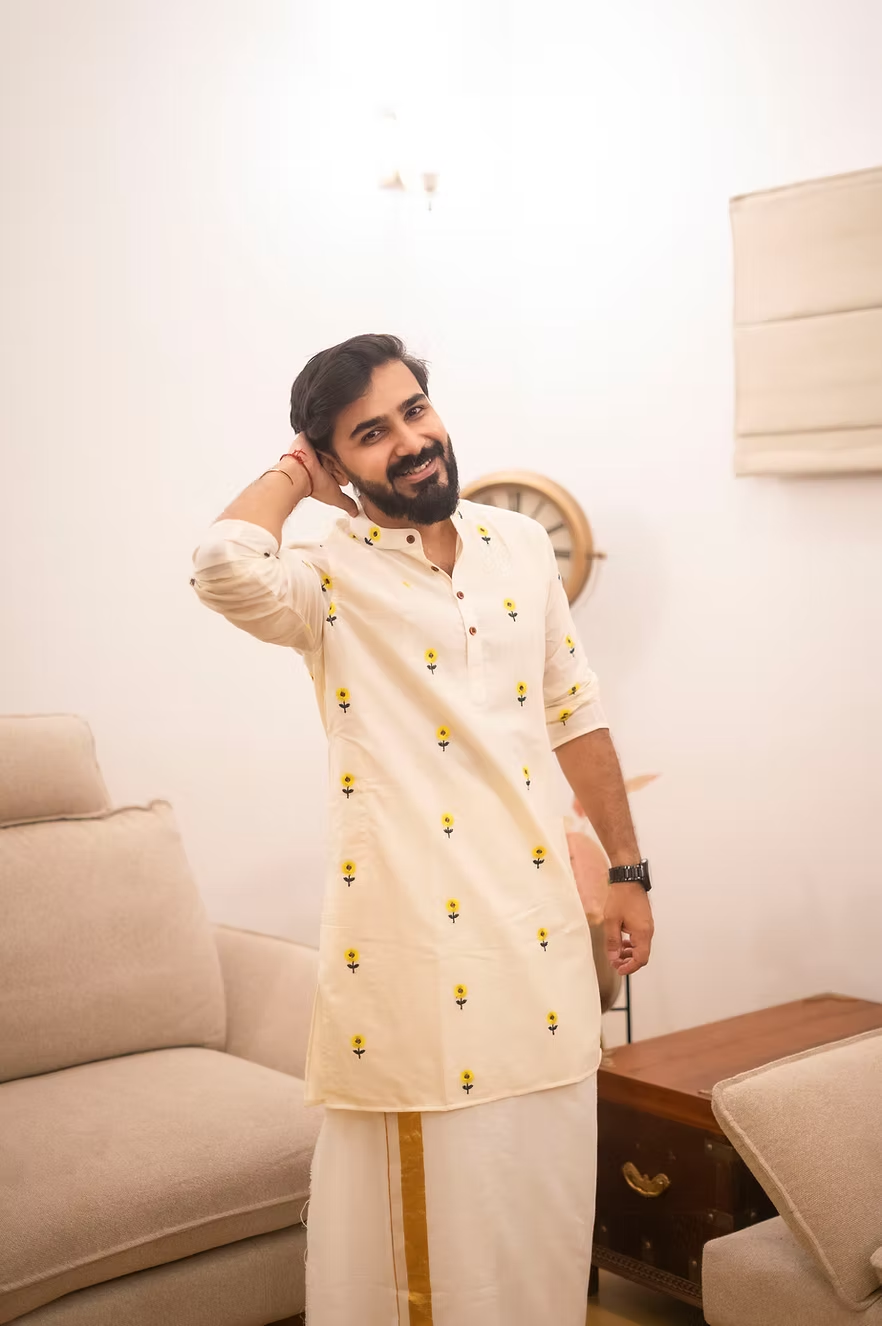
Kerala Saree Boutique Suryakanthi Kurta
What Onam Dressing Is Really About
The most beautifully dressed people at any Onam celebration are not necessarily the ones wearing the most elaborate garments or the most expensive jewellery. They are the ones who have understood that the festival’s dress code is an invitation to participate in a tradition with full attention, to choose the weave carefully, to wear the gold with intention, to drape the fabric with care, and to arrive dressed in a way that honours where the occasion comes from.
Onam is a harvest festival. Its visual language is the white of new cotton and the gold of a good year’s yield. The dress code that emerged from that symbolism over centuries is not a constraint on expression but an expression in itself: of belonging, of gratitude, and of the particular pleasure of dressing in a way that is specific to a time and a place.
In 2026, that specificity is available to anyone who chooses it. The saree is woven. The Mundu is ready. The gold is waiting.
Follow Best List India for the culture, conversations, and ideas worth paying attention to.