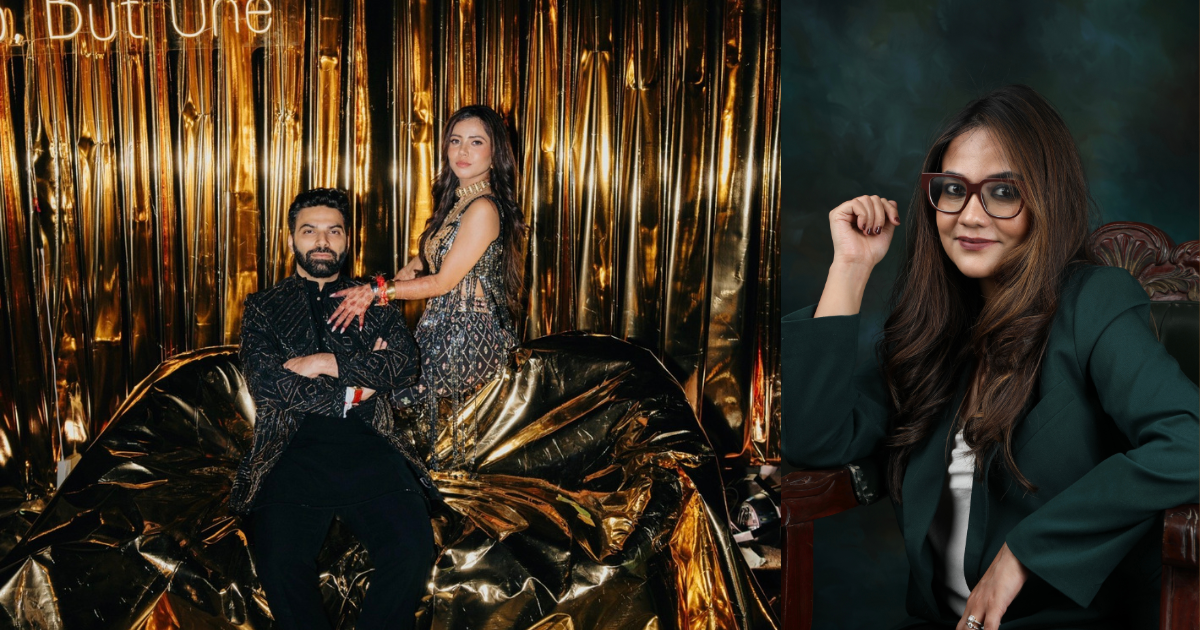
There is a particular kind of confidence that comes from refusing to treat your starting point as a limitation. Dakshita Bhatla, founder of DB and Spaces, built one of India’s most recognised luxury destination wedding planning and design firms not in Mumbai or Delhi, where the industry’s gravity typically sits, but in Uttarakhand, where most people would have seen logistical obstacles before they saw opportunity. Bhatla, trained as an architect, saw the mountains differently. She has since designed celebrations for some of India’s most publicly watched couples, including Aashna Hegde and Aditya Kumar in Jim Corbett and Sejal Kumar and Bharat Subramaniam in Mussoorie, while building a firm recognised among the most awarded names at the WeddingSutra Influencer Awards 2025. We spoke with her about designing with a landscape rather than against it, what destination weddings teach families they did not expect to learn, and the monochromatic wedding she still dreams of building.
DB and Spaces has become one of India’s most recognised luxury destination wedding planning and design firms, and you built it from Uttarakhand. Take us back to the very beginning. What was the vision, and how quickly did it become clear that the mountains were not a limitation but an identity?
I started DB and Spaces with a very simple belief. If we were going to do this, we had to do it exceptionally well. There was never a Plan B and there was never an intention to build something average.
Coming from architecture, I approached weddings differently. I looked beyond décor and focused on how people experience a celebration, how a space feels, and how every detail contributes to the larger story.
Building from Uttarakhand was a conscious decision. A lot of people looked at the mountains and saw logistical challenges. I looked at them and saw character. The terrain, the weather, the distances and the unpredictability demand a completely different level of planning. You cannot rely on standard processes here. You learn to think ahead, adapt quickly, and respect the place you are building in.
It became clear quite early that the mountains were never our limitation. They became our identity. They shaped the way we solve problems, the way we design, and the way we execute. They taught us to build with intention instead of excess.
Today, as we work across India, that foundation still defines us. Everything we have built as a company began here, and I genuinely believe Uttarakhand gave us a perspective that we would not have found anywhere else.
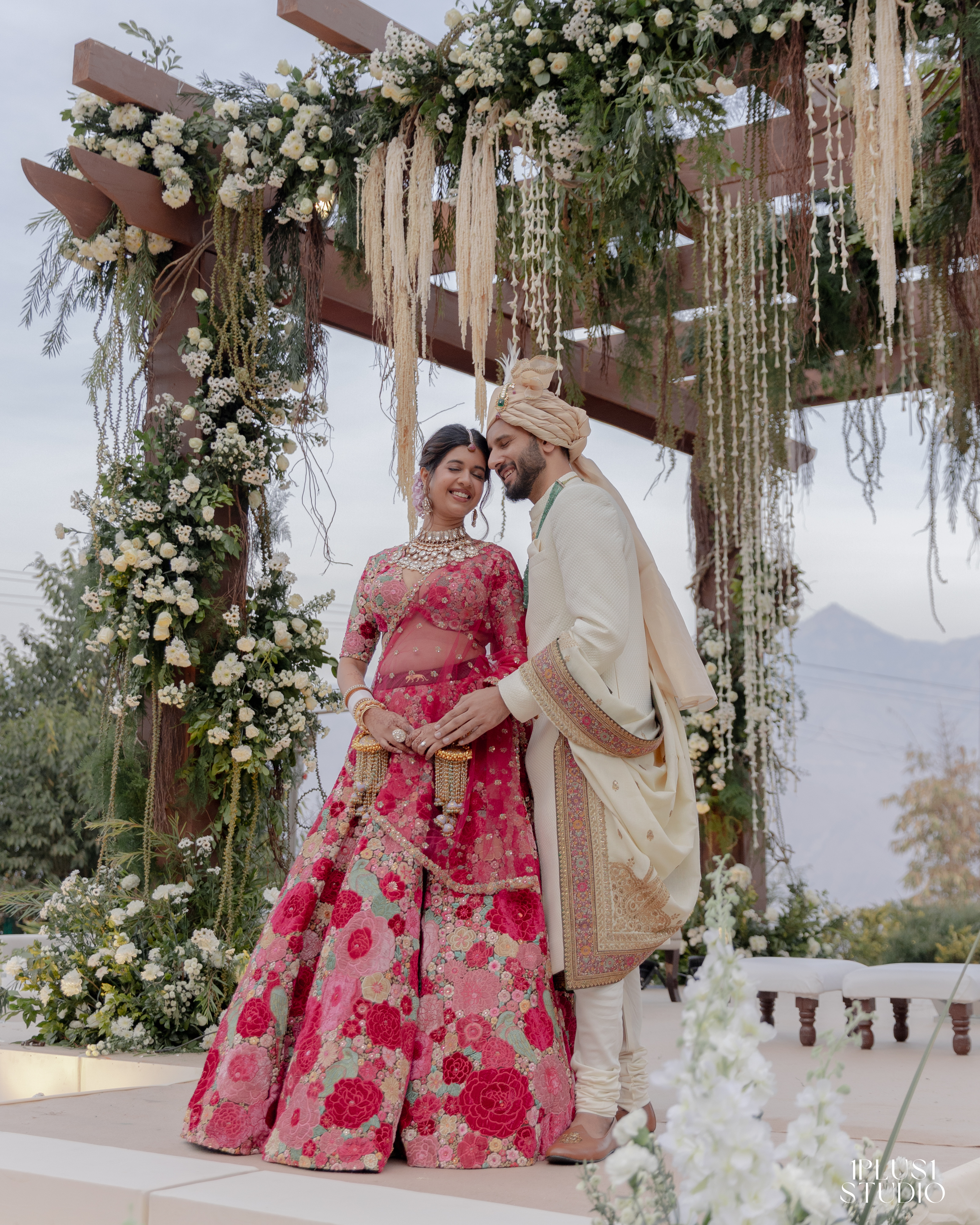
Your work is described as highly personalised and design-led. In a wedding industry that can lean heavily on formula and spectacle, what does it actually mean to lead with design, and how does that change the entire planning process?
When we say we are design-led, we are talking about the creative direction. As architects and interior designers, we naturally think about spaces, proportions, movement, scale and how people experience an environment. That is how every design begins.
Planning, however, is an entirely different discipline. It is built on management, systems and processes. Over the years, we have invested a lot of time in creating detailed SOPs and execution frameworks because that is what allows a design to become reality. Without strong planning, even the best design remains just an idea.
A couple plans a wedding once in their lifetime. We do this every single day. It is our responsibility to guide them, challenge them where required, and make decisions they may not even know they need to make. That guidance is only possible when your own fundamentals are extremely strong.
When the planning is structured and the design has clarity, every stakeholder works with the same vision. Vendors understand the intent, timelines become more efficient, decisions are faster, and the couple can actually enjoy the journey instead of managing it. That balance between creative thinking and disciplined execution is what defines the way we work.
You have planned Aashna Hegde and Aditya Kumar’s wedding in Jim Corbett and Sejal Kumar and Bharat Subramaniam’s wedding in Mussoorie. These are couples with very public lives and very discerning audiences. What does it take to create something that feels entirely personal when the world is watching?
I think the biggest misconception is that planning a wedding for someone in the public eye is fundamentally different. In reality, it is not.
Whether the couple is a public personality or not, the emotions of the family remain exactly the same. Every parent wants their child’s wedding to be memorable. Every family has traditions they want to honour, emotions they want to preserve, and moments they want to create. That is what we connect with first.
Our process has always been to become a part of the family. We spend time understanding them, how they celebrate, how they make decisions and what truly matters to them. That is what allows the wedding to feel personal, because it is built around the family, not around the public image of the couple.
Of course, when you are planning a wedding for someone like Sejal and Bharat or Aashna and Aditya, you know the celebration will eventually be seen by millions of people. That certainly brings a greater responsibility and a higher standard of execution because every detail will be noticed. But it never changes our approach.
We do not create weddings for the audience. We create weddings for the people getting married and for the families who have trusted us with one of the most important celebrations of their lives. If that authenticity resonates with the world later, that is the outcome we hope for.
Uttarakhand as a wedding destination has its own very specific character, the light, the landscape, the pace of it. How do you design celebrations that feel native to that environment rather than simply transplanted into it?
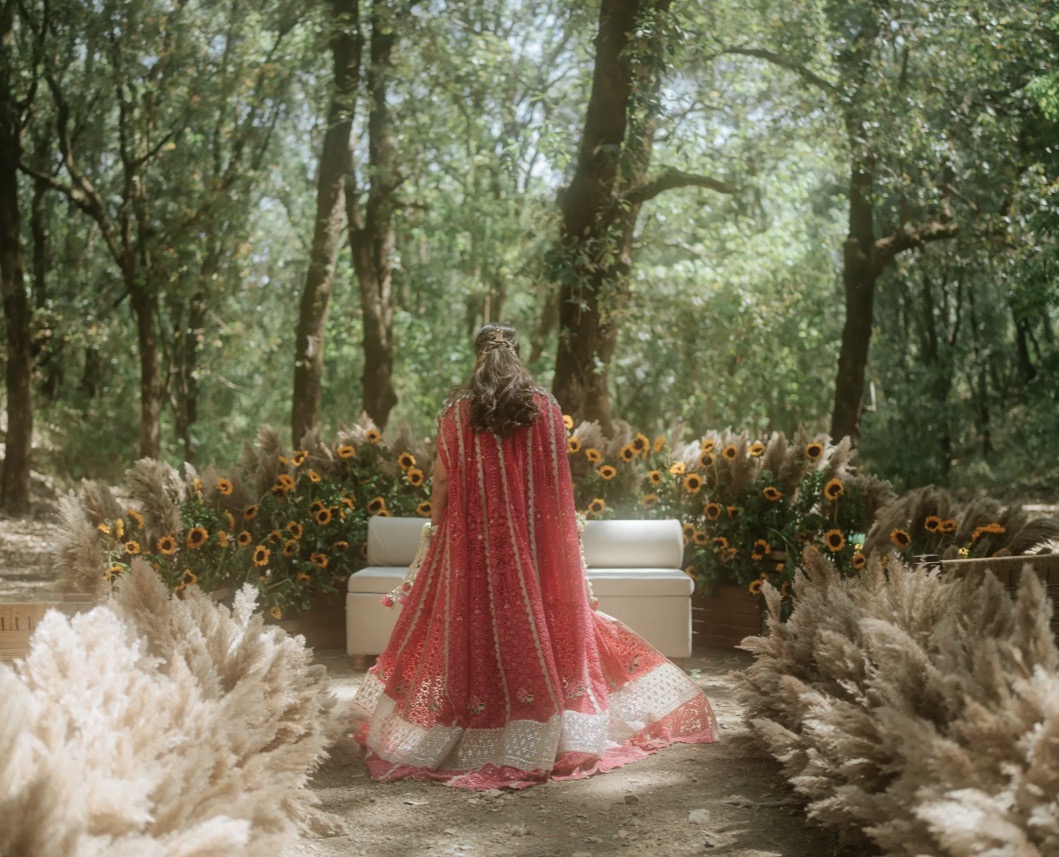
The biggest mistake you can make in Uttarakhand is to treat it like a blank canvas. It already has a very strong identity. The mountains, the forests, the rivers, the changing light throughout the day and even the pace of life become part of the celebration.
Our role is not to overpower that environment but to understand it first. We spend time studying the venue, how the light moves, what the natural backdrop already offers, how guests will experience the space and how the weather may influence every decision. Those factors shape the design just as much as the couple’s vision does.
At the same time, we do not believe every wedding in Uttarakhand has to look traditionally Pahadi. If a couple wants a contemporary or European aesthetic, we can absolutely create that. The difference is that we still design it with the landscape rather than against it. The scale, materials, colours and spatial planning are all considered so that the celebration feels like it belongs there instead of looking like it has been dropped into the mountains.
When a wedding feels effortless in its surroundings, guests may not immediately know why. But that is exactly the point. It feels natural because the destination has been respected, not competed with.
Destination weddings are logistically one of the most complex things to execute in the wedding industry. What is the hardest part of the job that never makes it into the final photographs?
I would not describe it as the hardest part because every destination comes with its own set of challenges. In Uttarakhand, the complexity comes from working with the geography rather than against it.
The terrain changes the way you plan everything. Large production elements have to be transported through winding mountain roads with limited access, so logistics have to be planned far more precisely than they would be in the plains.
Then there are the environmental conditions that are unique to the mountains. After sunset, temperatures can drop very quickly because of the altitude and the way heat dissipates in the hills. Cold air settles into the valleys overnight, there is a distinct sharpness in the air, and wind exposure makes the working conditions far harsher than the temperature alone would suggest. By early morning, dew and moisture can also become factors that affect installations, fabrics, florals and technical setups.
Our teams work through all of that so that when guests arrive, they simply experience a beautiful celebration. They never see the overnight planning, the adaptations, or the decisions being made in real time to keep every detail exactly as envisioned. Those are the stories that stay behind the scenes, but they are a defining part of building weddings in the mountains.
DB and Spaces has been among the most awarded names at the WeddingSutra Influencer Awards 2025. What does industry recognition mean to you, and what milestone that no award could capture has meant the most?
We are incredibly grateful for the recognition we have received from the industry. Every award, every feature and every appreciation reminds us that our work is being seen, and it motivates us to keep raising our own standards. At DB and Spaces, we have always believed that our biggest competition is ourselves. Every wedding should be better than the last.
But if I had to choose one milestone that no award could ever replace, it would be the messages we receive from our families after the wedding.
There are moments when, weeks or even months later, parents send us a video message or call us just to tell us how they felt about the journey and how those few days became some of the most cherished memories of their lives. By then, the wedding is over, everyone has gone back to their routines, and there is no obligation for them to reach out. The fact that they still take that time means everything to us.
Those moments cannot be measured by a trophy or a title. They remind us that we were not just planning an event, we became a small part of one of the most important chapters in a family’s life. That feeling is the most meaningful recognition we could ever receive, and it continues to inspire us to outdo ourselves with every celebration.
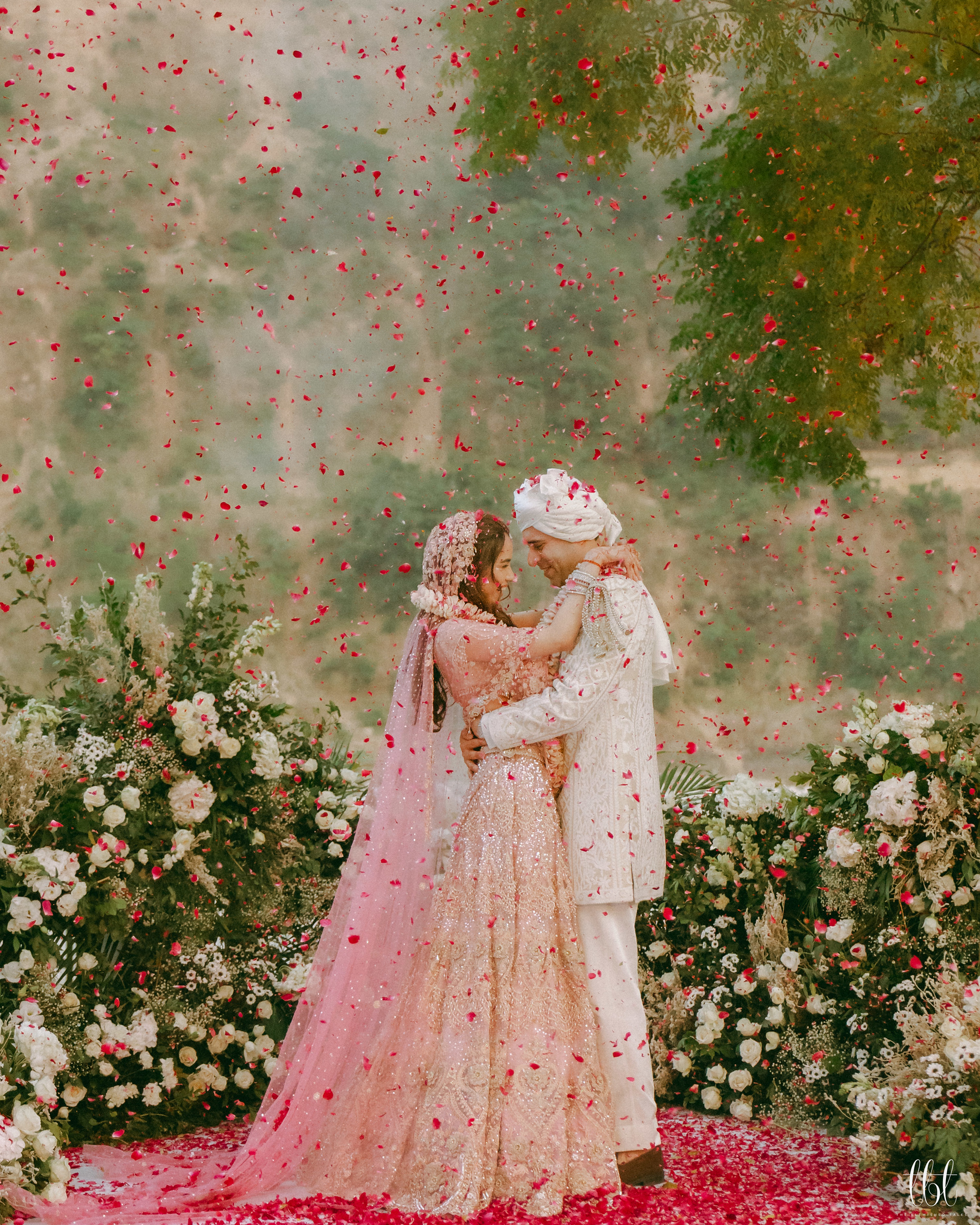
You work with couples who have chosen Uttarakhand specifically, for the mountains, the intimacy, the escape from the obvious. What do people find in a destination wedding here that they did not know they were looking for until they arrived?
I think most couples come to Uttarakhand for the mountains. But they leave remembering something much deeper.
The mountains naturally slow you down. Families arrive a day or two before the celebrations, spend time together without the rush of city life, and conversations happen more organically. People step away from their routines, their phones and their schedules, and become more present with each other. That changes the energy of the entire wedding.
There is also something about the scale of the landscape. The mountains have a quiet way of putting everything into perspective. They do not compete with the celebration, they create a sense of calm around it. As planners, we see families spending more time outdoors, guests staying back after functions instead of rushing away, and moments unfolding naturally rather than being forced into a timeline.
I often feel that couples come looking for a beautiful destination, but what they really discover is time. Time with their families, time with their closest friends and time to truly experience one of the biggest milestones of their lives. That is something they rarely expect when they first choose Uttarakhand, but it is what they remember long after the wedding is over.
If a DB and Spaces wedding were a moment in the mountains, not a décor element but a feeling, what would it be?
A DB and Spaces wedding would feel like watching the first rays of sunlight touch the Himalayan peaks. It is not loud, it does not demand attention, yet you instinctively pause and take it in. That is the kind of feeling we hope every celebration leaves behind.
Wedding design trends are moving fast, more intimate celebrations, stronger narrative arcs, design that tells a couple’s story rather than simply dressing a venue. Where do you see destination weddings going next, and where is DB and Spaces leading that conversation?
I think destination weddings are moving away from excess and towards intention. Couples today are far more travelled, far more exposed and much more confident in making choices that feel true to them instead of simply following trends.
The next shift, in my opinion, is that weddings will become more experience-led than décor-led. Design will always remain important, but it will not be enough for a space to just look beautiful. Every decision, from the guest journey and show flow to entertainment, hospitality and the smallest details, will need to contribute to one cohesive experience.
At DB and Spaces, that is a conversation we have been building for a long time because we have never looked at planning and design as isolated services. We approach them as two equally important disciplines. A strong design needs strong planning behind it, and strong planning deserves a meaningful design direction. When those two work together, the wedding feels effortless.
I also believe destinations themselves will start playing a much bigger role. Rather than recreating the same wedding in different cities, couples will want each destination to influence the celebration in its own way. That is where we see ourselves leading the conversation, by creating weddings that are deeply personal to the couple while remaining authentic to the place they are celebrating in.
For us, success is not when someone says, that was a beautiful wedding. It is when they say, that wedding could only have belonged to that couple, and it could only have happened there.
What is coming next for DB and Spaces, and what is the wedding you have not designed yet that you most want to?
The next chapter for DB and Spaces is to go even deeper into the way we plan and design weddings. We do not want to simply create beautiful celebrations, we want to create experiences where every decision, every space and every movement has a purpose. That is the direction we are excited about.
As for the wedding I have not designed yet, it is surprisingly simple in concept but incredibly complex to execute. I would love to create a completely monochromatic wedding where the destination, the architecture, the décor, the florals, the styling and even the guest wardrobe become part of one visual language.
Imagine a celebration on the white coastline of Greece where every guest arrives dressed in shades of white, and the entire landscape feels like one uninterrupted canvas. Or a wedding in Sicily where everything is interpreted through different tones of Mediterranean blue, so that the destination itself becomes part of the design rather than just the backdrop.
To me, that is the future of destination weddings. Not adding more elements, but creating one immersive world where every person, every detail and every space belongs to the same story. That is a wedding I would absolutely love to design.
Follow Best List India for the culture, conversations, and ideas worth paying attention to.