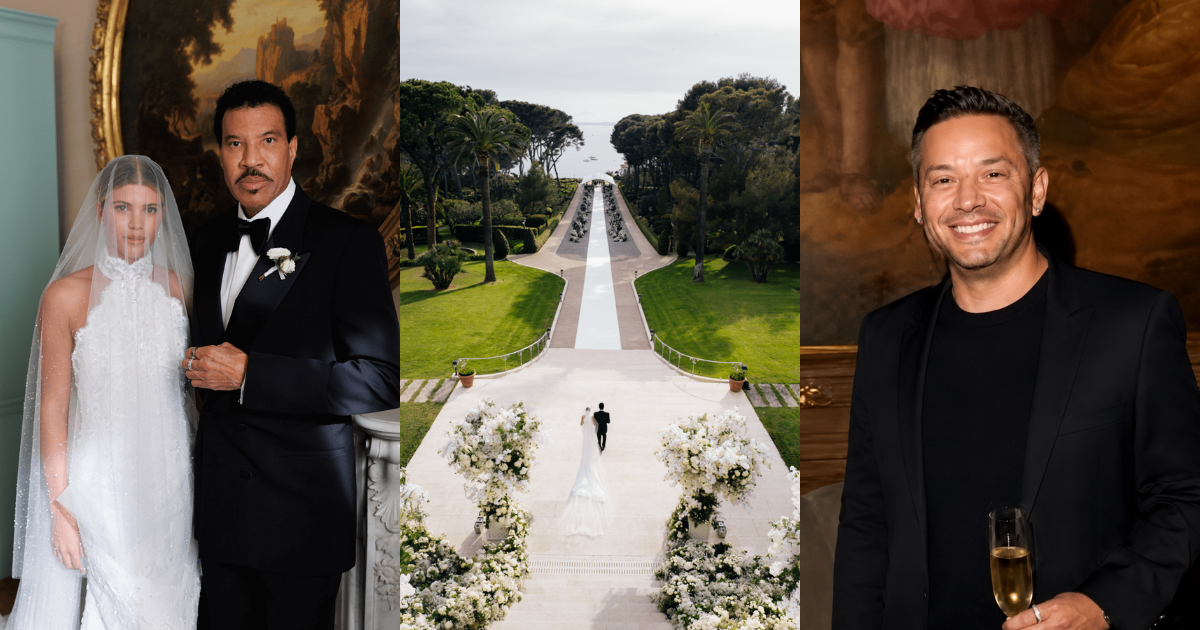
There are people in the events industry who plan celebrations, and there are people who build memories. Jamie Simon, Director at Banana Split, the London-founded luxury wedding and events company that has just crossed fifty years in business, belongs emphatically to the second category. In a conversation that moves from AI tools to Maldivian desert islands to what it feels like to stand in a finished event space before anyone else arrives, Simon offers something rarer than expertise: a philosophy of what this work is actually for. We spoke with him about the limits of doing everything yourself, what Indian weddings do that no other celebrations quite match, and why the planner who thrives in the next decade will be the one who never mistakes efficiency for empathy.
Twenty-five years in this industry. What does the Jamie Simon who started out not know that you know now?
That you do not have to do everything yourself. When I started out, I thought the way you proved yourself was by being the person who could handle it all. Every detail, every decision, every problem. If something needed doing, I would do it, and I would do it well, and somehow that meant I was earning my place.
What I know now is that approach has a ceiling, and you hit it faster than you think. The real shift came when I stopped trying to be the best at everything and started surrounding myself with people who are the best at their thing. I have an extraordinary team around me, and beyond that, I have built relationships with specialists across every discipline: designers, florists, sound engineers, caterers. People who are genuinely world-class at what they do. My job is not to compete with that expertise. It is to bring it all together, to see the full picture, and to know exactly who to call. The younger version of me would have seen that as a weakness. Now I see it as the single most important thing I have learned.
Your approach is described as creative yet technical. Most people are one or the other. Which one saves you more often?
I have always been technical first. I am a problem solver at heart. I love figuring out how to deliver something in a way that is unexpected or unusual, finding the angle nobody else has thought of. That is where my brain naturally goes. But over the years, I have developed an enormous respect for the creative process, and for the people who are genuinely wired that way. True creatives see the world differently. They notice things the rest of us walk past. I find that deeply inspiring.
One of the parts of my job I love most is walking into our design studio and working alongside our talented designers, refining a concept, pressure-testing it, making sure it not only looks extraordinary but actually works for the specific event it is intended for. That is where the technical and the creative meet, and I think that intersection is where the best work happens. But if I am being honest, I am probably a geek at heart. I love tinkering, I love pulling things apart to understand how they work. And right now, working with some of the AI tools that are emerging, I am genuinely blown away on a daily basis. That sense of discovery, of figuring out what a new tool can do and how it might change the way we work, is the same energy I had when I started in this industry twenty-five years ago.
What is the single most audacious thing Banana Split has ever pulled off? The one where even you think: how did we do that?
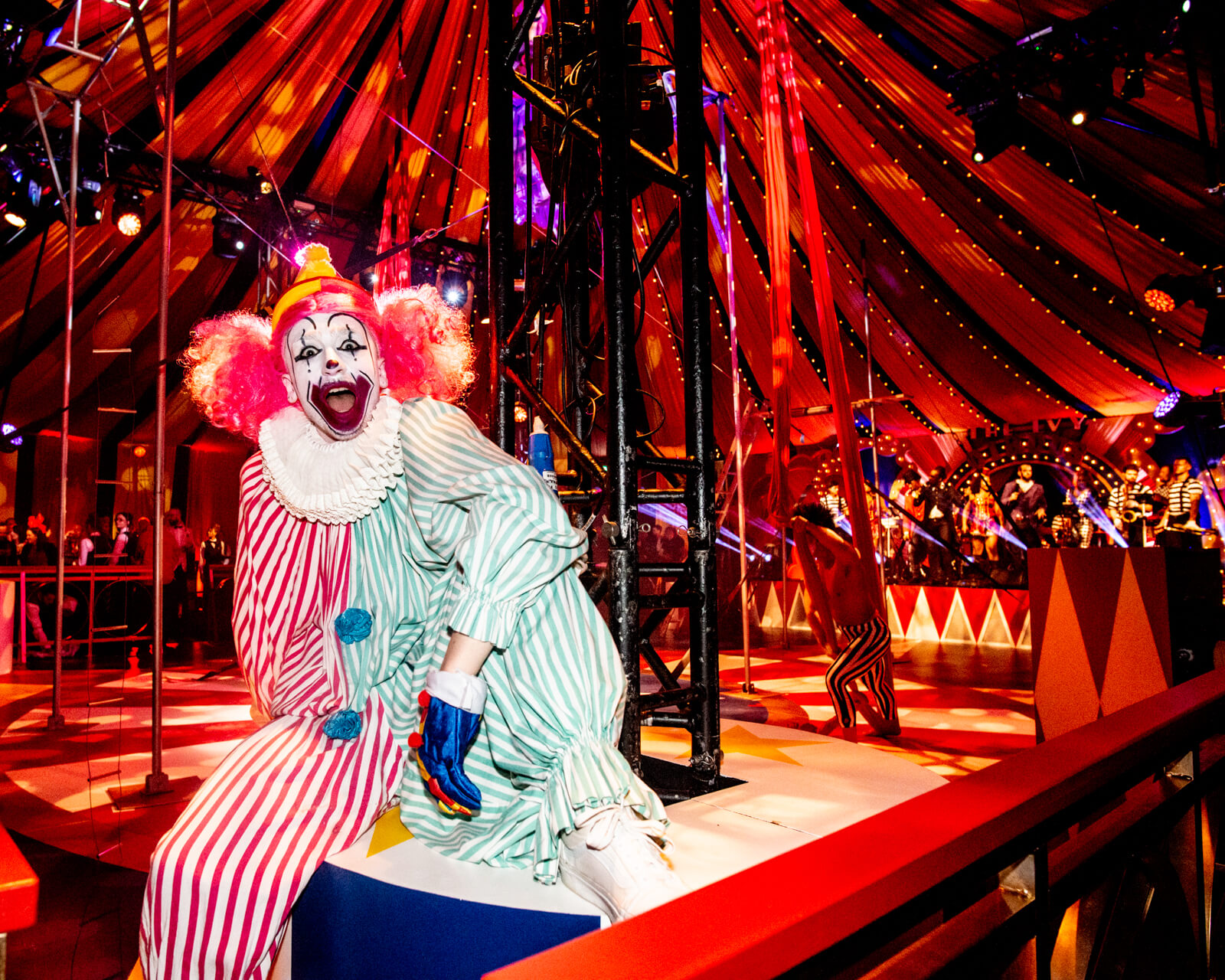
I do not think it is ever one single thing. It is all the small things that combine to make the magic, and it is doing them time and time again that matters. Booking the artist whose management flatly said no, it cannot happen, and finding a way to make it happen. Securing the venue that everyone said was impossible. Designing, building, shipping, and constructing an entire event on a Maldivian desert island during Covid, when the world was quite literally against us. Each of those on its own is a story. But together, they are the reason Banana Split enjoys the reputation it has. It is not one audacious moment. It is a pattern of them, delivered consistently, across decades.
The thing people do not always see is that the real audacity is not the grand gesture. It is the silent, relentless problem-solving that means a client’s experience is completely untouched by whatever chaos is unfolding behind the scenes. When a couple tells me their wedding felt effortless, that is the greatest compliment we can receive, because I know exactly how much effort it actually took.
There is always a gap between what a couple imagines and what reality allows. How do you manage that conversation, and where do you draw the line?
Honestly, the gap is usually smaller than people think. Most couples do not come to us with impossible ideas. They come with feelings. They want a certain atmosphere, a certain emotion. The challenge is not usually reining things in, it is translating something abstract into something tangible.
Where the conversation gets more delicate is around budget. Not because clients cannot afford what they want, but because they do not always understand the real cost of quality at scale. A dinner for twelve and a dinner for three hundred are entirely different disciplines. My job is to protect their vision while being completely transparent about what it takes to deliver it properly. I would rather have an honest conversation early on than let someone walk into their wedding day with a compromise they did not know they had made.
You have been in the room, or just outside it, for some of the most emotional moments of people’s lives. Does any of that reach you, or do you have to shut it out to do your job?
We are ultimately in the memory business. That is what this is. Everything we do, the planning, the logistics, the design, the production, exists so that a group of people can walk away with something they will carry for the rest of their lives. When you think about it in those terms, of course it reaches you. There is a moment, usually during the ceremony, or sometimes during a father’s speech, where the weight of what we have helped create really lands. You see a couple look at each other and you realise that every spreadsheet, every site visit, every late-night email was in service of this one, unrepeatable moment.
I do not shut that out. I have learned to hold it lightly, to feel it without letting it distract me, because there is always something that still needs managing. But that emotion is what keeps me sharp. It reminds me why the details matter so much, why we push so hard to get things right. We are not delivering a service. We are building someone’s most important memory.
What do couples consistently underestimate about planning a wedding at this level?
Time. Without exception, time. Not just the months of planning, but the sheer volume of decisions that need to be made and how each one creates a ripple effect through everything else. A change to the table plan is not just a seating decision. It affects the floral scheme, the lighting design, the catering logistics, the flow of the room. At this level, nothing exists in isolation.
The other thing is cost. The world has become really expensive in the past few years, and not everyone appreciates how hundreds of individual line items, each one perfectly reasonable on its own, add up to something genuinely significant. A wedding at this level is not ten big decisions, it is a thousand small ones, and they accumulate.
Beyond that, couples underestimate how much of our role is emotional management, not just theirs, but their families’. A luxury wedding often comes with complex family dynamics, multiple stakeholders, and deeply personal expectations from people who are not the ones getting married. Navigating that with diplomacy and discretion is rarely discussed, but it is often the thing that determines whether the planning process is joyful or stressful.
Is there a wedding you consider a personal masterpiece? One that still stays with you?
There is one I think about often. I will not name the couple, but it was an incredibly intimate celebration, far smaller than most of our projects, in a setting that required us to essentially build the entire infrastructure from scratch. No existing venue services, no permanent power, no road access for the last stretch. We created something that felt as though it had always existed in that landscape, as though the land itself had been waiting for that exact evening. The design was restrained, almost minimal, but every detail was considered to an extraordinary degree.
That one stays with me because it proved that luxury is not about excess. It is about intention. It is about knowing exactly what to leave out. That wedding taught me more about restraint and confidence than any large-scale production I have worked on, and it fundamentally shaped how I approach design to this day.
Banana Split is fifty-two years old. What does it feel like to be the engine of something with that much history and expectation behind it?
The amazing thing about Banana Split is that it never stands still. Fifty-two years is extraordinary, but what makes it remarkable is not the longevity. It is the fact that the company constantly evolves to anticipate and meet the needs of its clients. We embrace the latest trends, technologies, cultures, and fashions. We never rest on our laurels. That restlessness, that refusal to coast on reputation, is what keeps us relevant and what keeps the work exciting.
I feel enormously privileged to be part of a company that was founded before this industry was even really a thing, before luxury wedding planning existed as a profession in the way it does now. Banana Split helped define it. But through all of that evolution, we have remained true to the core principles the company was built on: creating extraordinary celebrations, and giving every client dedicated, personable, and unrelenting attention. When a client comes to us because their parents used Banana Split for their wedding, that tells you everything you need to know about what fifty-plus years of care actually means.
Luxury weddings are becoming multi-day immersive experiences, closer to brand activations than ceremonies. How has that shifted what Banana Split actually does?
It has shifted everything. A wedding used to be a day. Now it is a narrative arc that might span three, four, five days across multiple locations. Welcome dinners, morning-after brunches, activities, excursions, evening events, each one with its own identity but all part of a coherent story. That means we are not just event planners anymore. We are experience designers, creative directors, production managers, and storytellers, often simultaneously. We are working with entertainment directors, set designers, scriptwriters, and choreographers.
What has not changed is the principle at the centre of it all: every moment should feel intentional, personal, and unlike anything the guests have experienced before. The complexity has grown, but so has the opportunity. When you get a multi-day celebration right, when each chapter builds on the last and the whole thing feels like one seamless, unfolding story, there is nothing else like it.
What has been particularly interesting is that this shift has opened doors well beyond weddings. We are now regularly approached by brands, many from the technology and finance worlds, who want us to bring that same immersive, experience-led thinking to their internal and client events. They have seen what is possible when you treat an event as a story rather than a schedule, and they want that for their people too. It is a fascinating crossover, and one that is only going to grow.
AI can now generate mood boards, simulate dressed venues, and propose entire concepts from a brief. Does that excite you or unsettle you?
It excites me enormously. I use AI tools regularly, for concepting, for visualisation, for working through logistical scenarios, for helping clients see what something might feel like before we commit to it. It is an extraordinary creative accelerant. But it is also transforming the less glamorous side of what we do. So many of the repetitive administrative tasks that used to consume hours are now quicker and more accurate, which frees up our time to spend on the bits that really count. Less time in the spreadsheet, more time dreaming about how to make our events even better.
That said, it is a tool, not a replacement. AI can generate a mood board in seconds. What it cannot do is sit across from a couple, read the slight hesitation in someone’s voice, understand that when a bride says she wants something classic she actually means something entirely different, or know that the groom’s mother has very specific feelings about the ceremony that nobody has said out loud yet. The human layer, the intuition, the emotional intelligence, the lived experience, is irreplaceable. The planners who will thrive are the ones who embrace these tools wholeheartedly but never mistake efficiency for empathy.
After twenty-five years of making the impossible possible, what still feels impossible?
Switching off. This work does not have an off switch because the moments we are creating are so deeply personal to the people involved. You carry every event with you, the responsibility, the detail, the relationships you build through it.
What also still feels impossible, in the best possible way, is the first moment you walk into a finished space on the morning of an event, before anyone else arrives, and you see months of planning made real. That never gets ordinary. Twenty-five years in, and I still stand in those rooms thinking: we actually did this. The day that feeling disappears is the day I will know it is time to do something else.
Follow Best List India for the culture, conversations, and ideas worth paying attention to.