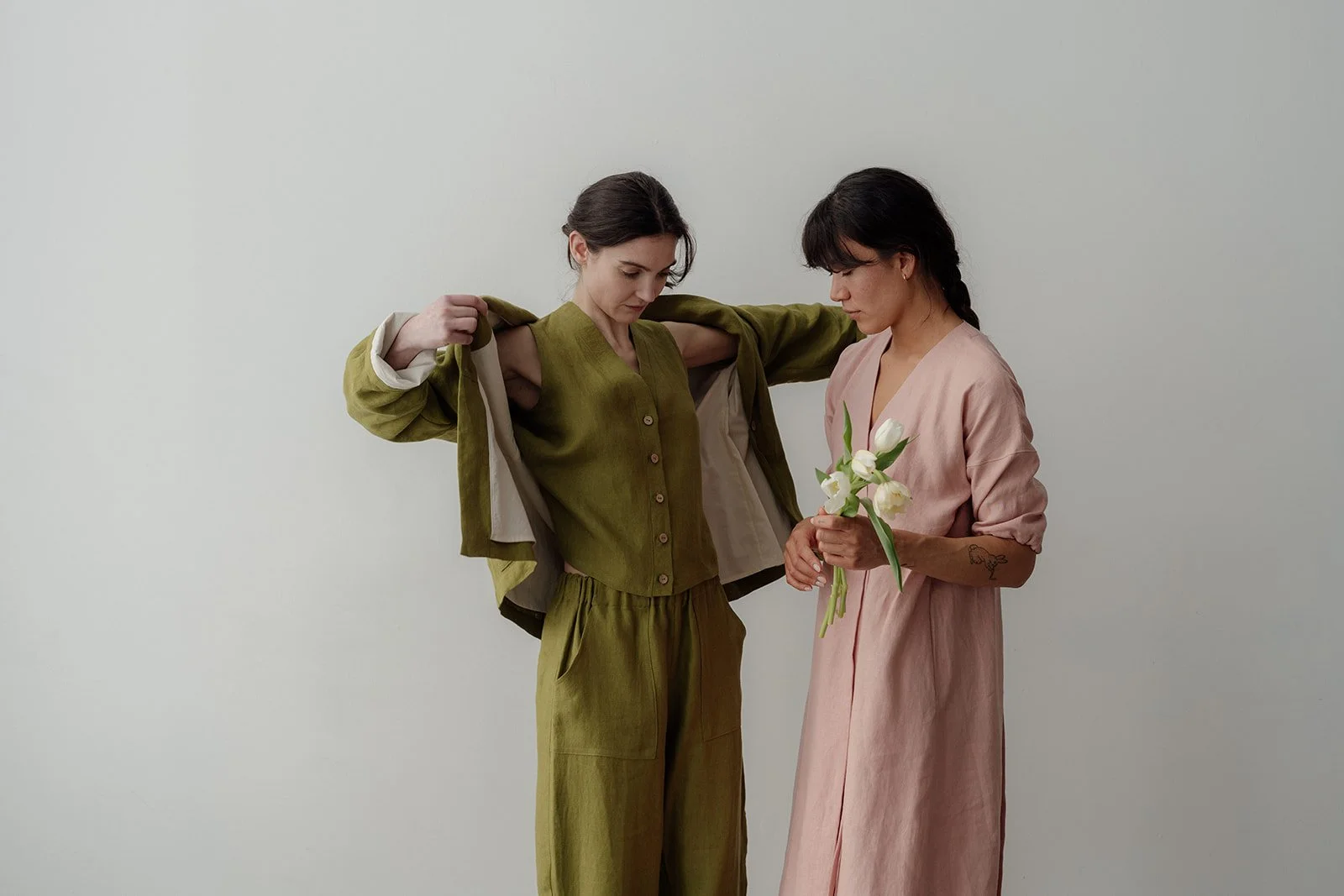
Linen has a reputation problem, and it is largely undeserved.
For years, the fabric occupied a specific and somewhat limiting position in the Indian wardrobe: the sensible choice, the hot-weather compromise, the thing you wore when you wanted to be comfortable and were willing to accept that comfort and beauty might not arrive in the same garment. It crinkled. It creased. It communicated ease in a way that sometimes read as informality when informality was not the intention. The Indian fashion imagination, which has always reached readily for silk, georgette, and embroidered cotton when occasion required something special, tended to leave linen at the door when the stakes went up.
Something has changed. Not overnight, and not through a single trend cycle, but through the accumulated work of a generation of Indian designers who looked at linen and decided that its reputation was not a fixed point but a failure of imagination. In their hands, linen has become something that the wardrobe staple conversation in India has rarely given it credit for being: genuinely, quietly beautiful.
Why Linen, Why Now
The renewed interest in linen is not simply a trend. It is the convergence of several forces that have been building simultaneously in the Indian fashion market and that have now arrived, together, at a point of critical mass.
The first is climate pragmatism. India’s summers are longer, hotter, and more humid than any previous generation of the fashion industry was asked to dress for with this level of intention. The fabrics that work in these conditions, that breathe genuinely rather than merely claiming to, have become worth reconsidering with more seriousness than the market previously brought to them. Linen, which regulates temperature more effectively than almost any other widely available textile, is the obvious beneficiary of this reckoning.
The second is the global conversation around natural fibres, sustainability, and the provenance of what we wear. Linen, made from flax, is one of the most environmentally responsible fabrics in commercial production, requiring less water than cotton and biodegrading in a way that synthetic alternatives cannot approach. For a consumer increasingly interested in what their clothes are made of and what that choice means, linen arrives with credentials that the fashion market is only now learning to communicate properly.
The third, and most interesting, is the design intelligence that a new generation of Indian makers has brought to the fabric. Linen does not crease less in their hands, nor does it suddenly pretend to be something other than what it is. What has changed is the understanding that its qualities, its texture, its weight, its particular way of moving, are not limitations to be worked around but characteristics to be designed for.
For Her
The female linen wardrobe in 2026 is considerably more expansive than it has ever been, and the designers responsible for that expansion have approached the fabric from very different creative starting points with consistently compelling results.

Yellow Printed Linen Lehenga and Blouse Set from Anavila Misra
Anavila Misra remains the definitive reference point for linen in Indian womenswear, and for good reason. Her creations in handwoven linen have done more to elevate the fabric’s status in the Indian occasion-wear conversation than perhaps any other single body of work. The understanding at the core of her practice, that linen’s texture and drape are features rather than bugs, and that a fabric this honest deserves to be worn to events as significant as the ones that silk is typically reserved for, has shifted the conversation around what occasion-appropriate dressing actually requires.

Roza Pret Lilian Kaftan Set
Roza Pret makes the case for linen as a canvas for print and narrative rather than simply texture and drape. The New Delhi label’s Lilian Kaftan Set, a breathable linen kaftan-style kurta in warm beige adorned with a bold floral motif and finished with contrast sleeves, paired with airy linen pants in a complementing contrast border, sits at the intersection of the relaxed and the considered. It is the kind of piece that reads as dressed without having tried visibly to be, which is precisely what the best linen dressing achieves. The brand’s broader philosophy, clean minimal silhouettes combined with handwoven fabrics and hand-painted florals, makes it a consistent address for the woman who wants her linen to carry more visual interest than a plain weave while remaining entirely wearable across occasions.

Lavender Jamdani Dress from Injiri
Injiri by Chinar Farooqui works at the intersection of handloom tradition and contemporary linen design with a rigour that rewards close attention. The label’s linen pieces, often in the kind of earthy, complex palette that only natural dyeing produces, carry a visual intelligence that places them in a different register from the standard linen-as-basics proposition. These are not clothes for keeping comfortable. They are clothes for being seen.
For occasion wear specifically, the linen lehenga and linen co-ord set have emerged as genuine alternatives to the heavily embroidered occasion wear that dominates the category, particularly for daytime weddings and festive events where full silk and velvet feel seasonally incongruous. The structural quality of well-woven linen holds its shape through an afternoon in a way that lighter fabrics cannot manage, while the fabric’s natural breathability makes the wearing of it a considerably less punishing experience than the alternatives.
Mrunal Khimji, Founder, Mrunal Khimji Label says,
Linen is one of the oldest and most enduring natural fibres, and today, it is being reinterpreted in ways that feel incredibly modern and relevant. What was once largely associated with shirts and kurtas has evolved into a remarkably versatile fabric that can be tailored into jackets, occasion wear, dresses, sarees and even statement separates.
As designers, we’re increasingly drawn to linen because it offers a rare balance of sophistication and ease. Its breathability, durability and inherent comfort make it especially suited to contemporary lifestyles and warmer climates. There is also a growing appreciation for linen’s natural texture and soft creases, which are now seen as signs of authenticity, chic style and character rather than imperfections.
The way linen is being used today, through contemporary silhouettes, playful styling and modern design interventions, has also made it increasingly popular among younger consumers. With the wider range of weaves, finishes and colours available today, linen is no longer viewed as a seasonal fabric. It’s become a year-round textile that lends itself beautifully to thoughtful, elevated dressing while remaining rooted in craftsmanship and sustainability.
For Him
The male linen wardrobe has undergone a transformation that is, in some ways, even more significant than its female equivalent, because the stakes for men’s dressing in India, the limited category tolerance, the relatively narrow palette of what is considered acceptable, made the elevation of linen a more ambitious project.
The linen shirt, once the default of the beach holiday and the casual weekend, has been reimagined by a generation of Indian menswear designers as something that can carry considerably more weight than its reputation suggested. The key shift has been in construction: a linen shirt with a proper collar stand, thoughtful placket finishing, and the right weight of fabric behaves like a dress shirt in a way that the mass-market linen shirt never quite achieved. It holds its shape without stiffness and moves through the day without the progressive deterioration that lighter fabrics tend toward in humidity.
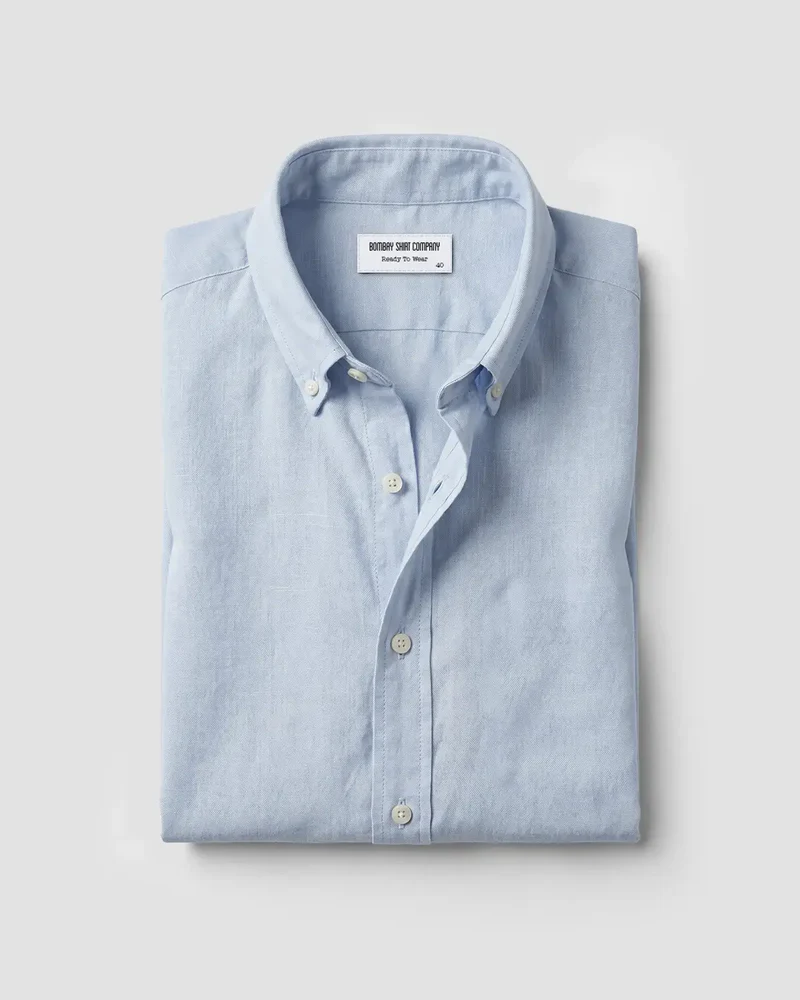
Light Blue Blended Linen Soft Washed Shirt
Bombay Shirt Company’s linen range has been among the more intelligent contributions to this conversation, bringing the customisation model that makes their shirts valuable in the first place to a fabric that, more than most, rewards being made to fit. A linen shirt in the right size is an entirely different garment from one that approximates fit, and the ability to specify collar, cuff, and measurement changes the equation entirely.
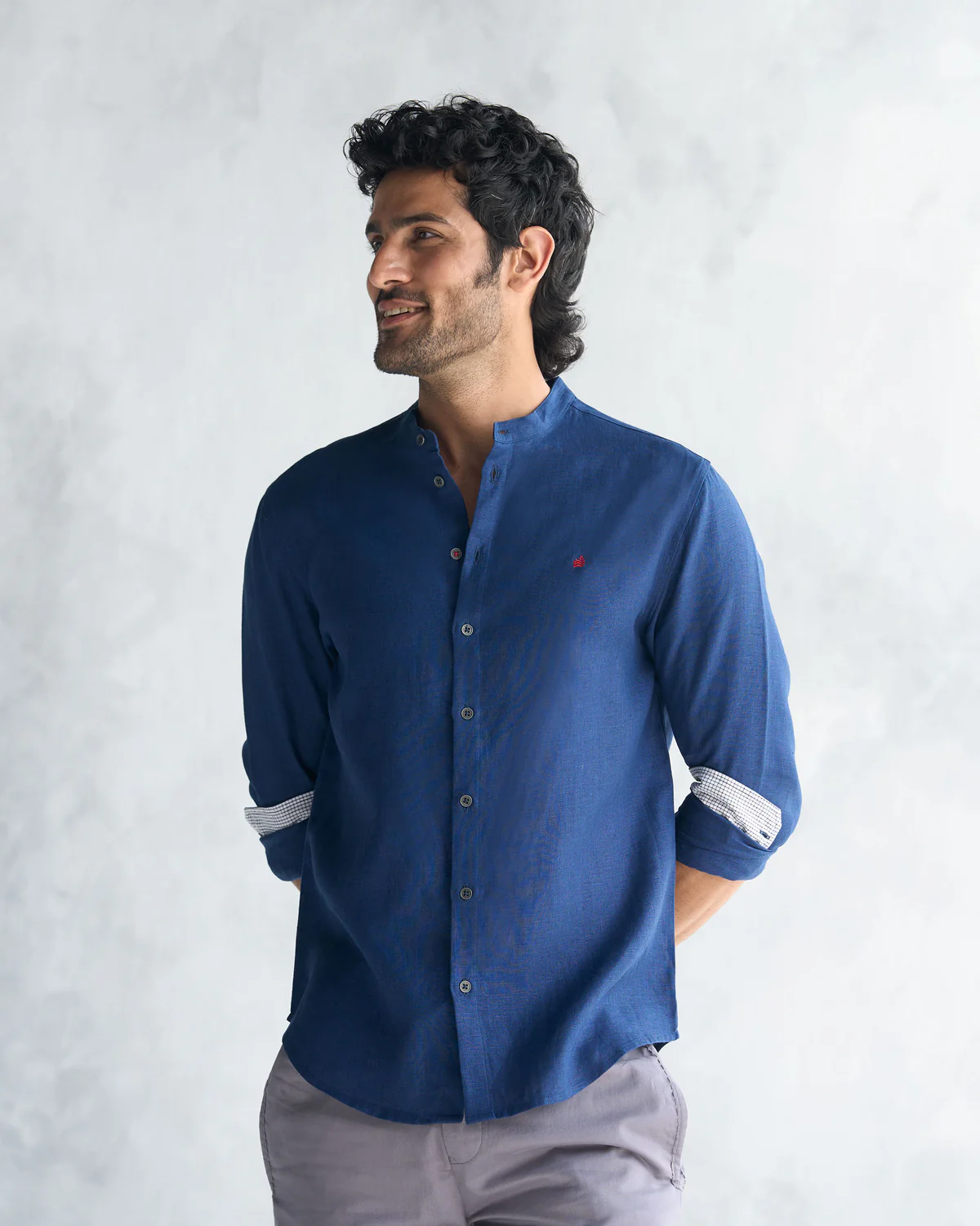
Nawab Shirt - Navy
Nicobar’s menswear consistently demonstrates what happens when linen is treated as a design material rather than a default: the brand’s shirts, trousers, and co-ord sets in linen are among the most considered pieces available in Indian menswear at their price point, with a colour intelligence that understands which tones the fabric flatters and which it does not. The washed blues, warm whites, and the particular muted terracottas of their palette work with linen’s natural variation rather than against it.
For men navigating occasions that sit between casual and formal, the linen blazer has emerged as the most versatile single addition to the wardrobe. In unstructured or half-lined construction, it provides the visual register of occasion dressing without the temperature cost, and it works over everything from a simple white tee to a more formal kurta.
The Occasion Question
The most significant shift in Indian linen dressing is the expansion of the occasions for which the fabric is now considered appropriate, and it is a shift that has happened from both directions simultaneously.
From the casual end, linen has moved up: it is no longer simply the fabric of the laid-back weekend, but a genuine option for work, for events, for the kind of dressing that used to require reaching for something more formal. From the occasion end, linen has moved in: the wedding guest in a linen saree, the groom in a linen bandhgala, the bridesmaid in a linen co-ord, are no longer making an eccentric choice. They are making a considered one, and the distinction has become visible enough that it registers as intentional rather than casual.
The designers responsible for this shift have done it not by insisting that linen can be what other fabrics are, but by demonstrating, through consistently beautiful work, that it can be something those fabrics cannot: honest, considered, and entirely suited to the specific conditions of Indian life.
The Crease
A final word on the crease, which remains linen’s most discussed characteristic and its most misunderstood one. The crease in linen is not a flaw. It is evidence of wear, of a fabric that responds to the body and the day rather than resisting them. The Japanese concept of wabi-sabi, the beauty of the imperfect and the transient, applies here with unusual precision: a linen garment that has been worn for several hours carries in its texture a record of that wearing, and the designers who have made linen worth dressing up again have understood this not as a problem to be solved but as a quality to be embraced.
The fabric that creases is also the fabric that breathes. The fabric that shows the day is also the fabric that survives it. In a wardrobe built for the reality of Indian summers, that is not a small thing. It is, quietly, the whole argument.
Follow Best List India for the culture, conversations, and ideas worth paying attention to.