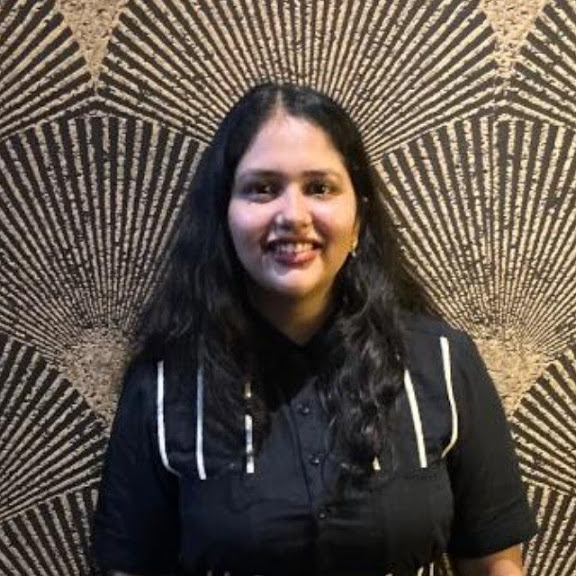
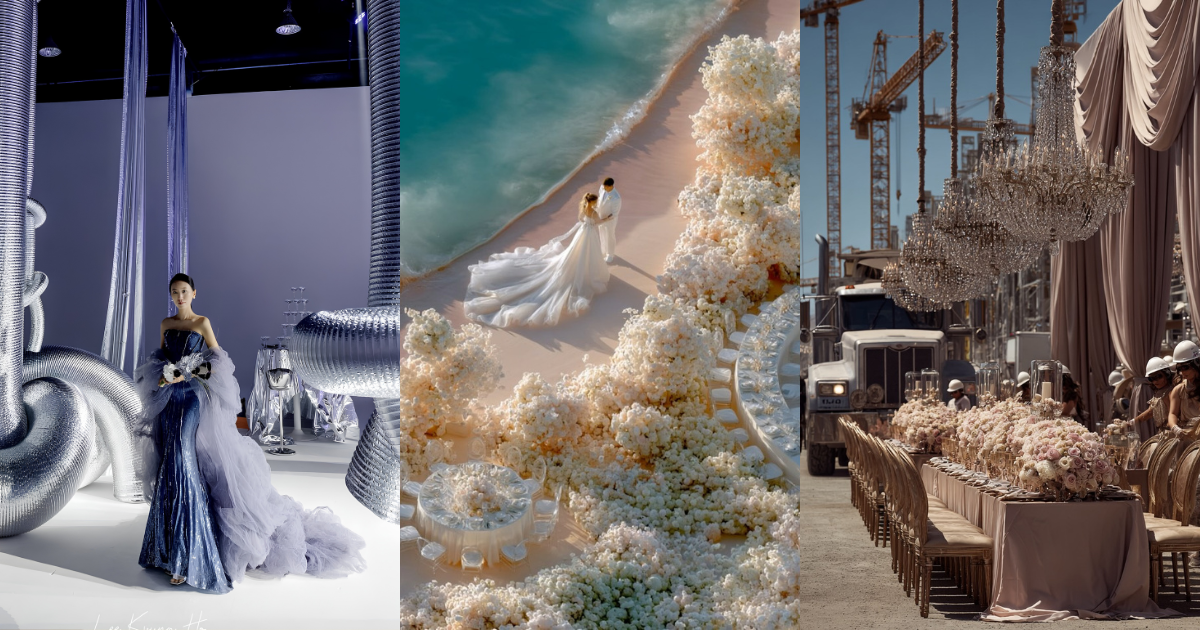
There are creatives who arrive at their calling in a straight line, and there are those whose path curves through seemingly unrelated chapters before the picture suddenly becomes clear. Anne Jang is the latter. She grew up sketching bridal gowns in a household shaped by her mother’s work in bridal and beauty. She trained as a graphic designer. She discovered Martha Stewart Weddings magazine and felt, with the particular clarity that only genuine direction produces, that she had found the world she wanted to work in. Today, as a wedding planner, creative director, and one of the few voices in the industry actively championing the use of AI in celebration design, she works alongside floral artist Ryohan to build what they call curated love stories, experiences that are simultaneously visually opulent and deeply personal. We spoke with her about the evolution of her creative process, what AI actually does in her workflow, and why she believes the planners who do not engage with it are choosing to give up their own competitive edge.
You grew up surrounded by weddings, your mother worked in bridal gowns and beauty. At what point did you realise you did not just want to be part of weddings, but wanted to author the entire experience?
From a young age, I was always drawn to wedding dresses. I used to sketch them constantly. Then life moved on and I forgot about it for a while. But everything changed when I came across Martha Stewart Weddings magazine. It completely pulled me into the world of creative weddings. It was not just an inspiration. It showed me, clearly, the direction of what I wanted to do with my life.
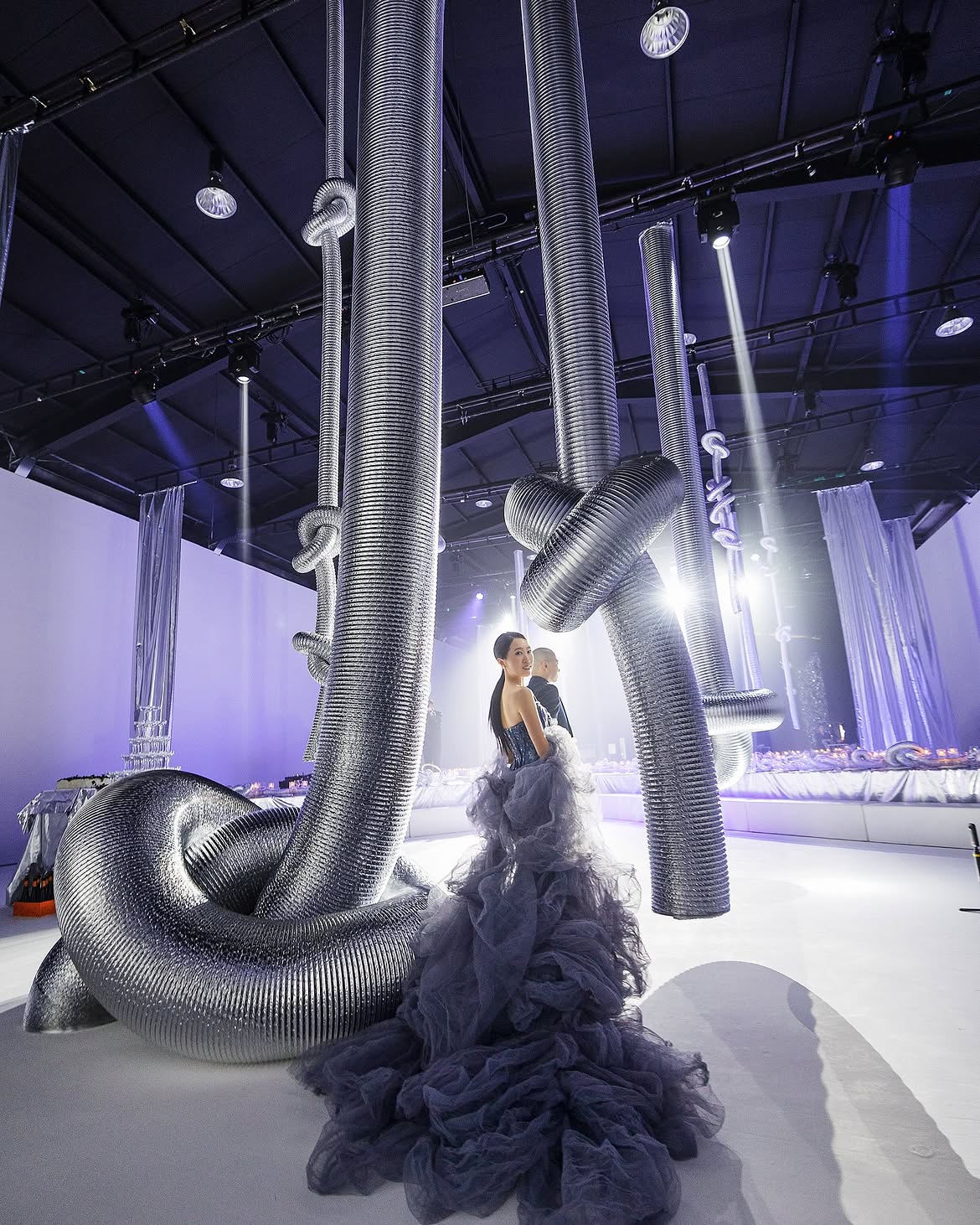
You began as a graphic designer before becoming a wedding planner and creative director. Today, you also work with AI. How has your creative process evolved across these three worlds, from design to physical space to digital imagination?
In the beginning, my inspiration came from everyday moments and magazines. Then, as the internet grew, I was able to research and explore a much wider world, and my perspective expanded. Now, with AI, I can create beyond the boundaries of my own imagination. Looking back, it feels like each phase stretched the limits of my creativity a little further.
Ryohan brings the flowers, you bring the event vision. Now, with AI entering that equation, how do these three forces, floral artistry, spatial design, and machine intelligence, come together in your work?
Ryohan and I work together on creative directing and planning. We each paint the big picture, develop concepts tailored to each couple, and see the design through to the end, all while staying in close communication so that the entire experience flows as one cohesive story. With AI now in the mix, we can visualise colour combinations and overall atmosphere in advance, which makes it so much easier to share ideas with clients clearly and confidently.
You describe yourselves as curators of love stories. In an age where AI can generate infinite visual ideas, how do you ensure the story remains deeply personal and not algorithmic?
A wedding concept should never be random. When the bride and groom’s own story is woven into the experience, the ceremony becomes truly moving, and guests do not just attend, they feel like they are part of that love story. That is why I always make it a point to blend the couple’s personal narrative with my own creative vision. That combination is what makes a wedding feel genuinely meaningful.
You are among the few planners actively championing AI in wedding design. What drew you to it early, and what did you see in it that others perhaps did not?
My introduction to AI was honestly completely by chance. Before becoming a wedding planner, I worked as a graphic designer, so I have always had a deep passion for visuals. When I first discovered AI image generation, I was instantly hooked. The more I explored it, the more naturally it connected to my work as a wedding planner. What really captivated me was the ability to take an idea that seemed impossible or unrealistic and make it look tangible, real, right in front of you. That is how I started with AI artwork, not because someone told me to, but because I fell in love with it on my own.
Practically speaking, how does AI fit into your workflow today? Is it about ideation, visualisation, client communication, or something more transformative?
AI is with me at virtually every stage of my work, from the very first spark of an idea all the way through to programmes, timelines, and design. Honestly, the days of working without AI already feel like a distant memory.
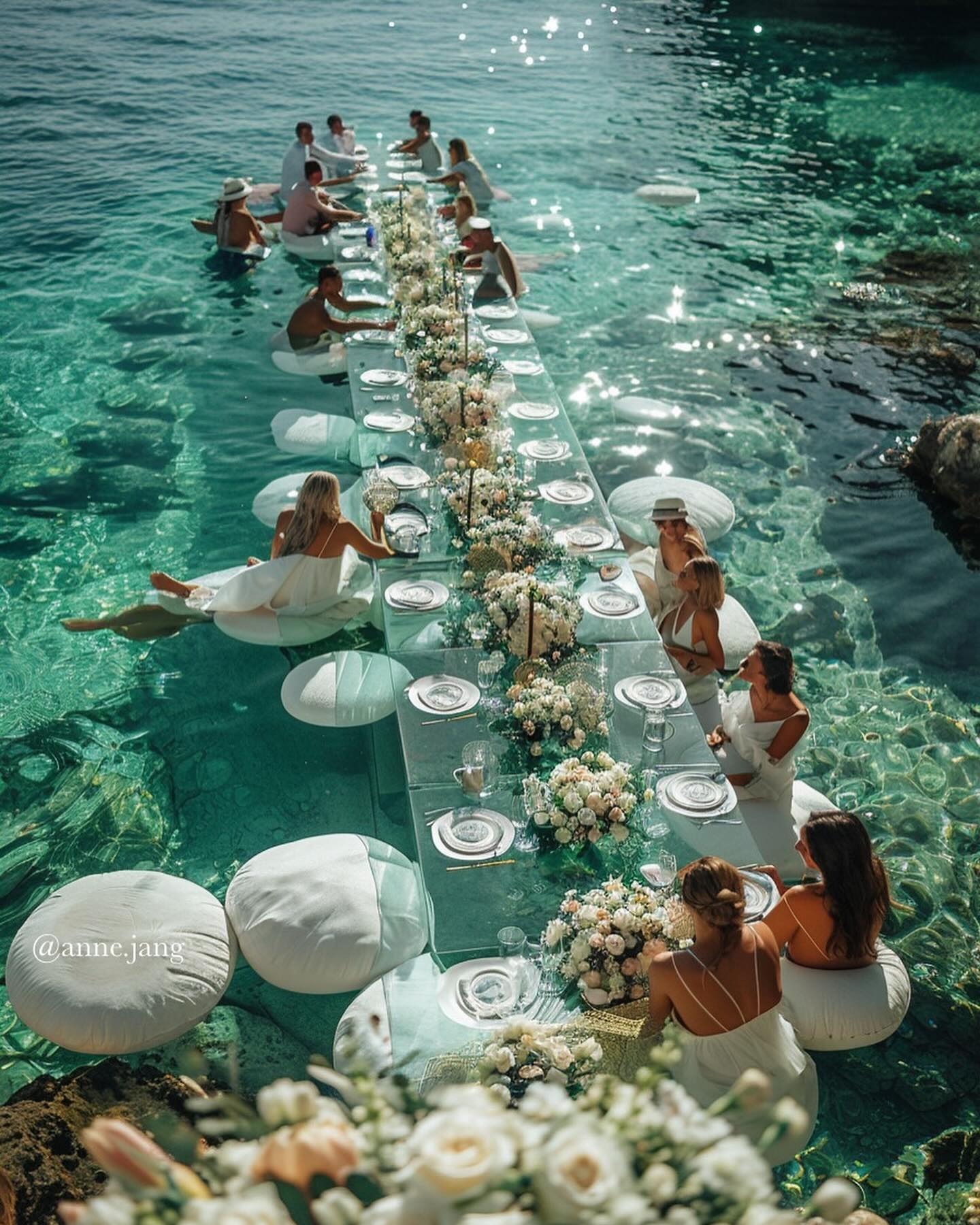
Do you think AI is misunderstood within the wedding industry? What are most planners getting wrong about it right now?
I think a lot of people have the misconception that AI is going to replace their jobs. And yes, certain repetitive support roles may be affected. But the person who draws the big picture, who sets the direction, who reads human emotion, AI simply cannot do that. It cannot feel the atmosphere of a moment. That is why I think it is so much more helpful to see AI not as something that replaces you, but as a powerful tool that fills in your gaps. Once you shift that perspective, everything opens up.
Flowers are central to your work, tactile, emotional, ephemeral. How do you balance something so organic and human with something as digital and limitless?
In today’s wedding trends, most people prefer a balance between organic beauty and digital aesthetics, and flowers remain absolutely central to that. But as time goes on, I think there will be couples who seek something more unique and unconventional, and the idea of going fully digital may not be as far-fetched as it sounds today. For now, flowers are essential. But I keep an open mind about how that might evolve.
Your signature is opulence, lush, abundant, unapologetically maximalist. Has AI allowed you to push that vision even further, perhaps beyond what was previously imaginable?
AI has genuinely been a huge help. That said, there are still real limitations: client budgets, the practical constraints of each venue. These are things that always need to be factored in. But compared to working without AI, I can now see far more possibilities than I ever could before. It feels like the ceiling on imagination has been raised.
Is there a project where AI meaningfully changed the outcome of a wedding or design concept?
AI has played a meaningful role in helping organise the concept and story behind each wedding, and in making it easier to naturally weave the couple’s unique narrative into every detail. Because of that, I can honestly say that the weddings where AI has been part of the process carry a deeper sense of purpose. They feel like more than just beautiful events. They feel like someone’s story.
What do couples consistently underestimate, not just about luxury weddings, but about the role of technology and pre-visualisation in bringing them to life?
A lot of couples assume that wedding design is as simple as producing an image, and that it therefore should not cost very much. But what they consistently underestimate is how much time, expertise, and investment it actually takes to turn that vision into reality. The gap between a beautiful image and a beautifully executed wedding is bigger than most people expect.
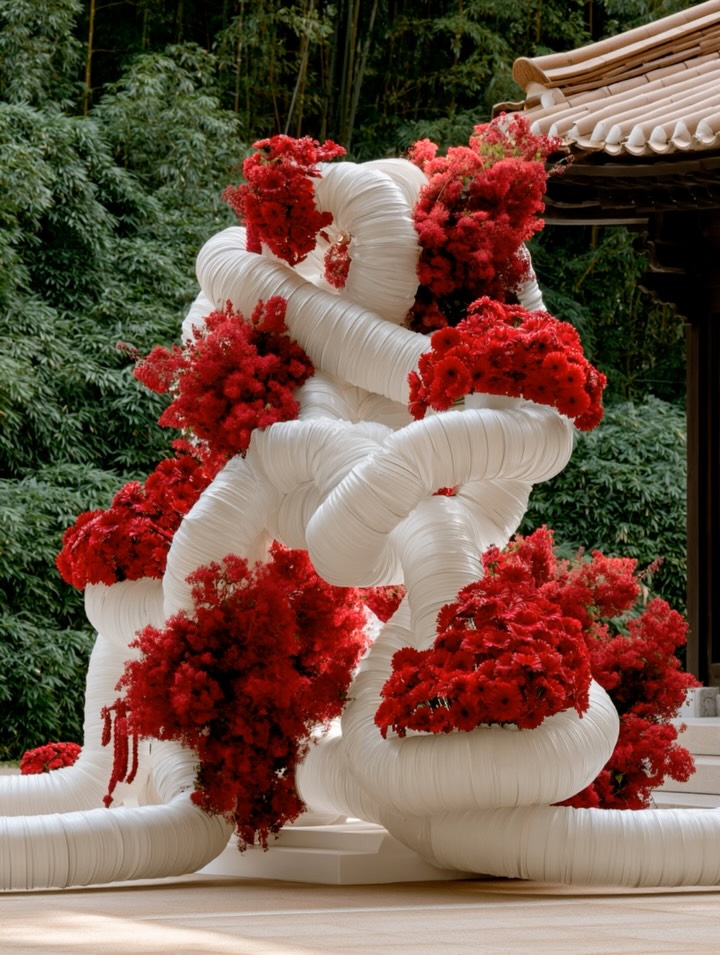
For planners who are hesitant: why do you believe embracing AI is no longer optional, but essential?
I genuinely believe that those who do not understand AI will eventually be replaced by those who do. Gen Z in particular is already using AI as a natural part of their everyday lives, and they will naturally gravitate toward planners who speak that same language. Beyond that, AI saves time and expands the range of ideas available to you. Choosing not to embrace it is essentially choosing to give up your own competitive edge.
Looking ahead, how do you see AI shaping the future of wedding design over the next five to ten years?
I think a lot of what we do today will become automated, document organisation, idea generation, creative direction, all of it faster and more efficient than ever. We are entering an era where even non-professionals can produce expert-level images, videos, documents, and plans through AI. But that is exactly why I believe that a true professional who also masters these AI skills will become an extraordinarily powerful force, in a way that simply cannot be compared to anything else.
Follow Best List India for the culture, conversations, and ideas worth paying attention to.