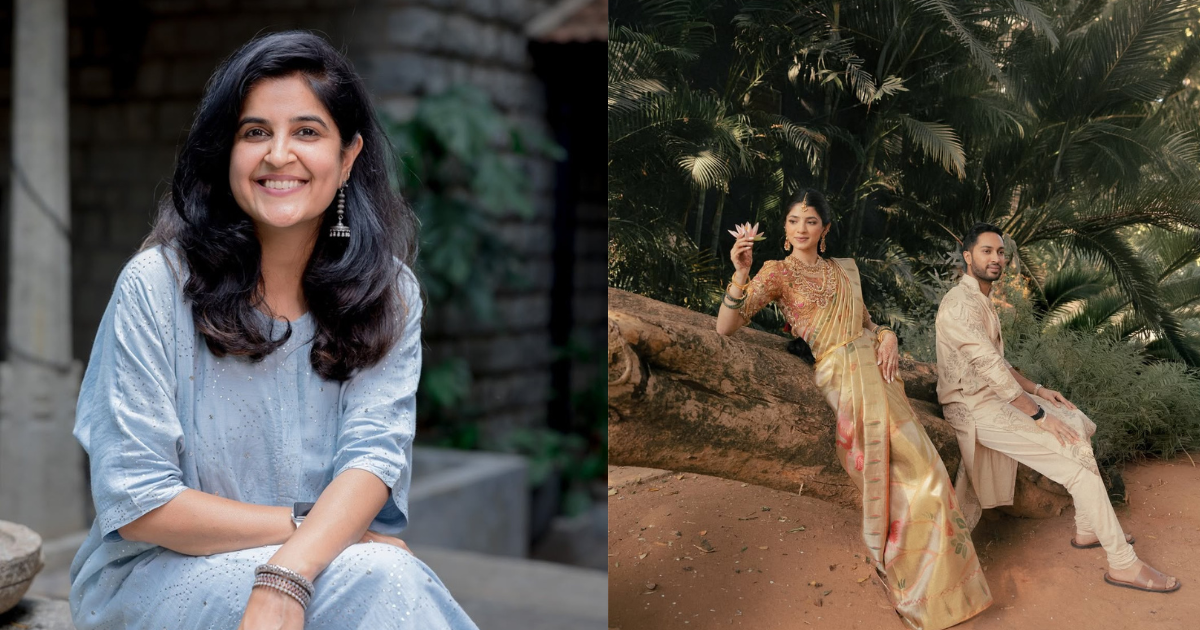
There is a particular quality of honesty in the founding story of 1Plus1 Studio that most studios would not lead with. Manvi Gandotra, its founder, looks back at her own wedding photographs and sees what is missing. The ceremony is documented. The rituals are there. The formal moments are all accounted for. What is not there is what she actually remembers: the grandmother watching from across the room, the father trying not to cry, the friends laughing in a corner, the bride taking a breath before walking in.
That gap became the company. Twelve years, 300 love stories, 60 cities, 12 countries, and three consecutive Great Indian Wedding Awards for Best Wedding Film later, it has become one of the most respected wedding storytelling studios in India, built by a woman who came from sales rather than photography and who earned every part of what she built in an industry that did not make it easy.
We spoke with Gandotra about what travelling across twelve countries to photograph weddings has taught her about human beings, why she finds film harder than photography, and what the single frame that captures everything 1Plus1 stands for would actually look like.
1Plus1 Studio was born from the most personal of origins, your own wedding and what it felt like to have that day truly seen and held by a camera. Take us back to that experience. What did great wedding photography do for you as a bride that made you want to spend your life doing it for others?
My own wedding is actually what made me realise what I did not want wedding photography to be.
When I look back at my wedding photographs, I remember feeling that so much of the focus was on the ceremony, the rituals, the formal moments, the things that were expected to be photographed. But when I think about what I actually remember from that day, it is the little things. The expressions, the people, the chaos, the laughter, the fleeting moments that happened around the ceremony. And so much of that was not captured.
That stayed with me. I started thinking about how strange it is that a wedding can be one of the most emotionally significant days of your life, and yet the photographs can sometimes tell you more about what happened than about what it actually felt like.
That became the foundation of 1Plus1 Studio. I wanted to create photographs that looked beyond the obvious, that noticed the grandmother watching from across the room, the father trying not to cry, friends laughing in a corner, a bride taking a breath before walking in. The things that are not necessarily part of the ceremony, but are actually the memories you carry with you.
You entered a competitive, male-dominated industry without a formal photography background, trading a sales career for a camera and a conviction. What were the first years actually like, and what kept you going when the field pushed back?
The beginning was honestly much harder than it looks in hindsight.
I did not come from photography. I did not have a photographic legacy, a network in the industry or years of technical training behind me. I was essentially learning the craft while simultaneously trying to build a business around it.
There were definitely moments when people questioned whether I belonged in the space. But I think coming from sales actually helped me enormously. I knew how to listen to people, understand what they wanted, build relationships and, most importantly, keep going when someone said no.
The camera was the part I had to learn. The conviction was already there.
And I think what kept me going was a very simple belief: if I could create work that genuinely moved people, eventually the work would speak louder than my background.
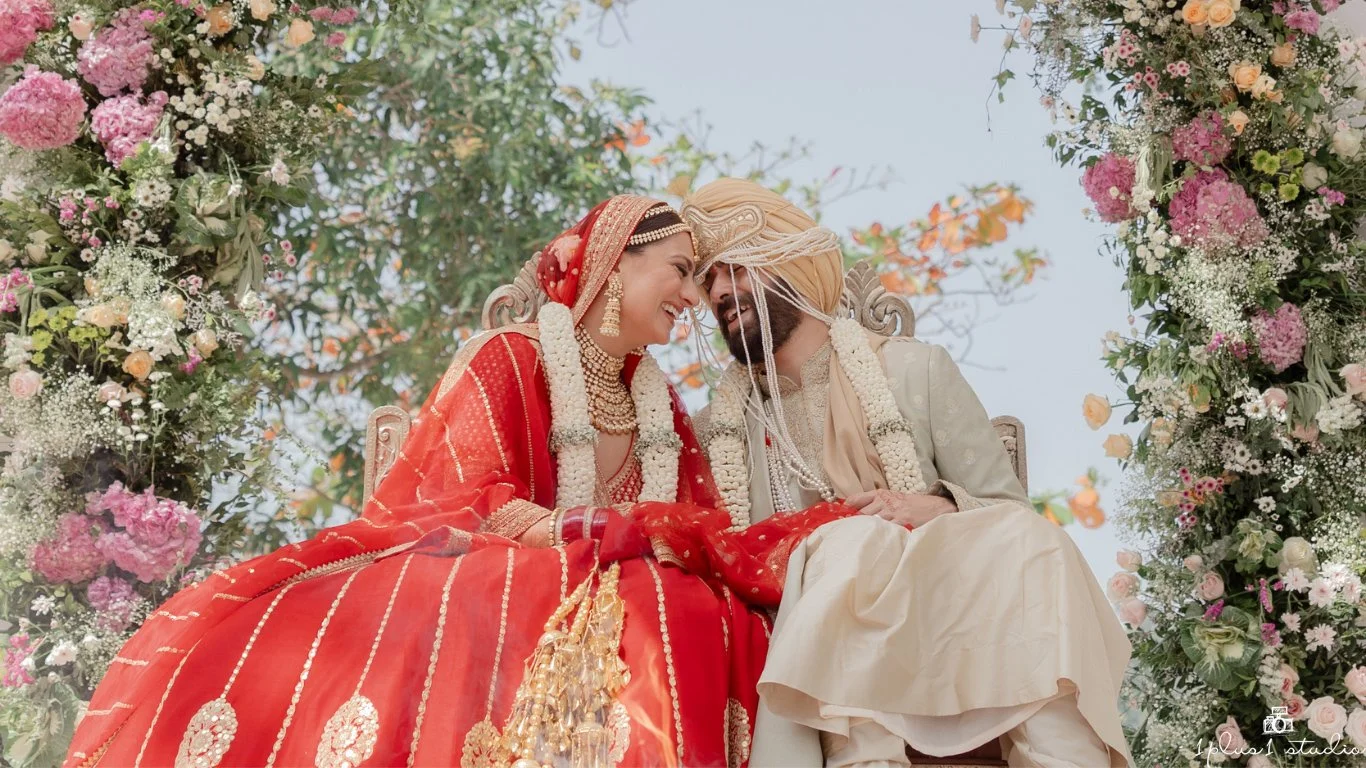
Over twelve years, 1Plus1 Studio has documented 300 plus love stories across 60 cities and 12 countries. Every couple, every culture, every kind of love is different. What has travelling that widely to photograph weddings taught you about what is universal in the way human beings celebrate commitment?
It has taught me that the rituals are different, but the emotions are remarkably similar.
We have photographed weddings across cultures where the food, clothing, music, ceremonies and traditions are completely different. But somewhere in every wedding, there is a parent looking at their child and realising that life has changed. There are friends who have not seen each other in years. There is someone trying not to cry. There is laughter that completely takes over a room.
Those moments are universal.
I have also realised that weddings are really a celebration of relationships, not just the relationship between two people getting married, but the entire ecosystem of people who have shaped them.
Travelling for weddings has made me much more curious and much less presumptive. You arrive in a new culture thinking you need to understand everything, and very quickly you realise that your job is actually to observe, listen and allow people to show you what matters to them.
Your approach blends documentary-style photography with artistic portraiture, unscripted moments alongside considered framing. How do you hold both impulses at once in a room where everything is moving and nothing waits for you?
For me, they are not really opposing approaches.
The documentary side is about being present enough to recognise something real when it happens. The artistic side is about knowing how to frame that moment in a way that makes it visually powerful.
A wedding photographer has to be both an observer and a director, but you have to know which role the moment needs.
If someone is laughing with their friends and something completely spontaneous is happening, I do not want to interrupt it to make it prettier. I want to be ready for it. But there are also moments where I know I can create something more considered, a portrait, a composition, a frame using architecture or light, and those are opportunities to create something intentionally beautiful.
The magic, for me, is knowing when to intervene and when to disappear.
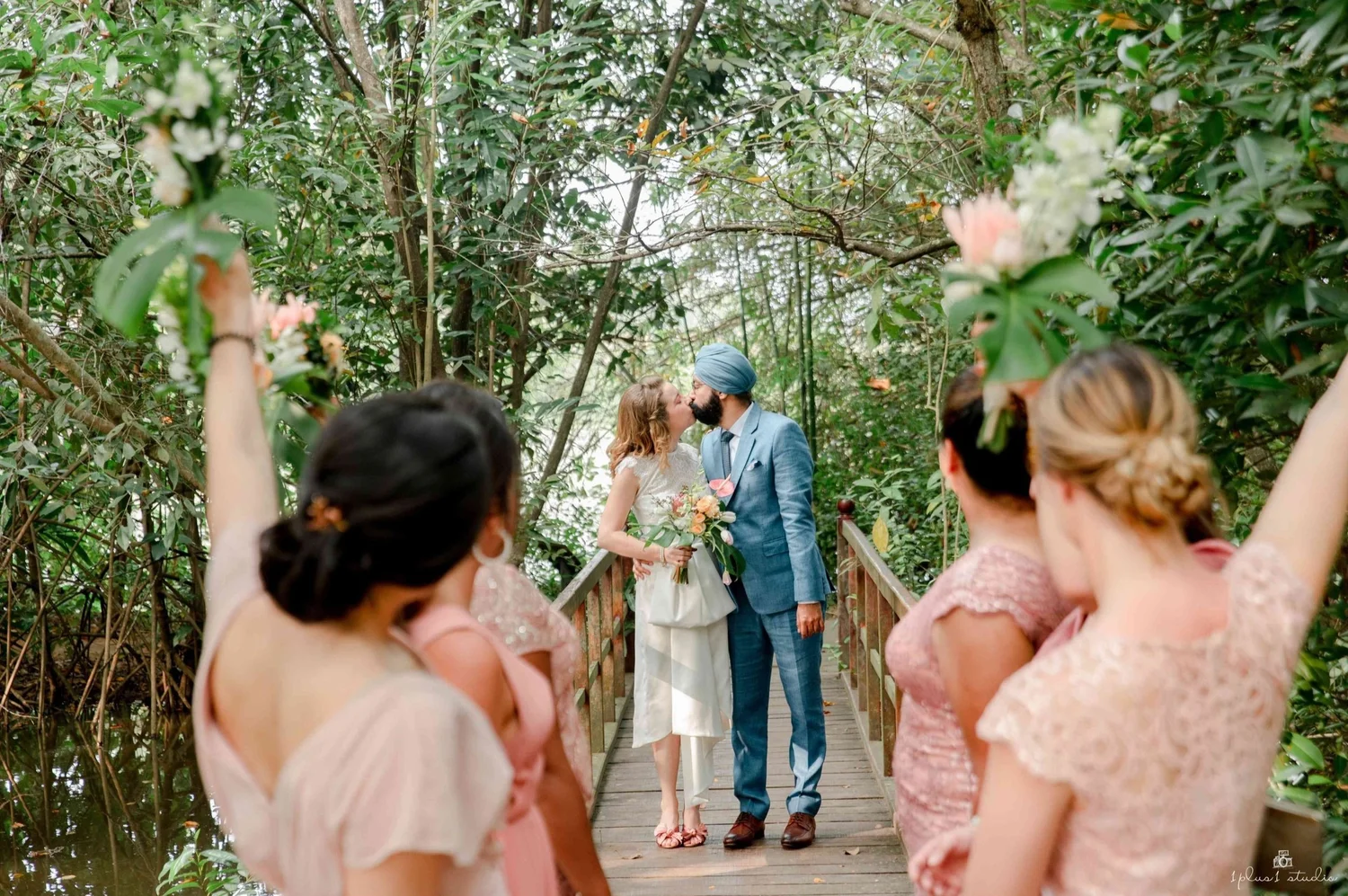
1Plus1 Studio won the Great Indian Wedding Awards for Best Wedding Film in 2023, 2024 and 2025. Film and photography are two entirely different storytelling disciplines. What does a wedding film demand of you that a photograph does not, and which one do you find harder to get exactly right?
Photography captures an instant. Film has to create an emotional journey.
With a photograph, you can sometimes say everything through one expression, one composition or one gesture. A film has to make you feel something over time. The pacing, sound, music, movement, dialogue, silence and sequencing all become part of the storytelling.
I actually find film harder.
You can have hundreds of beautiful shots and still not have a great film. The film needs a point of view. It needs rhythm and emotional progression. It needs to know what to leave out.
And perhaps most importantly, wedding films have to feel like the couple, not like a generic beautiful wedding film. That is something we have become increasingly obsessed with at 1Plus1: finding the story within the wedding rather than simply making the wedding look spectacular.
You pursued the IIM Women Entrepreneurs Scholarship and the Advanced Growth Programme at ISB alongside running a creative studio. Most artists resist the business school impulse. What made you lean into it, and what did those programmes change about how you lead 1Plus1 Studio?
For a long time, I thought being a creative entrepreneur meant that the creative part was the most important part.
As the company grew, I realised that my job was changing. If I wanted 1Plus1 to become bigger than me, I could not continue to make every decision myself. I needed to understand leadership, finance, strategy, people, systems and growth.
Business education gave me a language for things I had often been doing intuitively.
The biggest shift was understanding that building a creative company is not about taking creativity out of the equation. It is about creating the structure that allows creativity to thrive consistently.
Today, I think much more about the kind of organisation I am building, not just the kind of photographs we are making.
You are a mother to a six-year-old daughter, and you photograph some of the most emotionally charged days in other families’ lives. How does being a parent change what you see through the lens, particularly in the moments between parents and their children at a wedding?
Becoming a mother has made me much more sensitive to the small moments between parents and children.
Before, I might have seen a father fixing his daughter’s jewellery or a mother holding her son’s face as simply a beautiful moment. Now I understand the emotional weight that can sit inside something that ordinary.
I think parenting has also made me more aware of time. You suddenly understand how quickly children change and how quickly these chapters disappear. So when I photograph parents with their children at weddings, I am not only thinking about the wedding they are experiencing that day. I am thinking about the photograph that child might look at twenty years later.
That is a very different way of looking through a camera.

If 1Plus1 Studio were a single frame, not a photograph you have already taken but the one that perfectly captures what the studio stands for, what would be in it?
If 1Plus1 Studio were a single frame, it would be a moment just after the ceremony.
The couple has stepped away from everyone for a moment. They are still dressed in all the grandeur of the day, but the formality has disappeared. They are laughing, a little overwhelmed, maybe slightly exhausted, and completely themselves. Their family and friends are still around them, somewhere in the background, moving through the frame.
I love that moment because the ceremony is over, but the wedding is not. They are caught in this tiny space between what they have just experienced and everything that is still to come.
For me, that one photograph would hold everything I love about weddings: the beauty, the intimacy, the people, the chaos, the joy, and that quiet sense of having crossed into a new chapter without even realising it.
It would not be perfectly posed. It would not need to be. It would feel alive.
And I think that is what I want 1Plus1 to stand for: photographs that are beautiful enough to be framed, but honest enough to feel like a memory.
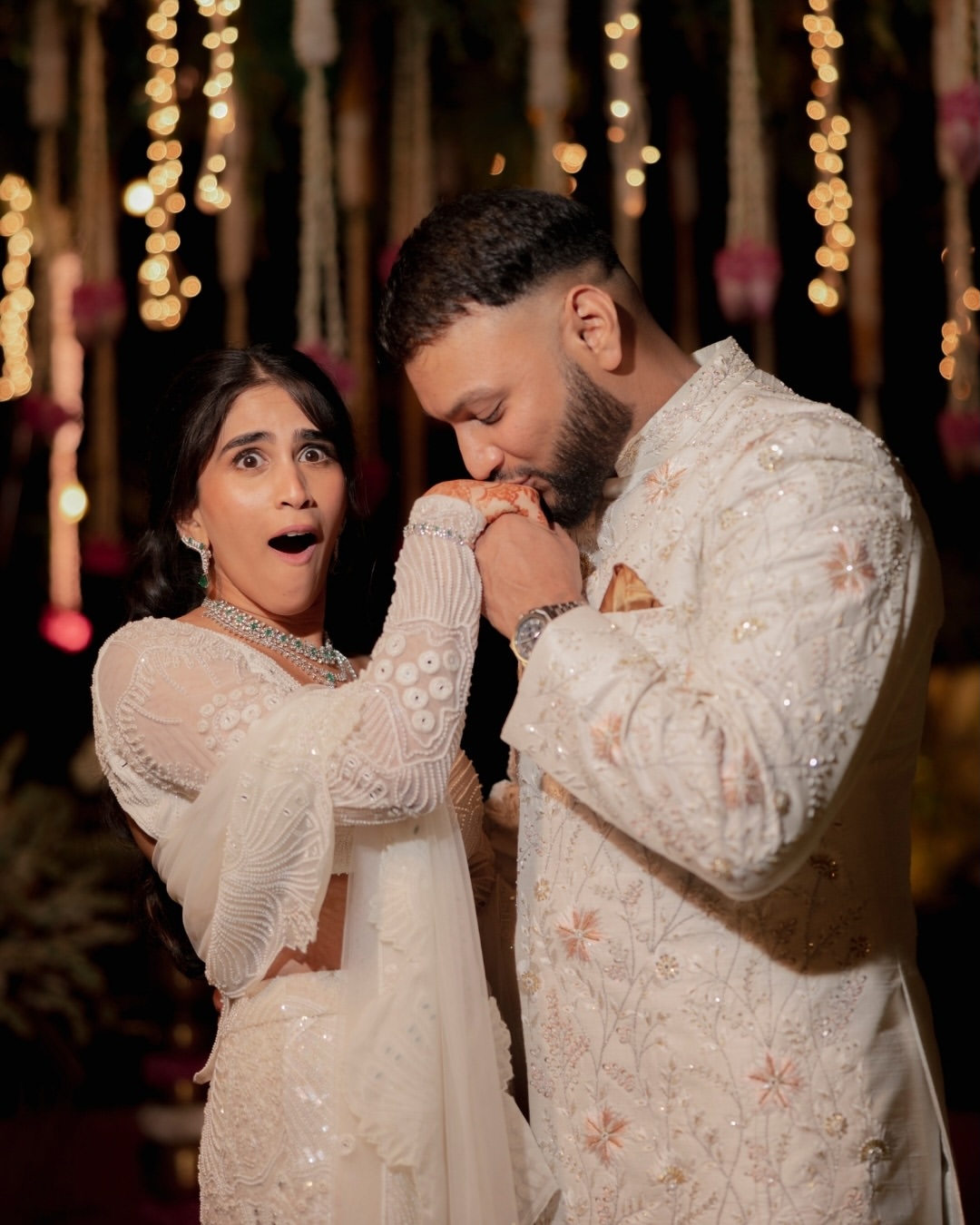
You describe your defining quality as genuine dedication and the ability to connect with people on a deeper level. In a wedding context, where you often meet couples months before their day and then spend the most intimate hours of it beside them, what does that connection actually feel like, and what do you do to build it?
I do not think you can manufacture intimacy. You have to earn enough trust for people to forget that you are holding a camera.
For us, that starts long before the wedding. We spend time understanding the couple, their personalities, their families, their dynamics, what they are excited about and sometimes even what they are nervous about.
On the wedding day, I think the most important thing is to be emotionally intelligent. You need to know when someone wants direction and when they need space. When a family needs you to step in and when you should simply observe.
The best compliment we can receive is not that we took beautiful photographs. It is when a couple says, you captured us exactly as we are. That is when I know the connection worked.
What is coming next for 1Plus1 Studio, and what does the most sought-after destination wedding photography and film team in the world look like when you have built it exactly as you envisioned?
I do not want 1Plus1 to simply become the biggest wedding photography studio.
I want it to become one of the most respected visual storytelling studios in the world, one that happens to specialise in weddings. I want us to work with extraordinary people, in extraordinary places, and continue pushing what wedding photography and filmmaking can look and feel like. I want to build a team where the work does not depend on one person’s vision, but where every person brings an exceptional creative point of view.
And I want us to remain selective. For me, success is not photographing every wedding. It is having the freedom to choose the stories we believe in, work with people who value what we do, and keep making work that ten years from now still feels relevant.
The dream is that when someone thinks about wedding storytelling at the highest level anywhere in the world, 1Plus1 is one of the names that comes to mind.
Follow Best List India for the culture, conversations, and ideas worth paying attention to.