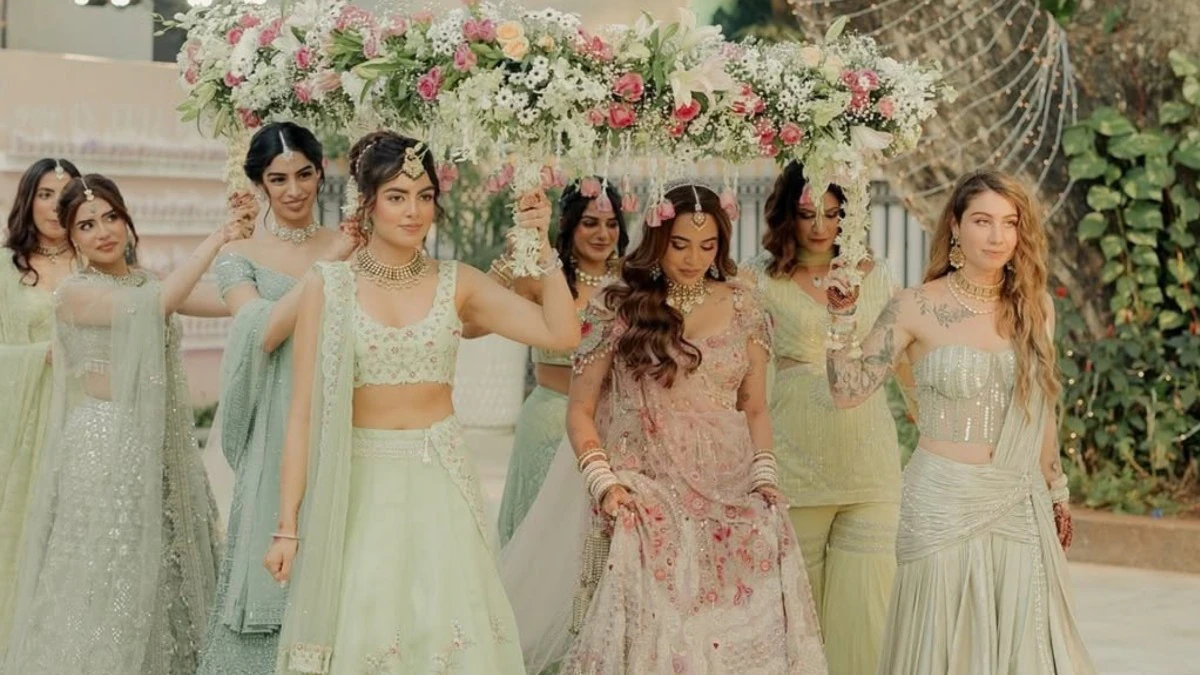
The lehenga has held its position at the centre of the Indian bridal wardrobe with a dominance so complete that, for a generation of brides, it ceased to feel like a choice at all. It was simply what a bride wore. The embroidery, the weight, the silhouette, the months of fittings, the photograph at the mandap: the whole architecture of the Indian wedding, in its most widely reproduced visual form, was built around it.
Something is shifting. Not dramatically, not universally, and not in a way that threatens the lehenga’s position so much as it complicates the assumption that the lehenga is the only answer. Across India’s metros and increasingly beyond them, a growing number of brides are arriving at their weddings in sarees, in draped silhouettes, in structured gowns that reference Indian craft without reproducing Indian convention, in choices that reflect, above all, a considered relationship with who they are and what they want the most significant outfit of their lives to say.
The shift is not about rejecting tradition. It is about expanding the definition of what tradition can mean for a woman who is, in 2026, more informed, more confident, and more willing to trust her own instincts about how she wants to be seen on the day she is looked at most.
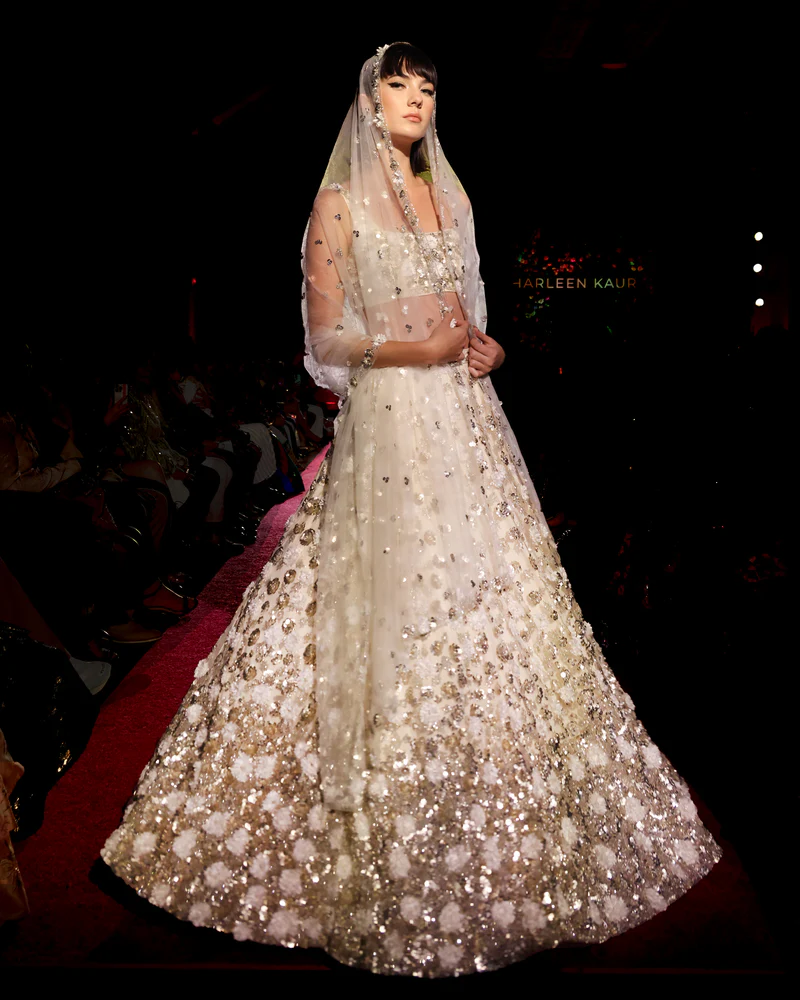
Why the Lehenga Became the Default
To understand why brides are moving beyond the lehenga, it helps to understand how thoroughly it came to occupy the space. The lehenga’s rise to total dominance in Indian bridal fashion was not the result of a single moment but of a decades-long accumulation of forces: the Bollywood wedding as aspirational template, the bridal industry’s commercial interest in a garment that required extensive embroidery and multiple fittings, the social performance of the Indian wedding and the particular visual grammar it developed around the heavily embellished, maximally embroidered silhouette.
The lehenga in this context became less a garment and more a set of expectations. It carried the weight of what a bride was supposed to look like, which is a different and heavier thing than what any individual woman might actually want to look like on her wedding day.
The bride who has grown up with Instagram, who has attended twenty weddings before her own, who has seen the same embroidered silhouette reproduced across a thousand wedding photographs, arrives at the bridal conversation with a specific kind of fatigue. Not fatigue with Indian craft or Indian occasion dressing, but with the sameness of an industry that spent years producing variations on a single answer to a question that deserves considerably more.
The Saree’s Return, and What It Means
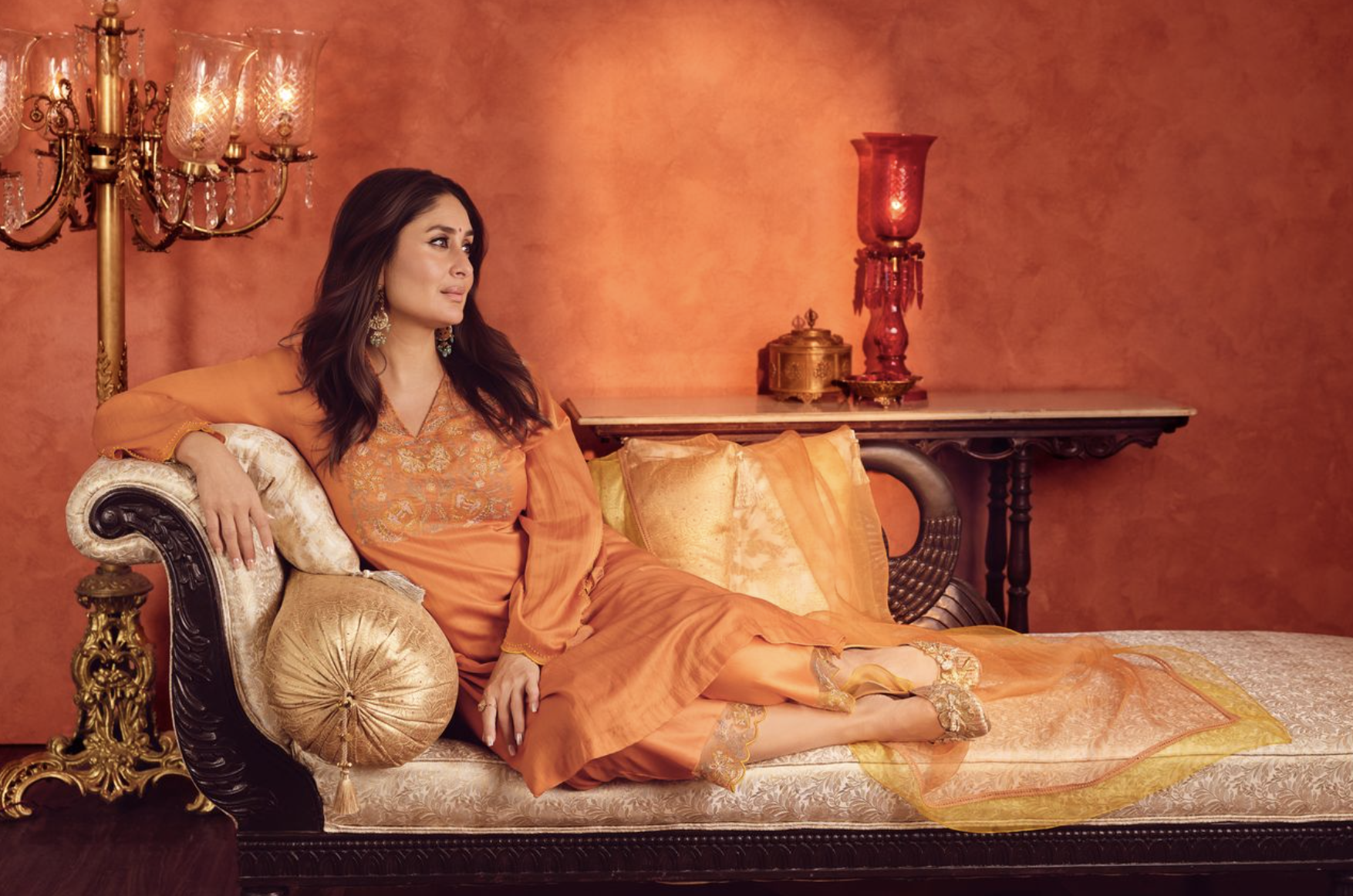
The most significant movement in contemporary Indian bridal dressing is the return of the saree, not as a concession to regional tradition or family expectation, but as a genuine first choice made by women who have considered everything available and arrived, deliberately, at six yards of fabric.
The brides choosing sarees in 2026 are not doing so because it is what their mothers wore, though in many cases it is. They are doing so because the saree, styled with contemporary intelligence and executed in fabrics that respond to the specific demands of a wedding, offers something the lehenga structurally cannot: the ability to move, to breathe, to occupy a room without being occupied by the garment.
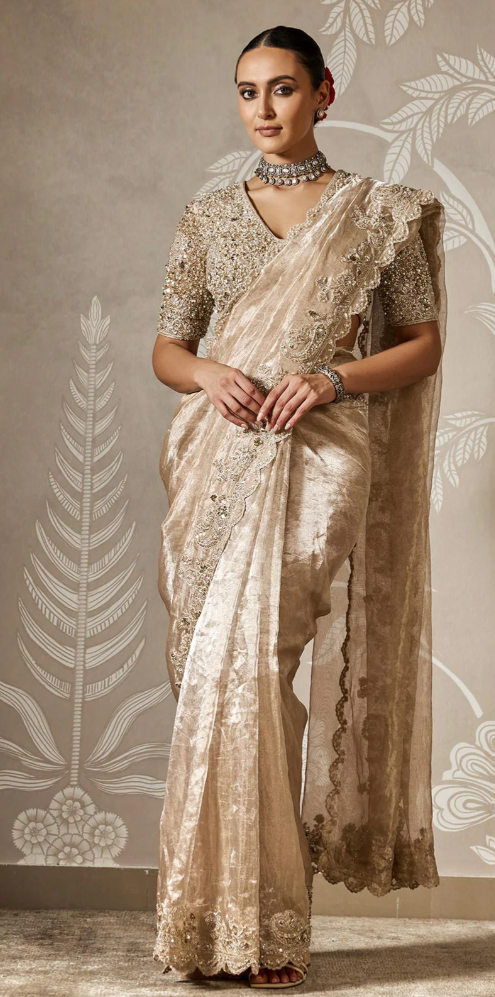
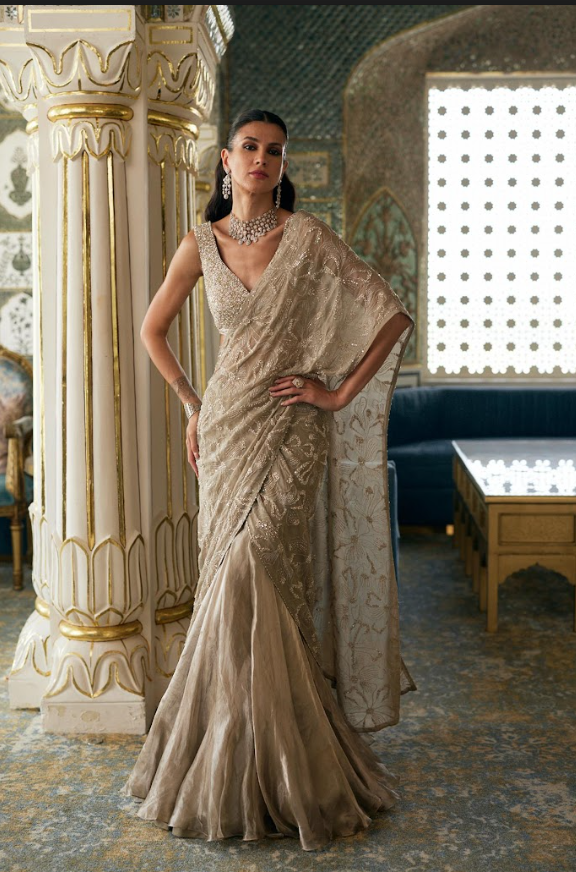
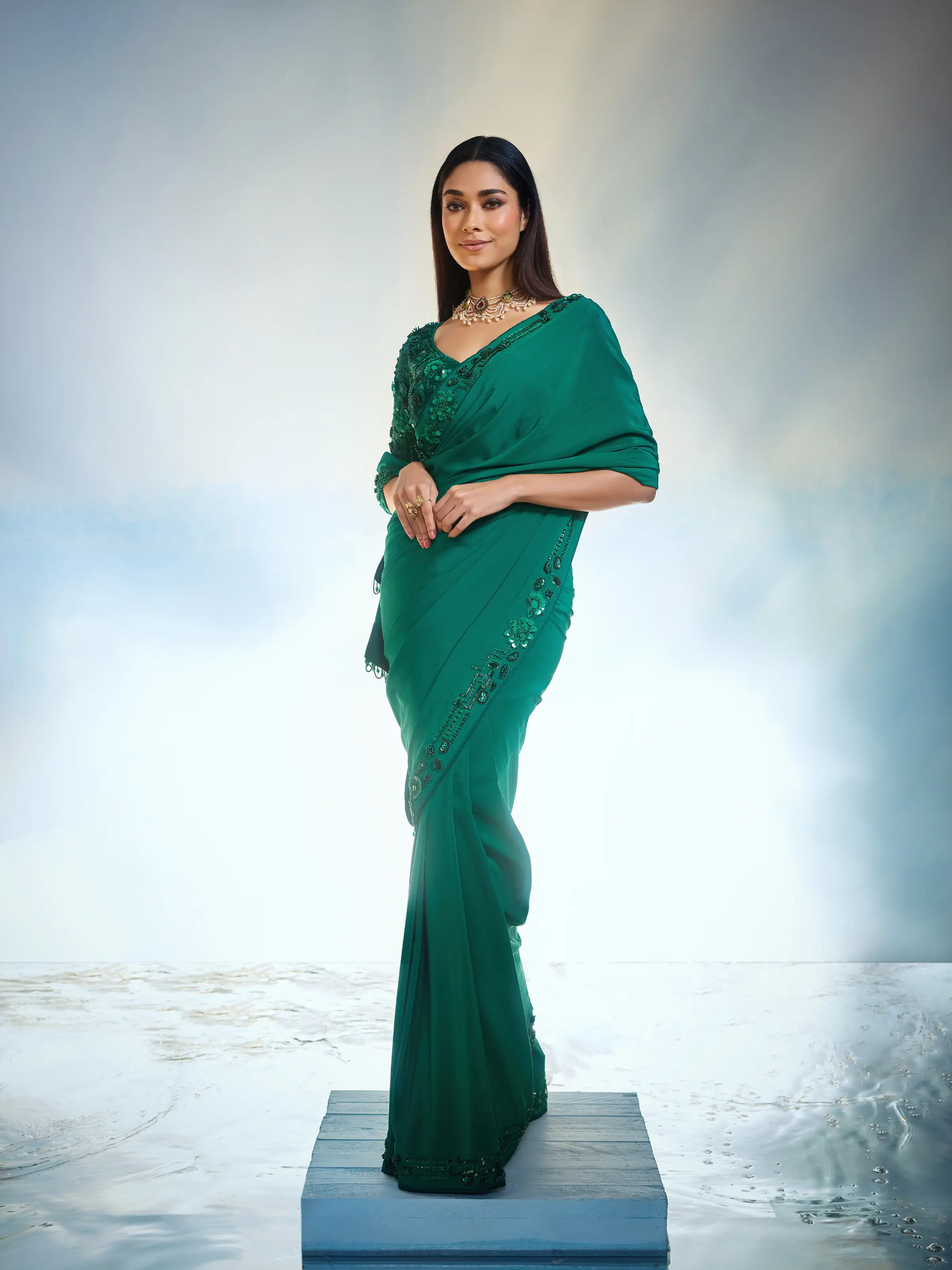
Saree with Velvet Blouse in Green by Mrunal Khimji Label
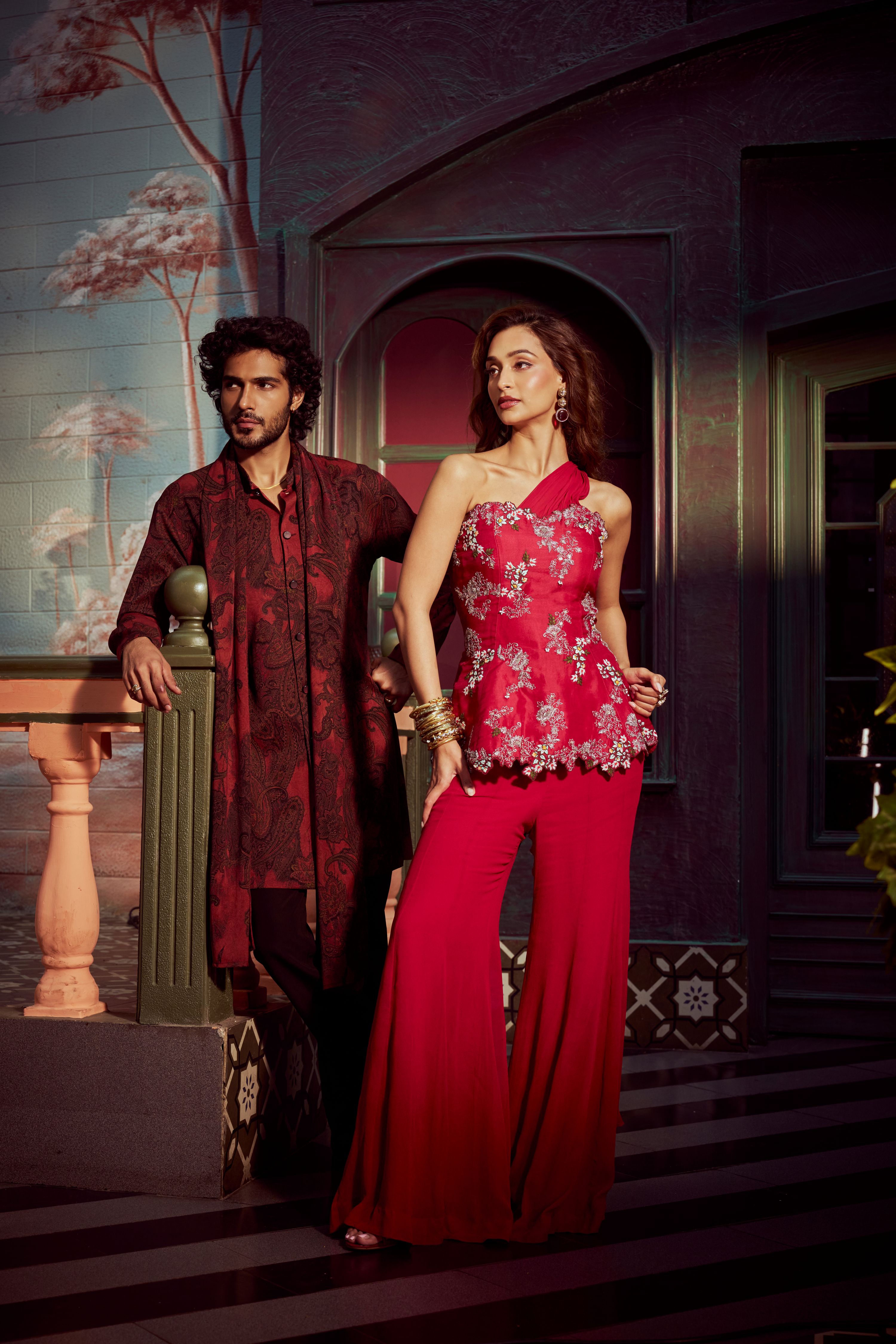
The Separates Question
One of the more quietly radical developments in Indian bridal dressing is the growing number of brides choosing to wear separates, a structured blouse with a draped skirt, a cropped jacket over a simple silhouette, or a coordinated set that references Indian occasion dressing without reproducing its conventional forms. The logic is partly practical: separates can be reworn in ways that a heavily embroidered lehenga almost never can. But it is also aesthetic: the clean line of a well-constructed separate carries a modernity that the maximalist bridal garment, for all its beauty, is not always able to accommodate.
The rewearability argument is one that brides are making with increasing frequency and without apology. The garment that costs as much as a small car and is worn once, however magnificently, is a different kind of investment from the one that enters the wardrobe as a wedding outfit and remains in it as something that continues to earn its place. For the bride who is also thinking about what her relationship with her wardrobe looks like after the wedding, the question of what she will do with the garment is not unromantic. It is practical in the best sense.
What the Families Think
No honest account of the unconventional Indian bridal choice can avoid the family dimension, which remains the most significant external force acting on any bride’s decision about what to wear. The Indian wedding is, in most cases, a family event before it is an individual one, and the bride negotiating her outfit is frequently negotiating it with and against a set of expectations that have decades of precedent behind them.
What has changed is the confidence with which brides are entering those negotiations, and the growing number of families that have, sometimes with initial resistance and sometimes with immediate enthusiasm, arrived at an understanding that the bride’s comfort and conviction in what she is wearing is itself an important part of what makes a wedding beautiful.
The bride who is genuinely at ease in her outfit, who feels like herself rather than a costumed version of what a bride is supposed to look like, brings something to the occasion that no amount of embroidery can manufacture. The families who have understood this have, in many cases, become the most enthusiastic advocates for their daughter’s unconventional choice.
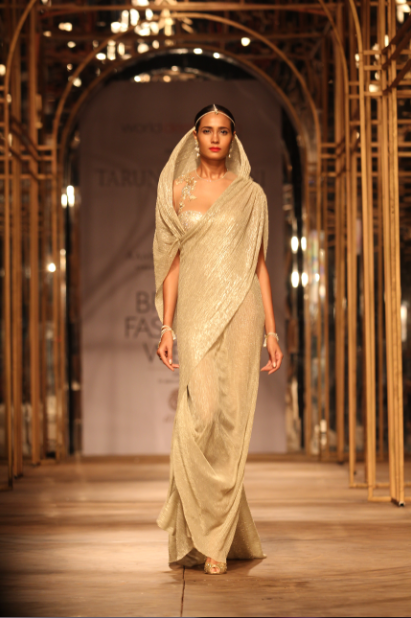
The Deeper Shift
The movement beyond the lehenga is, at its most meaningful, a story about agency. About the Indian bride’s growing insistence on the right to make an informed, considered, personal choice about the most significant outfit she will ever wear, rather than defaulting to a cultural script that was written for a different generation’s sense of what a bride should be.
That insistence is not anti-tradition. The brides choosing Jamdani sarees and Chanderi drapes and Raw Mango tissue silks are, in many cases, more deeply engaged with Indian textile tradition than the conventional bridal market has ever asked its customers to be. They know what they are wearing, where it comes from, who made it, and what it means. That knowledge is itself a form of respect for the tradition it draws from.
What they are rejecting is not tradition but the narrowing of tradition into a single, commercially convenient form. The Indian bridal wardrobe, at its most expansive and most honest, has always contained multitudes. The brides of 2026 are simply insisting on having access to all of them.
Follow Best List India for the culture, conversations, and ideas worth paying attention to.