
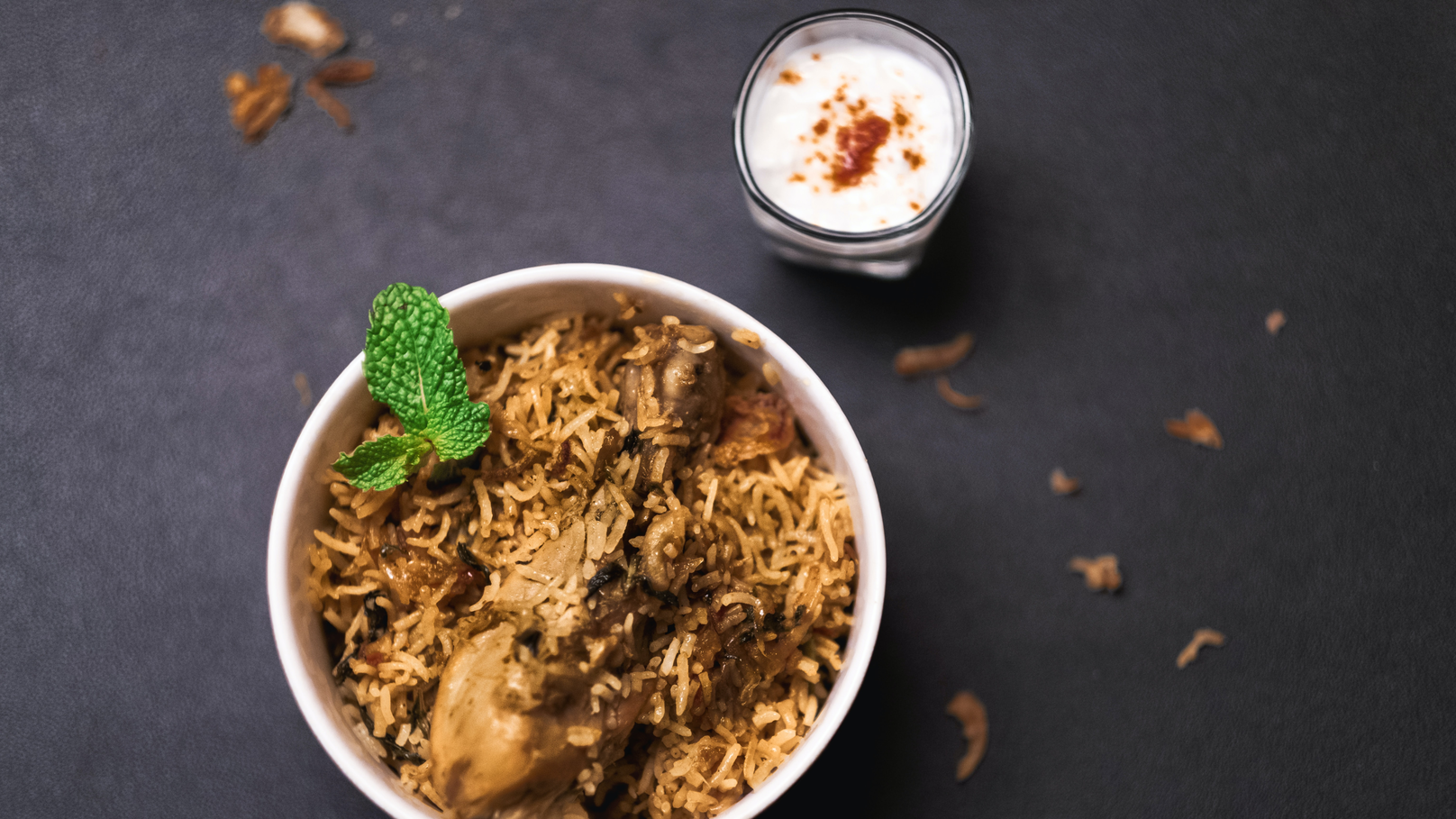
There is no dish in the world quite like biryani. Not because of what it is, but because of what it means. To the child who grew up smelling it cook from the next room. To the home cook who has spent years trying to crack their grandmother’s recipe. To the chef who has built an entire identity around perfecting it. Biryani is not just food. It is memory, identity, and love, layered and sealed and cooked low and slow until everything inside becomes something greater than the sum of its parts.
We found eight chefs who understand that completely. Their biryanis are as different as the cities that shaped them. What they share is the conviction that there is no shortcut worth taking.
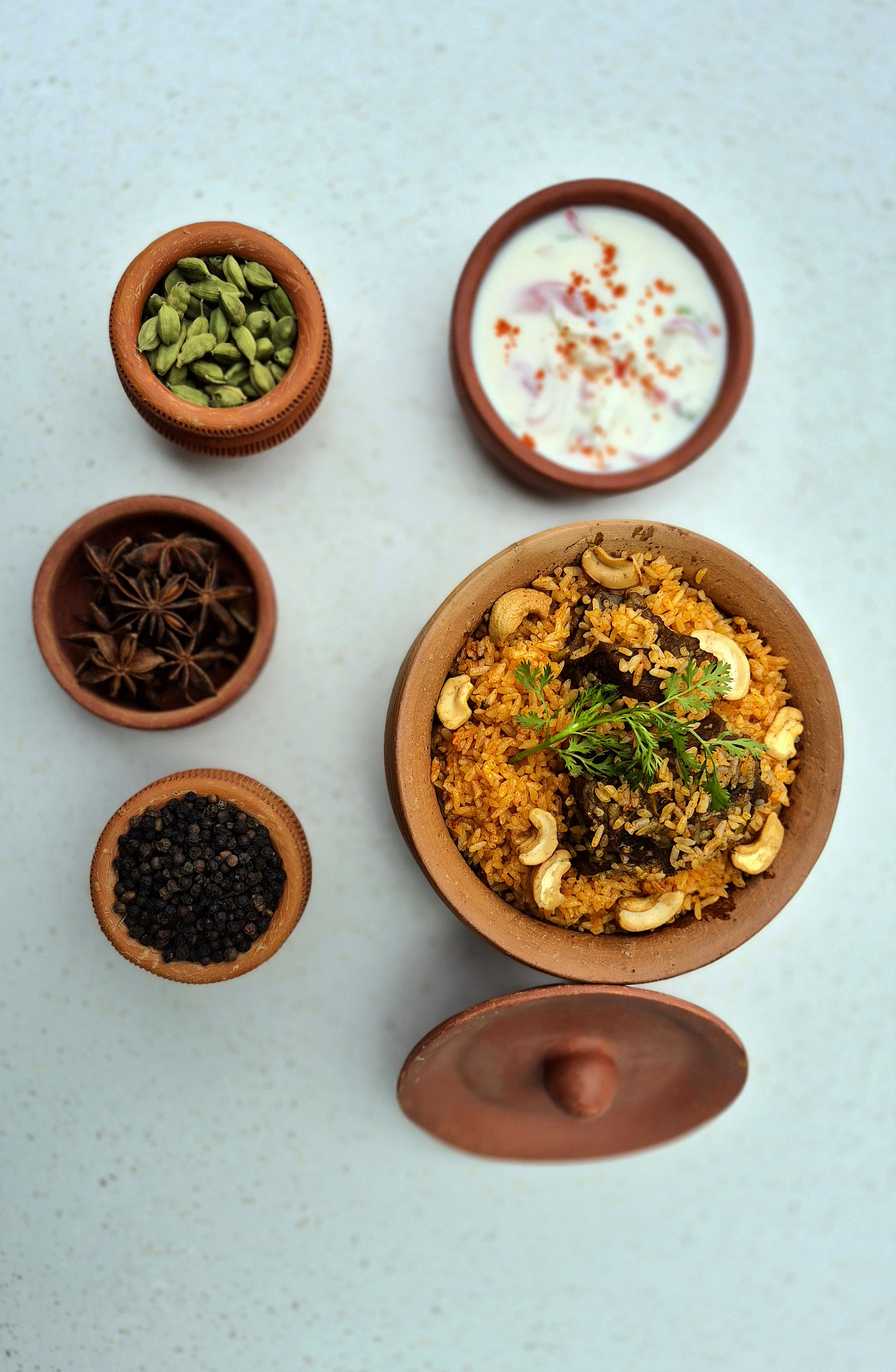
01. Rajaram Ravi — Rawther Mutton Biryani (Hilton and Hilton Garden Inn Bengaluru Embassy Manyata Business Park)
Chef De Cuisine at Neer Restaurant, Hilton and Hilton Garden Inn Bengaluru Embassy Manyata Business Park, Chef Rajaram Ravi brings one of South India’s most quietly celebrated regional styles to this list: the Rawther Mutton Biryani, a Tamil Muslim tradition that deserves far more recognition than it currently gets outside of its home communities. Like the Donne and Dindigul biryanis, this one uses seeraga samba rice, the short-grain, intensely fragrant variety that is the backbone of South Indian biryani cooking. Unlike the layered dum biryanis of the north, the Rawther method cooks the rice directly into the masala and meat, absorbing every bit of flavour from the mutton, the tomatoes, the golden onions, and the whole spices as it goes. The result is a biryani where every grain carries the entire story of the pot. The method is almost deceptively simple: golden onions, fresh mint and coriander added early, ginger-garlic paste cooked through completely, tomatoes broken down before the mutton goes in. Once the oil separates, the soaked seeraga samba rice is added directly with measured water, cooked on medium until 70 percent done, then sealed on the lowest flame for 10 to 15 minutes of dum. Ten minutes of rest before opening. No saffron. No rose water. No theatrics. Just deeply flavoured, beautifully cohesive rice and mutton that remind you why the simplest techniques, done with total conviction, always win.
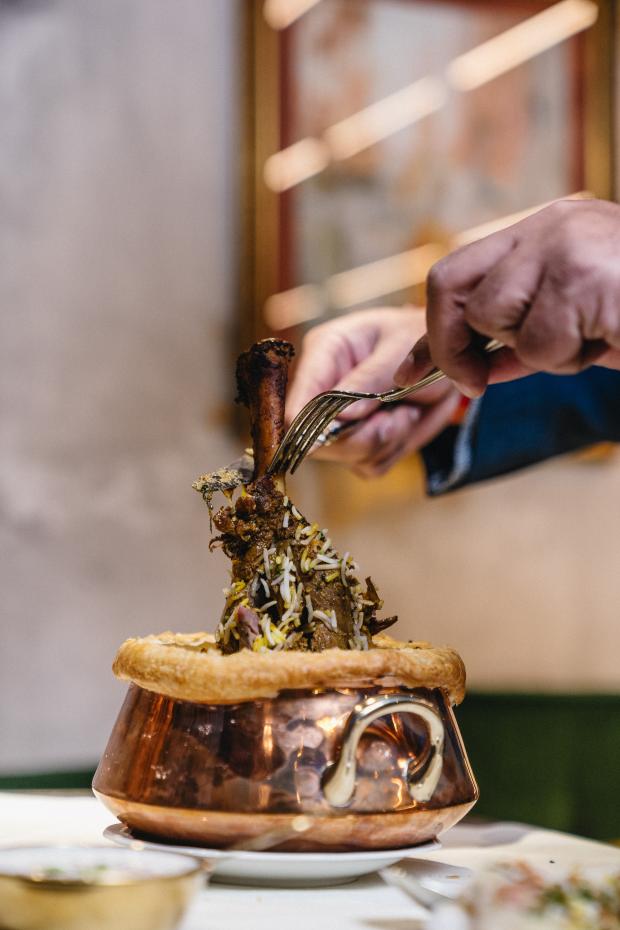
02. Rohit Ghai — Kolkata-Style Lamb Shank Biryani (London)
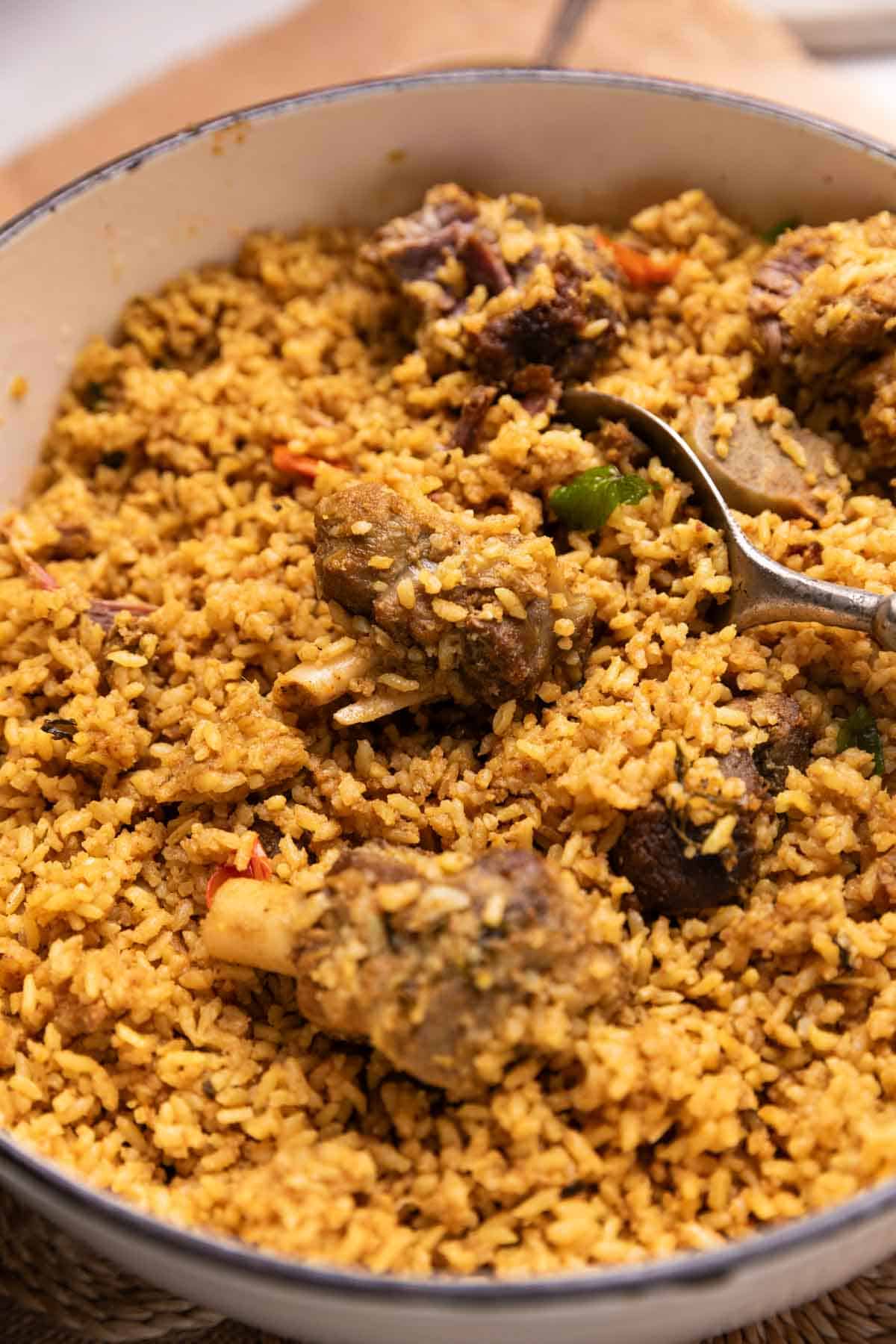
Michelin-starred Chef Rohit Ghai, the force behind London’s Jamavar, Manthan, Kutir, and the newly opened Vatavaran, serves a Kolkata-style biryani that has become one of the most talked-about dishes on the London fine dining circuit. It arrives sealed under a pastry top. You cut into it at the table, the steam rises, and the lamb shank falls away from the bone the moment you touch it.
Ghai insists the Kolkata biryani is one of the most misunderstood regional styles. It is not spicy. It is not heavy. It is subtle, fragrant, and built on restraint. The clay pot is essential. The saffron is non-negotiable. Baby potatoes, cooked in the mutton stock until they have absorbed every bit of it, are as important as the meat itself.
His advice for home cooks: caramelise your onions with patience and a pinch of salt. It takes time, and it is the foundation of the entire dish. Rush this step and everything that follows will show it.
The biryani is sealed with a dough crust, baked in a clay pot with saffron, fresh plums, and lamb slow-cooked until the meat offers no resistance whatsoever. The pastry top is removed at the table. This is the drama. This is the point.
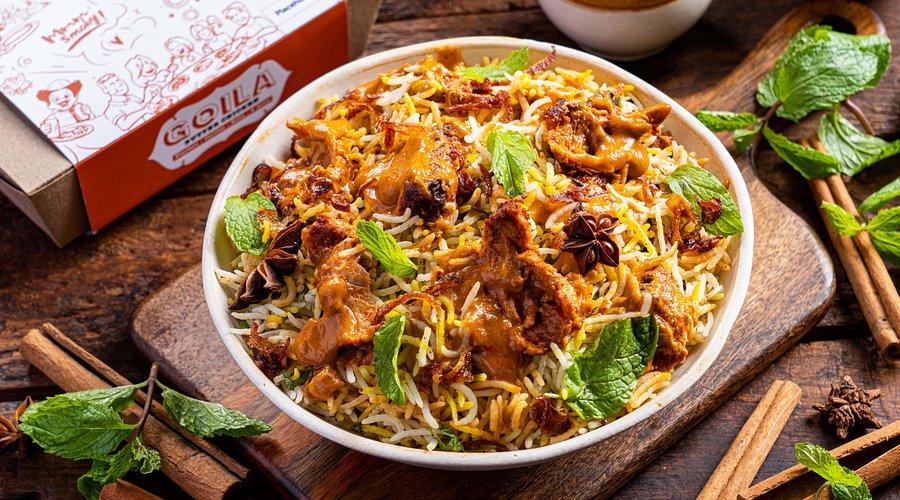
03. Saransh Goila — Butter Chicken Biryani (Mumbai)
Chef Saransh Goila is the youngest celebrated chef in India, listed in Forbes Celebrity 100 in 2019, the only Indian chef to appear as a guest judge on MasterChef Australia, and the founder of Goila Butter Chicken, now across 100 outlets in 40 cities. His signature biryani takes his famous smoky Makhani gravy and uses it as the base for a dum-cooked biryani, topped with crispy fried onions and crunchy cashews.
The key to Goila’s biryani is the double marination technique. First marinate the chicken in lemon juice, garlic paste, salt, red chilli powder, and ginger paste. Set aside for an hour. Then separately dry-roast cloves, peppercorns, bay leaf, cinnamon, and almonds, grind into a powder, and combine with yogurt, cardamom, turmeric, and cumin. Apply this second marinade and rest for another hour. The layered spicing is what gives his biryani its particular depth.
The Makhani gravy is made in a pressure cooker with cashew nuts, ginger, onions, garlic, coriander powder, honey, kasuri methi, and butter. The biryani is assembled in the traditional dum style, sealed with dough, and cooked on full flame before reducing to low. Thirty minutes of rest before opening is non-negotiable.
04. Courtyard by Marriott Bengaluru Hebbal — Awadhi Mutton Biryani
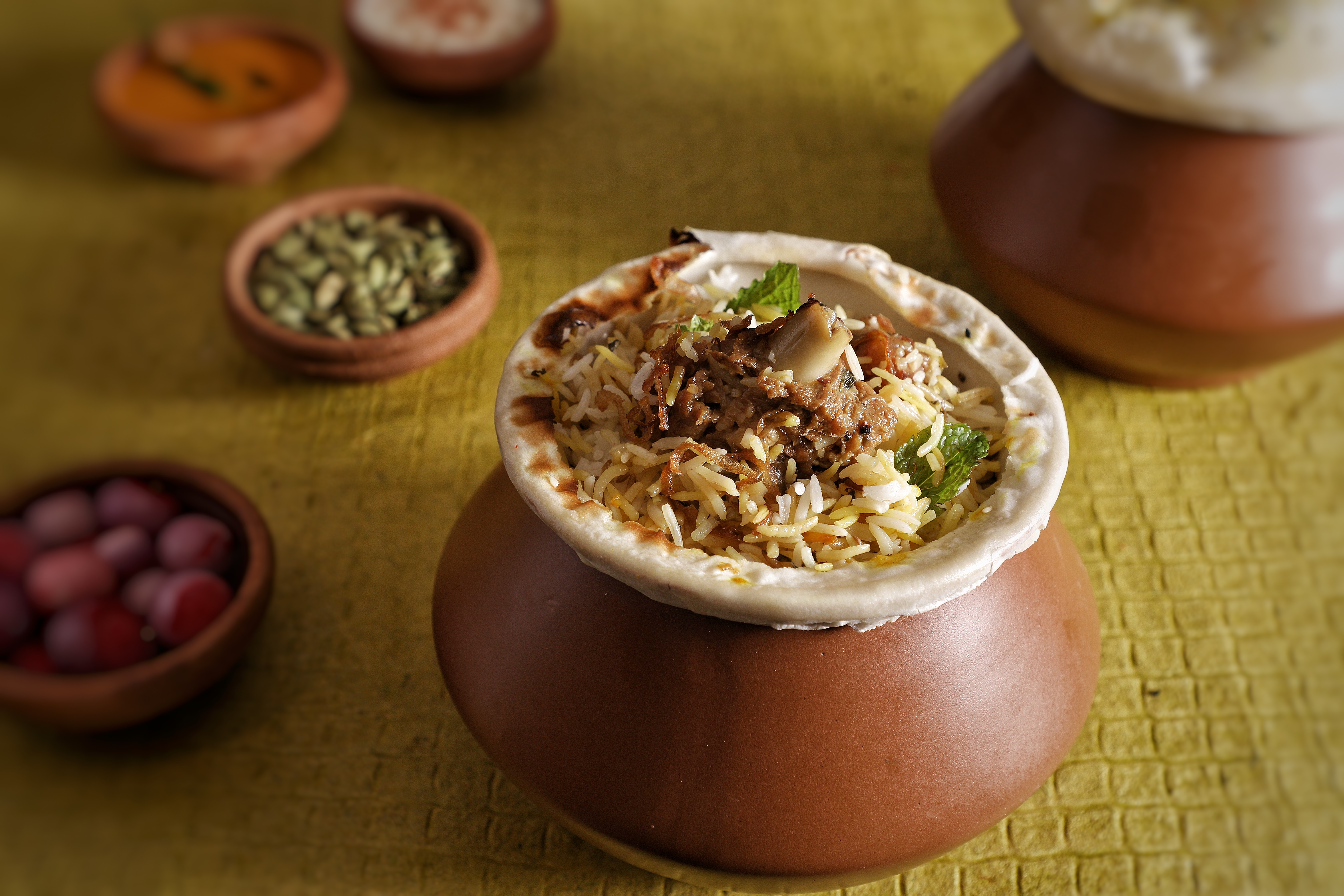
Few biryanis carry the weight of history the way the Awadhi does. Born in the royal kitchens of Lucknow under the Nawabs, it is a biryani built on patience, restraint, and an almost meditative approach to spice. No heat for its own sake. No colour without purpose. Just fragrance, tenderness, and a depth of flavour that only comes from doing things the slow way.
The version served at Courtyard by Marriott Bengaluru Hebbal arrives in a sealed clay handi, the dough still intact at the edges when it reaches the table. When you break that seal, the steam carries saffron, whole spices, and slow-cooked mutton into the air. It is, without exaggeration, one of the most comforting things you can experience in Bengaluru on a weekend afternoon.
Ingredients (Serves 4)
For the mutton: 800g bone-in mutton, 1 cup yogurt, 2 tbsp ginger-garlic paste, 1 tsp red chilli powder, 1 tsp coriander powder, half tsp turmeric, 1 tsp garam masala, 2 tbsp ghee, salt to taste.
For the rice: 2 cups aged basmati rice, 4 green cardamom pods, 4 cloves, 2 bay leaves, 1 inch cinnamon stick, 1 star anise, salt to taste.
For the dum: a generous pinch of saffron soaked in 3 tbsp warm milk, 3 tbsp ghee, 2 tbsp fried onions (birista), fresh mint leaves, 2 tbsp rose water, dough for sealing.
Method
Marinate the mutton in yogurt, ginger-garlic paste, and all the spices listed. Cover and refrigerate for a minimum of 4 hours, overnight if possible.
In a heavy-bottomed pot, heat ghee and cook the marinated mutton on medium heat until it is about 70 percent done and the oil has separated. Set aside.
Wash and soak basmati for 30 minutes. Bring a large pot of heavily salted water to a boil with all the whole spices. Add the rice and cook until it is exactly 70 percent done. Drain immediately and spread on a flat tray.
To layer: place the cooked mutton at the base of the handi. Layer the partially cooked rice over the mutton. Drizzle saffron milk, ghee, rose water, fried onions, and scattered mint leaves generously between the layers and over the top.
Seal the handi with a tight dough rim. Place over high heat for 5 minutes, then transfer to a cast-iron tawa and cook on the lowest possible flame for 25 to 30 minutes. Allow to rest sealed for another 10 minutes before opening.
Serve with raita, salan, and no distractions.
``
``
05. Praveen Kumar — Dindigul Biryani (Tamil Nadu)
MasterChef India Tamil Season 2 runner-up Praveen Kumar is among the most important voices in the conversation around Tamil Nadu’s distinct biryani traditions. The Dindigul biryani, which originates from the city of Dindigul in the Madurai district, is unlike any other biryani in India. And Praveen Kumar’s recipe is as close to the original as a home kitchen can get.
What makes it distinct is the use of seeraga samba rice, a short-grained, intensely fragrant variety native to Tamil Nadu, instead of basmati. The marination uses freshly ground black pepper in significant quantities, whole spices cooked in sesame oil rather than ghee, and no saffron. The result is drier, spicier, darker, and more intensely aromatic than any of its northern counterparts.
The mutton is traditionally sourced from Dindigul’s local farms, known for leaner, younger animals. Every grain of rice in a Dindigul biryani should be separate. The dish should have chew and spice and fragrance all at once. Praveen Kumar’s version holds to all of these principles without compromise.
06. Subhojit Sen — Safed Biryani (Kolkata)
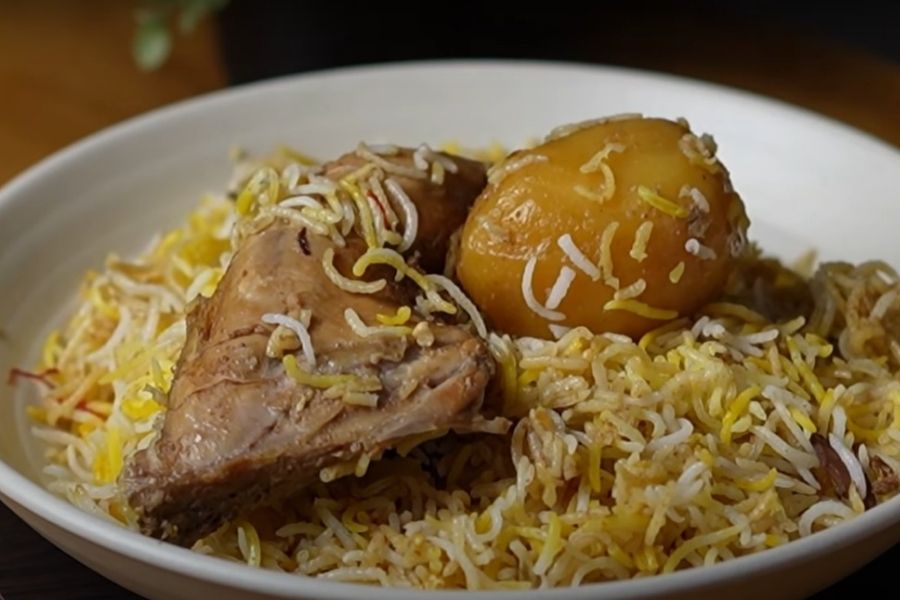
MasterChef India semifinalist and founder of The Harmony Pot, Subhojit Sen is a former thermal engineer from Kolkata who walked away from a power plant to follow a conviction that food was more important than a career plan. He has since become one of the most interesting culinary voices in the city, and his Safed Biryani, a white biryani with no added colour, no turmeric, and no saffron, has made the city genuinely stop and pay attention.
The Safed Biryani is built on the purity of its ingredients rather than the complexity of its spicing. Subhojit uses yogurt-marinated meat, white pepper, green cardamom, and restrained aromatics to create a biryani that is creamy, pale, and deeply fragrant without any of the visual cues that usually signal a biryani’s depth of flavour. The visual surprise is part of the experience. A white biryani that smells this good and tastes this deep is the kind of dish that makes you reconsider every assumption you held about the category.
His rule: subtlety is the highest form of skill. Any cook can add more spice. The real art is knowing how little you need.
07. Sunil Rai — Nizami Gosht Dum Biryani (Sheraton Grand Bangalore Hotel at Brigade Gateway)
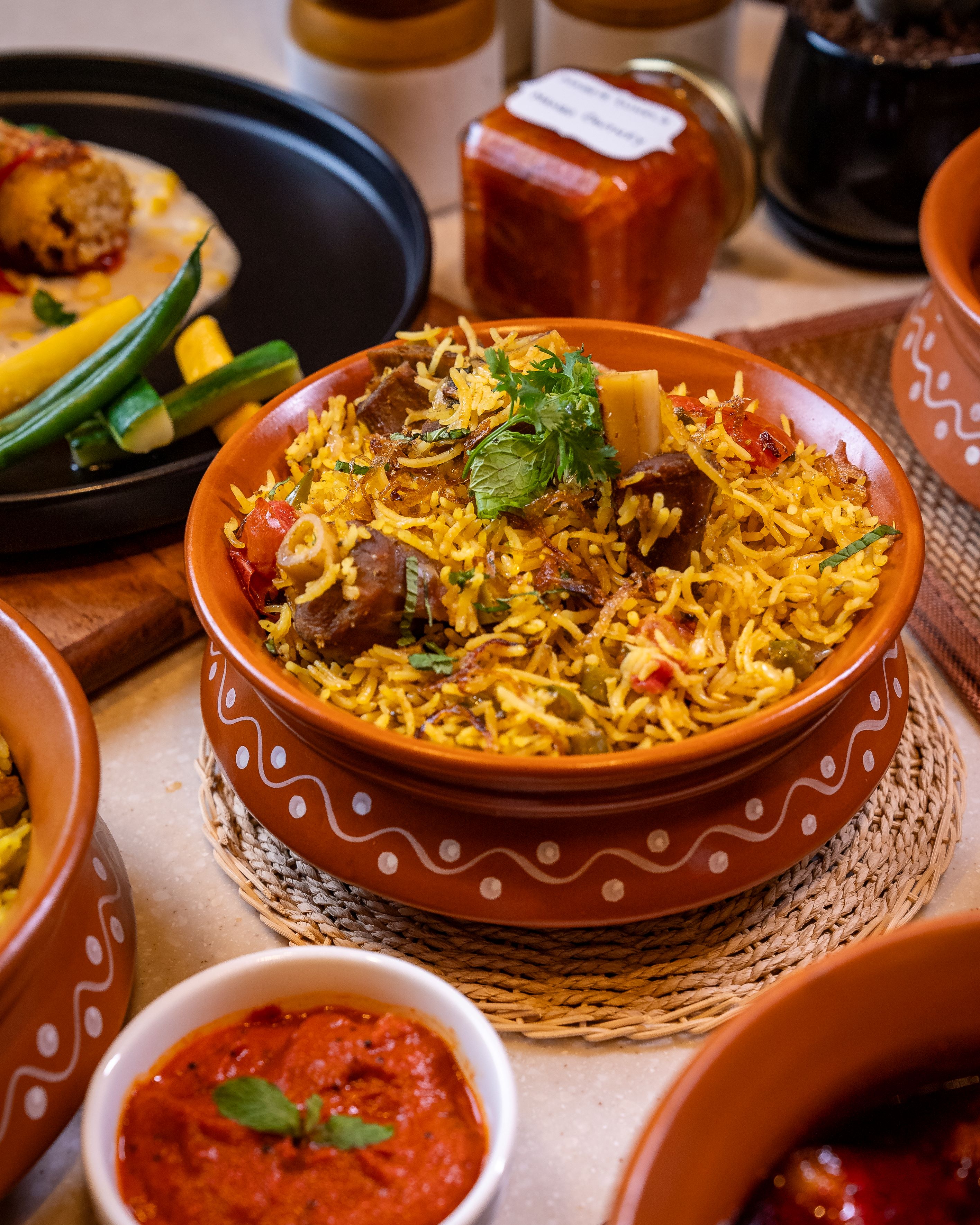
Executive Sous Chef Sunil Rai of Sheraton Grand Bangalore Hotel at Brigade Gateway brings one of the most regal biryanis on this list: the Nizami Gosht Dum Biryani. A biryani that carries the full weight of Hyderabadi court cooking in every layer, built on overnight-marinated mutton, shahi jeera-spiced parboiled basmati, and the finishing luxury of saffron, kewra, and rose water sealed together under dum.
The overnight marination is not optional. It is the difference between a good biryani and a great one. The yogurt and birista (fried onions) in the marinade begin breaking down the muscle fibres in the mutton hours before any heat is applied. By the time the meat meets the pot, it is already halfway to where it needs to be.
Ingredients (Serves 4 to 5)
Mutton: 1kg cleaned mutton. Marination: 1 cup yogurt, 1 tbsp ginger-garlic paste, half tbsp red chilli powder, half tsp turmeric, half tsp yellow chilli powder, 1 tsp garam masala, half cup fried onions (birista), juice of half a lemon, salt. Whole spices for pot: mace, green cardamom, cloves, nutmeg, rose petals, cinnamon stick. Rice: 700g basmati rice soaked for 30 minutes, shahi jeera, cardamom, cloves, cinnamon, bay leaf, salt. For the dum: saffron soaked in warm milk, ghee, fried onions, chopped mint and coriander, kewra essence (optional).
Method
Marinate the mutton with yogurt, ginger-garlic paste, all powdered spices, half the fried onions, mint, coriander, lemon juice, and salt. Marinate for at least 1 to 2 hours, overnight for best results.
In a heavy-bottomed pan, heat oil and crackle the whole spices on medium heat. Add the marinated mutton and sauté over low heat until partially cooked. A little water may be added if needed.
In a separate pot, boil water with salt and shahi jeera. Add the drained rice and cook until 70 percent done. Drain immediately.
In the dum pot, layer half the meat at the base. Add a layer of parboiled rice. Top with saffron milk, the remaining meat, kewra, rose water, coriander, mint, and fried onions. Seal the pot tightly and cook over very low heat for 20 minutes. Remove from flame and rest for 10 minutes before lifting the lid.
Serve hot. The first breath of steam when the seal breaks is its own reward.

08. Neeraj Rawoot — Chicken Donne Biryani (JW Marriott Prestige Golfshire Resort and Spa, Bengaluru)
Director of Culinary at JW Marriott Prestige Golfshire Resort and Spa, Chef Neeraj Rawoot brings his version of one of Karnataka’s most beloved and least-exported biryani styles to this list. The Donne Biryani takes its name from the small bowl made of dried areca nut palm leaf in which it is traditionally served, and it is as different from the Mughlai biryani as Bengaluru is from Lucknow.
No layering. No saffron. No long-grain basmati. Instead, short-grain seeraga samba rice, a vibrant green masala paste of coriander, mint, green chillies, whole spices, and the quiet addition of stone flower (kalpasi), and a chicken base cooked until the oil separates and the masala is thick, not watery. This is a biryani that rewards directness.
Ingredients (Serves 4 to 5)
Chicken Marinade: 1kg chicken (medium biryani cut), 1 cup thick curd, 1 tbsp ginger-garlic paste, 1 tsp turmeric, 1 tsp red chilli powder, juice of half a lime, salt. Marinate for a minimum of 1 hour, 4 hours ideal.
Green Masala: 2 cups fresh coriander leaves, 1 cup mint leaves, 6 to 8 green chillies, 1 inch ginger scraped, 6 to 8 garlic cloves, 1 tbsp poppy seeds (optional), 4 to 5 cloves, 1 inch cinnamon, 2 to 3 green cardamom, 1 small piece stone flower (kalpasi). Grind into a thick smooth paste with a little water.
Rice: 750g short-grain seeraga samba rice, 2 cloves, 1 bay leaf, 1 small cinnamon, 3 to 4 green cardamom, salt. Wash and soak for 20 minutes.
Method
Heat 4 tbsp oil and 2 tbsp ghee in a heavy-bottomed pot. Add 2 sliced onions and sauté until soft and light pink, not deep brown. Add the green masala paste and cook until the raw smell disappears. Add the marinated chicken and cook on medium-high until the chicken is 70 percent done and the oil separates. The masala must be thick, not watery. Adjust salt.
Boil water with salt and whole spices. Add the soaked rice and cook until 70 percent done. Drain immediately.
Layer the semi-cooked rice over the chicken. Add 2 tbsp ghee, a handful of chopped coriander and mint. Seal the pot and cook on low flame with the handi placed over a thick tawa to avoid burning, for 20 to 25 minutes. Rest for 10 minutes before mixing gently and serving.
Serve, ideally, in a donne. The leaf carries its own fragrance that becomes part of the final dish.
Eight biryanis. Eight stories. One conclusion: there is no single correct biryani. There is only the biryani that carries your history in it, made with the patience it deserves.
Follow Best List India for the recipes, restaurants, and food stories worth knowing about.