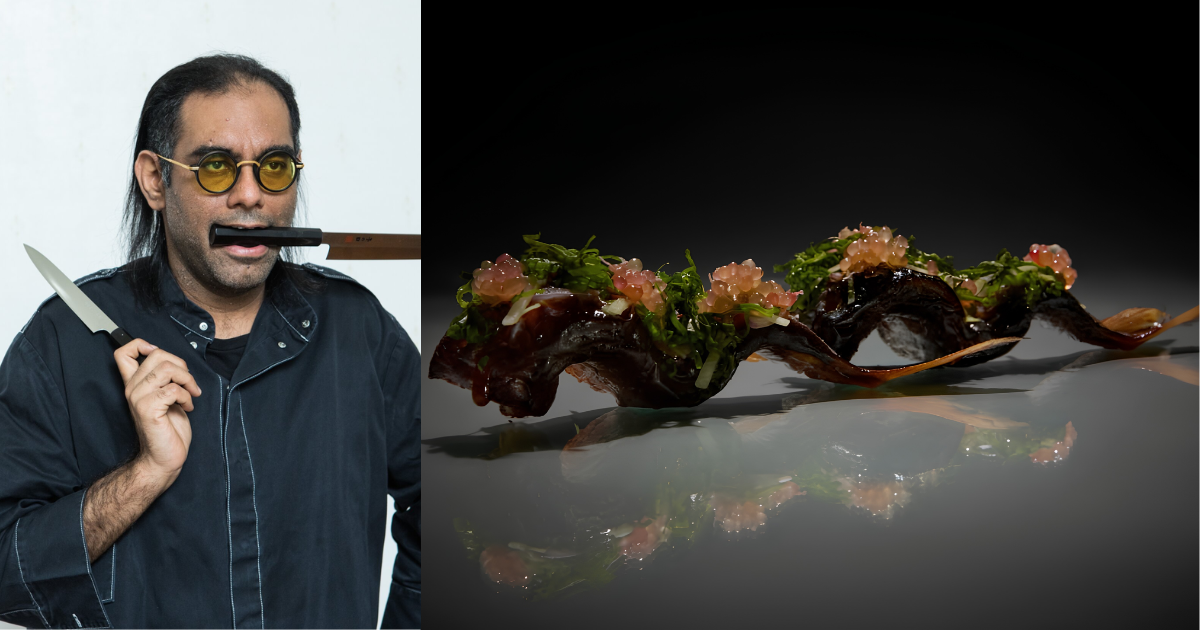
Gaggan Anand has spent fifteen years dismantling everything the world thought it knew about Indian food. Now, for the first time, he’s bringing the revolution home.
There is a particular kind of genius that cannot be contained, not by geography, not by convention, not by the very industry it has come to define. Gaggan Anand is that kind of genius. Kolkata-born, Bangkok-forged, and answerable to no one but his own extraordinarily restless imagination, he is the chef who looked at Indian cuisine, ancient, magnificent, and deeply misunderstood and decided it deserved something far more radical than reverence. He gave it a revolution instead.
And now, after fifteen years of making the world come to him, Gaggan Anand is coming home.
The Making of a Maverick
Before the accolades, before the emoji menus and the standing ovations and the five consecutive Asia’s Best Restaurant titles, there was a boy in Kolkata who wanted to be a drummer. Gaggan Anand pursued music professionally before pivoting to a culinary career, starting as a trainee at the Taj Group before landing what would become the defining opportunity of his life — a stage at El Bulli in Spain under the legendary Ferran Adrià. It was there, in the laboratories of the world’s most experimental kitchen, that Anand encountered molecular gastronomy — and something clicked with the same irreversible force as a perfect chord.
The musician in him never left. It simply found a new instrument.
In 2010, he founded his first restaurant in Bangkok, simply called Gaggan, which would go on to be named the Best Restaurant in Asia five times over. This was not a small achievement. This was a seismic one. Here was an Indian chef, in Thailand, cooking Indian food — and doing it in a way that no one, anywhere in the world, had done before.
The Philosophy: Disruption as a Love Language
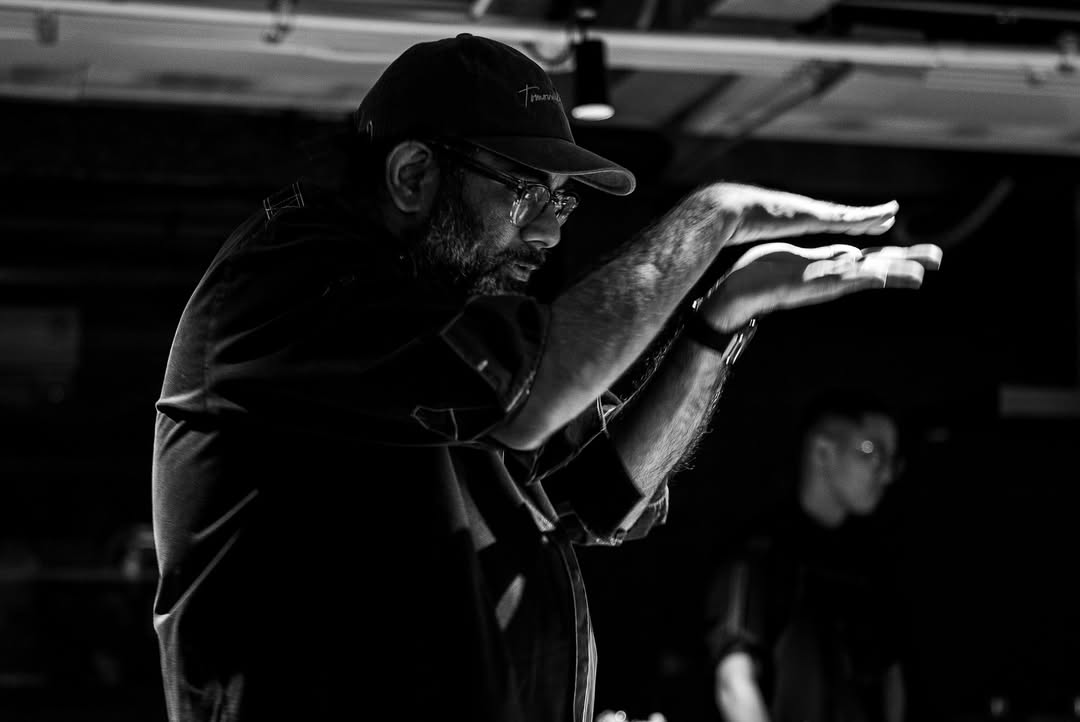
To understand Gaggan Anand’s cuisine is to first abandon everything you think you know about fine dining. There are no starched silences here. No hushed reverence. No carefully curated distance between the chef and the guest. From using emojis to represent each course on his menu, to encouraging diners to eat with their hands or lick the plate, Anand’s singular mission has always been to disrupt and reinvent the traditional fine-dining experience.
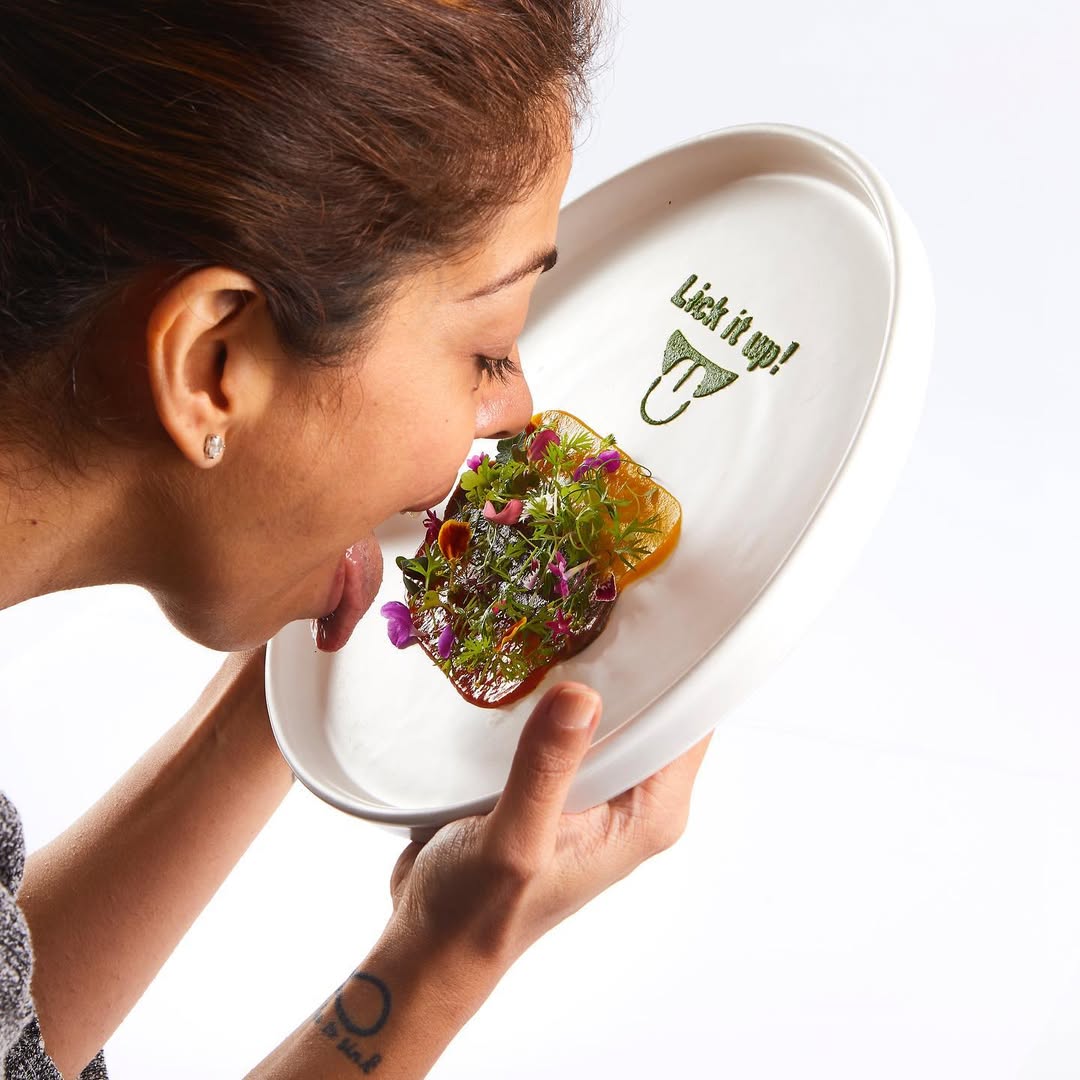
His food is best described as progressive Indian — though even that label feels like an understatement. The menu is anchored in progressive Indian cuisine, woven through with French, Thai and Japanese influences, combining music, colour and creativity in every course. The result is a dining experience that operates more like theatre — or, given his musical sensibilities, more like a live concert. Loud in places. Tender in others. Always, always surprising.
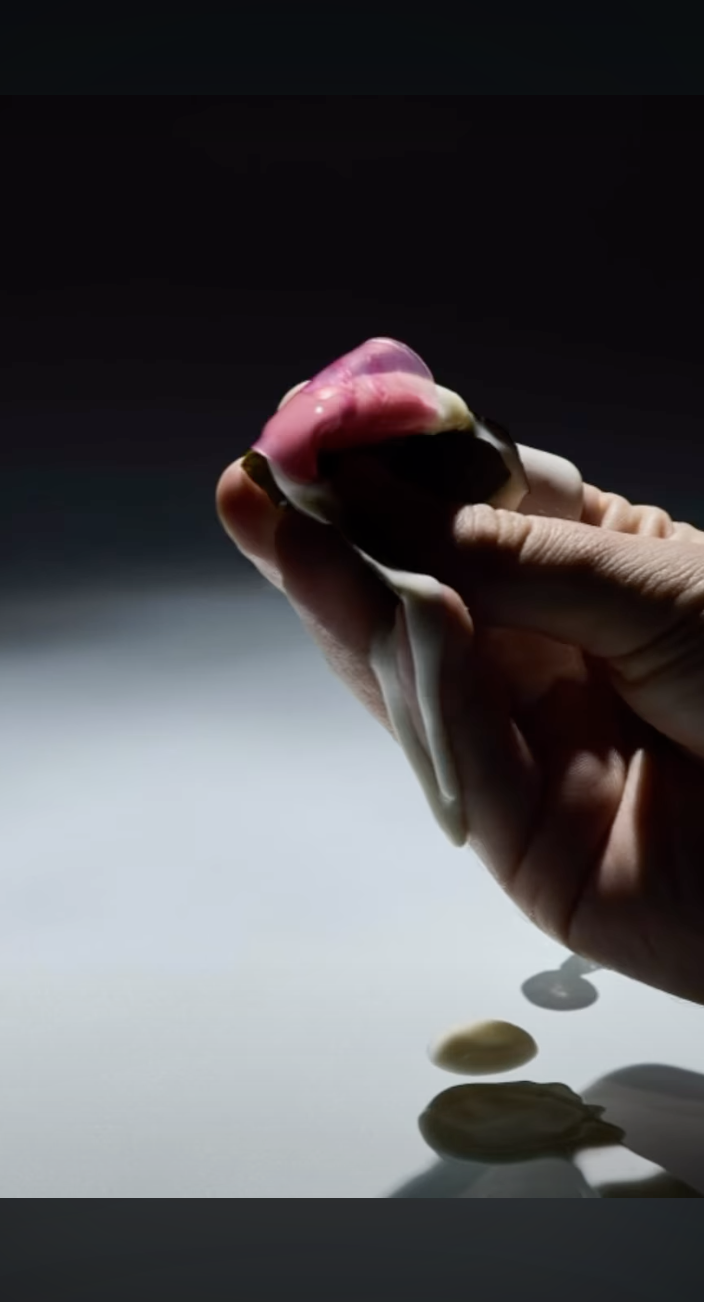
His most iconic creation — the yoghurt explosion — tells you everything about who he is. A direct riff on the olive spherification he learned at El Bulli, the dish reimagines a humble Indian staple through the language of molecular gastronomy. It is precisely the kind of culinary manoeuvre that makes purists nervous and everyone else absolutely delighted. Which is, of course, entirely the point.
The Empire He Built Far From Home
The numbers, by any measure, are staggering. Anand’s current ventures include Ms. Maria & Mr. Singh, an Indian-Mexican concept that has earned a place on Asia’s 50 Best Restaurants extended list; GohGan, a 55-seat collaborative restaurant created with Japanese chef Tsuyoshi Fukuyama in Fukuoka; and Gaggan at Louis Vuitton, which opened in 2024 and currently sits at No. 31 on Asia’s 50 Best Restaurants. Each project is characteristically Gaggan — conceptually bold, collaboratively driven, and impossible to replicate.
And yet, for all his global reach, one conspicuous gap has always remained on his map. India. His homeland. The very source of the cuisine that made him one of the most celebrated chefs alive. For years, the question followed him everywhere: when are you coming home? For years, his answer was characteristically elusive.
Enter: Raga
In early 2026, when pressed on the subject, Anand offered the kind of answer only he could give: “I will. In four months. In Delhi.” He wouldn’t share the name. He wouldn’t reveal the location. “I’m a Pisces,” he said. “Pisces are mysterious. Like a fish. You can’t catch a fish unless you bait it.”
Then March arrived, and with it, his fifth consecutive Asia’s No. 1 title. Business as usual for the planet’s most decorated Indian chef. And then, finally — the details.
The restaurant is called Raga. It will seat just 42 people. It will be located on Janpath — prime real estate close to Rashtrapati Bhavan, flanked by the capital’s most prominent government buildings, luxury hotels and storied markets. The name itself is a composite: RA from Rydo Anton, Gaggan’s longtime Indonesian protégé and co-chef, and GA from Gaggan himself — and it also connects to Indian classical music, where a raga is both a structure and an improvisation. For a chef who has always understood that the best meals, like the best music, live in that exact tension between discipline and freedom, the name could not be more fitting.
Expect two tasting menus, the legendary yoghurt explosion among the greatest hits, and — for the first time in his career — the opportunity to work directly with local Indian produce. That last detail is perhaps the most quietly thrilling of all. Gaggan Anand, finally cooking Indian food on Indian soil, with Indian ingredients. The possibilities feel genuinely limitless.
His partner in the venture is Zorawar Kalra — arguably India’s most powerful restaurateur right now, the force behind Masala Library, Farzi Café, and Massive Restaurants, which currently operates 26 brands across eight countries. It is a partnership of complementary energies: Anand’s avant-garde vision meeting Kalra’s unmatched operational expertise and deep understanding of the Indian market. Anand has floated a price point of around ₹8,000 per head — a signal that he wants Raga to be bold, but accessible by fine-dining standards.
Why This Moment Matters
Raga is not simply a restaurant opening. It is a statement — about where Indian cuisine has arrived, about what Indian diners are ready for, and about what it means when the country’s greatest culinary export finally decides that home is worth the risk.
For too long, India’s most ambitious chefs have had to leave to be taken seriously. Gaggan Anand is the most spectacular example of that paradox — a man who had to go to Bangkok to show the world what Indian food could be. His return, then, carries the weight of something larger than a new address. It is a vindication. A homecoming. And, knowing Gaggan, almost certainly a provocation.
Delhi, after all, is a city with strong opinions about its food. A city that has its own culinary vocabulary, its own loyalties, its own deeply held convictions about what belongs on a plate and what doesn’t. Gaggan Anand has spent his entire career gleefully ignoring convictions like those.
Raga may well be the most significant restaurant launch India has seen in a generation. And if the past fifteen years are any indication, it will also be the most joyfully, brilliantly disruptive.
The rebellion, it turns out, was always going to end up here.
FACT BOX
Restaurant: Raga by Gaggan Anand
Location: Janpath, New Delhi
Opening: 2026
Covers: 42 seats
Format: Two tasting menus
Price Point: Approximately Rs 8,000 per head
Partner: Zorawar Kalra, Massive Restaurants
Co-Chef: Rydo Anton
Follow Best List India for the culture, conversations, and ideas worth paying attention to.