
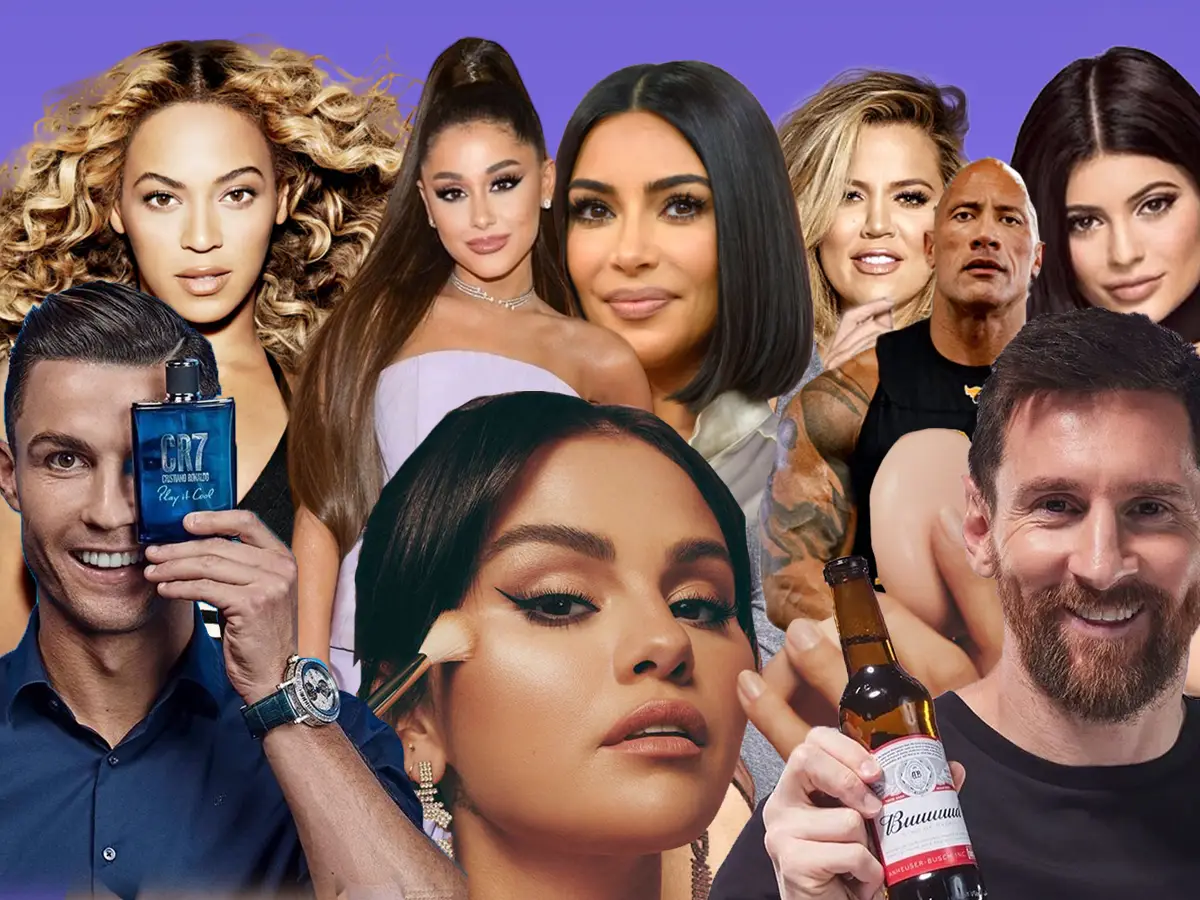
It happened quietly, the way most significant cultural shifts do. Not with a single viral moment or a dramatic platform collapse, but with a slow accumulation of scrolled-past posts, unmuted accounts, and the particular exhaustion that comes from watching someone live beautifully without ever saying anything true.
Influencer fatigue is real. And in 2026, it has reached a point of genuine reckoning.
The creator economy, which spent the better part of a decade promising democratised attention and authentic connection, is confronting an uncomfortable reality: that the version of authenticity it produced was, in many cases, a highly produced simulacrum of the thing it claimed to be. The aspirational lifestyle grid, the golden-hour content, the carefully curated chaos of a relatable morning routine, has not disappeared. But the trust that once attended it has quietly vacated the premises.
What audiences are doing with that trust is considerably more interesting than simply withdrawing it.

The Curated Void
To understand where trust is going, it helps to understand precisely what it is moving away from. Shipra Jena, Chief Consultant and CEO of PitchOne PR, has articulated the problem with a precision that the industry itself has been reluctant to apply
Audiences have grown intolerant of what she calls the curated void, beautiful frames that offer zero education or novelty. The visual grammar of aspirational content, the sunlit flat lay, the artfully dishevelled travel shot, the brand partnership disclosed with just enough awkwardness to read as genuine, has become so familiar as to be invisible. And invisible content, however beautiful, does not build trust.
The shift Jena identifies is from the aspirational to the functional. Audiences are no longer content watching someone live their best life. They want to know how to improve their own. It is a deceptively simple distinction that carries significant implications for every brand, agency, and creator currently operating in the attention economy.
The everything influencer, the generalist lifestyle presence who covers travel, food, fashion, wellness, and the occasional deeply personal revelation with equal fluency and equal shallowness, has, as Jena puts it, hit a glass ceiling of relatability. The ceiling was always structural. A person cannot be an authority on everything. And audiences, who have grown considerably more sophisticated about the mechanics of content creation, have started to notice.

The Rise of Intellectual Authenticity
The creators commanding the highest trust in 2026 are not necessarily those with the largest followings. They are those who operate, as Jena describes it, with the precision of a subject matter expert. They have a position. They have knowledge. They are, crucially, willing to be inconvenient.
The concept Jena introduces, intellectual authenticity, is worth dwelling on. It describes creators who are not afraid to break myths, to complicate the narrative, to show the unpolished work behind the polished result. In a content landscape saturated with arrival stories, these are the creators telling process stories. In a feed full of outcomes, they are showing the friction.
The appetite for this kind of content is visible across categories. In finance, a new generation of creators has built substantial trust by explaining, in plain language, the mechanics of systems that traditional institutions have historically preferred to keep opaque. In food, creators who talk about nutrition with genuine scientific literacy have displaced those who simply make things look delicious. In fashion, the accounts gaining ground are those interrogating the industry rather than merely participating in it.
Agency-Influencers and the Expert Turn
One of the more telling developments in the creator economy’s current moment is the emergence of what Jena calls Agency-Influencers, creators who break down the mechanics of the industries they work within. The PR professional who explains how a press trip is structured. The brand manager who decodes the economics of an influencer partnership. The fashion editor who shows what does not make it into the magazine.
These creators are, in a sense, defectors. They are offering audiences access to the interior of systems that the content economy was built on keeping opaque, and audiences are rewarding them with precisely the trust they withheld from the system’s official representatives.
The phenomenon is not limited to media and marketing. Pujarini Pradhan, whose name Jena invokes as an example of a different kind of creator authority, represents a distinct but related mode of trust-building. Her appeal, rooted in what Jena describes as the sharp juxtaposition of a grounded, rural reality with high-level intellectual discourse on literature and social themes, operates on a logic of contrast rather than aspiration. She does not invite her audience to want her life. She invites them to think about the world with her. The distinction is significant. One relationship is consumptive; the other is generative.
What Brands Have Got Wrong
The brand implications of this shift are considerable, and the adjustment required is more fundamental than most marketing departments have yet acknowledged.
The influencer marketing playbook of 2018 to 2023 was built on a relatively simple premise: reach multiplied by aspiration produces desire, and desire produces purchase. The influencer with the largest following in the most relevant aesthetic category was, by that logic, the most valuable partner. Follower count was a proxy for trust, and trust was a proxy for commercial conversion.
That proxy has broken down. Jena’s formulation is direct: it is no longer about hitching your wagon to a high follower count, but to a high trust count. A creator with two hundred thousand highly engaged followers who have come to rely on their expertise in a specific category will almost always produce more meaningful commercial outcomes than a creator with two million followers who produce beautiful content that their audience admires without particularly believing.
The shift demands a different kind of brand intelligence. Not the intelligence that identifies the most aesthetically aligned content creator, but the intelligence that identifies whose recommendations their audience actually acts on, whose opinion changes minds rather than merely confirming preferences, whose presence in a category signals quality rather than simply exposure.

The Attention Economy’s New Currency
What the trust shift represents, at a deeper level, is a renegotiation of the terms on which audiences are willing to give their attention. Jena’s phrase, the utility of attention, captures this precisely. In an era of infinite scroll, attention is not just scarce; it is guarded. The audience member who pauses, watches, saves, and returns is making a decision that something is worth their time. That decision is increasingly based on whether the content offers something that adds value to their own narrative, their own knowledge, their own ability to navigate the world.
This is, in some respects, a return to a more fundamental media logic: that the exchange between creator and audience should involve the transfer of something genuinely useful. The parasocial intimacy of lifestyle influencing created an illusion of value through emotional proximity, through the sense of knowing someone and being invited into their life. That illusion has worn thin. What audiences are reaching for instead is something closer to expertise, to the relationship with a trusted advisor who knows more than you do about something that matters, and who is willing to tell you the truth about it.
What Comes Next
The creator economy is not contracting. It is stratifying. The general lifestyle presence is not disappearing; it is simply being deprioritised in the trust hierarchy. What is rising is a more differentiated landscape, in which creators are valued for depth rather than breadth, for knowledge rather than access, and for the courage to say something that might not perform as well as something pretty.
For audiences, this is an entirely legible development. They have always known the difference between a person showing them something and a person teaching them something. The content economy spent years persuading them that the former was sufficient. In 2026, the persuasion is no longer working.
For brands, the mandate is clear, even if the execution requires more sophistication than the previous model. The question is no longer who has the most followers but who has built the kind of relationship with their audience that makes a recommendation feel like advice rather than advertising.
In an era of infinite content and finite trust, the answer to that question is the only one that matters.
Follow Best List India for the culture, conversations, and ideas worth paying attention to.