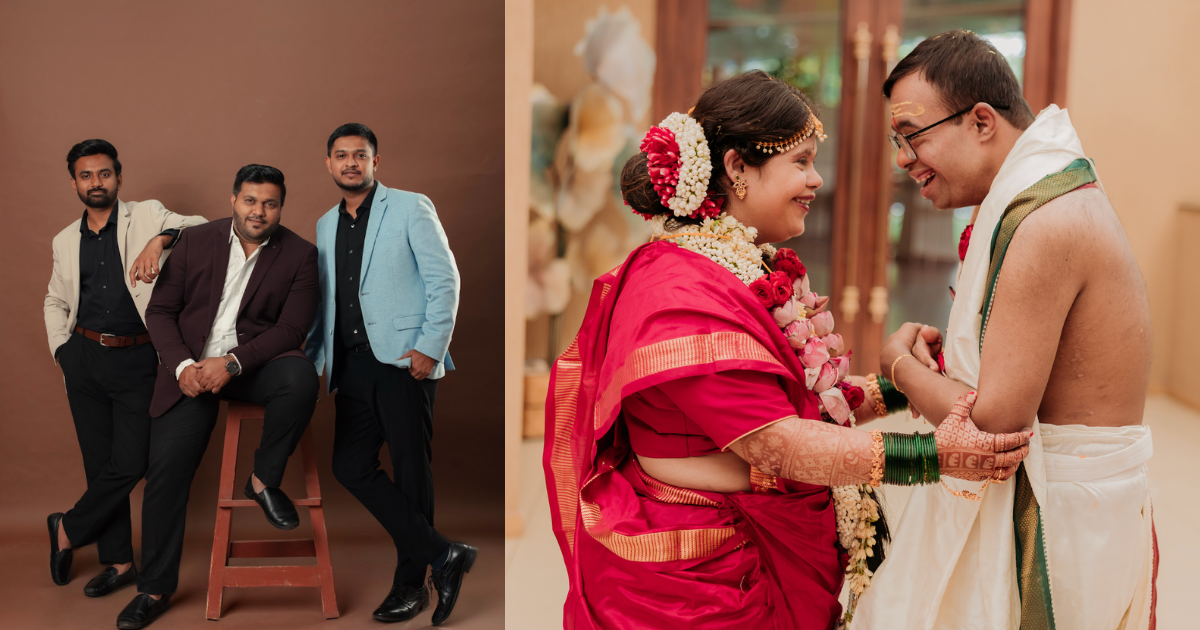
There is a question that most wedding photography studios ask themselves at the beginning of every brief: how do we photograph this wedding beautifully? Immortal Arts, the three-founder studio that has been building one of the more quietly distinctive bodies of work in Indian wedding photography since 2019, stopped asking that question some time ago. The question they ask instead is both simpler and considerably more demanding: what does this wedding mean to these people?
That shift, from the aesthetic to the human, from the celebration to the story inside it, is what separates a photograph that looks beautiful from one that carries something. It is also, as the three founders of Immortal Arts have discovered across years of weddings and the particular education that only bearing witness to other people’s most significant moments can provide, the difference between work that is remembered and work that is kept.
We spoke with them about what it takes to make a couple forget the camera is there, what they saw through the lens at a wedding the news covered as a milestone and they experienced as something more specific and more moving, and why the photographs they are most proud of are the ones they are making for people who have not yet been born.
Three founders, one lens philosophy. Take us back to 2019. What was the exact moment Immortal Arts stopped being an idea and became a way of seeing?
There was not one particular day when Immortal Arts became what it is today. It happened through the weddings we photographed and, more importantly, through what those weddings gradually taught us to notice. When the three of us started, we were naturally fascinated by the craft: cameras, filmmaking, composition, light and the possibilities of creating beautiful images.
But the more weddings we photographed, the more we realised that the images that stayed with us were not necessarily the grandest photographs. They were the photographs that carried a relationship.
A father looking at his daughter. A mother quietly watching from the corner of a room. Friends laughing at something nobody else understood. A couple forgetting, for a moment, that there was a camera around.
Those photographs made us realise that the wedding itself was only the setting. The people were the story. That became the turning point for Immortal Arts. We stopped asking only how do we photograph this wedding beautifully, and began asking what does this wedding mean to these people. That question continues to influence almost everything we do today.
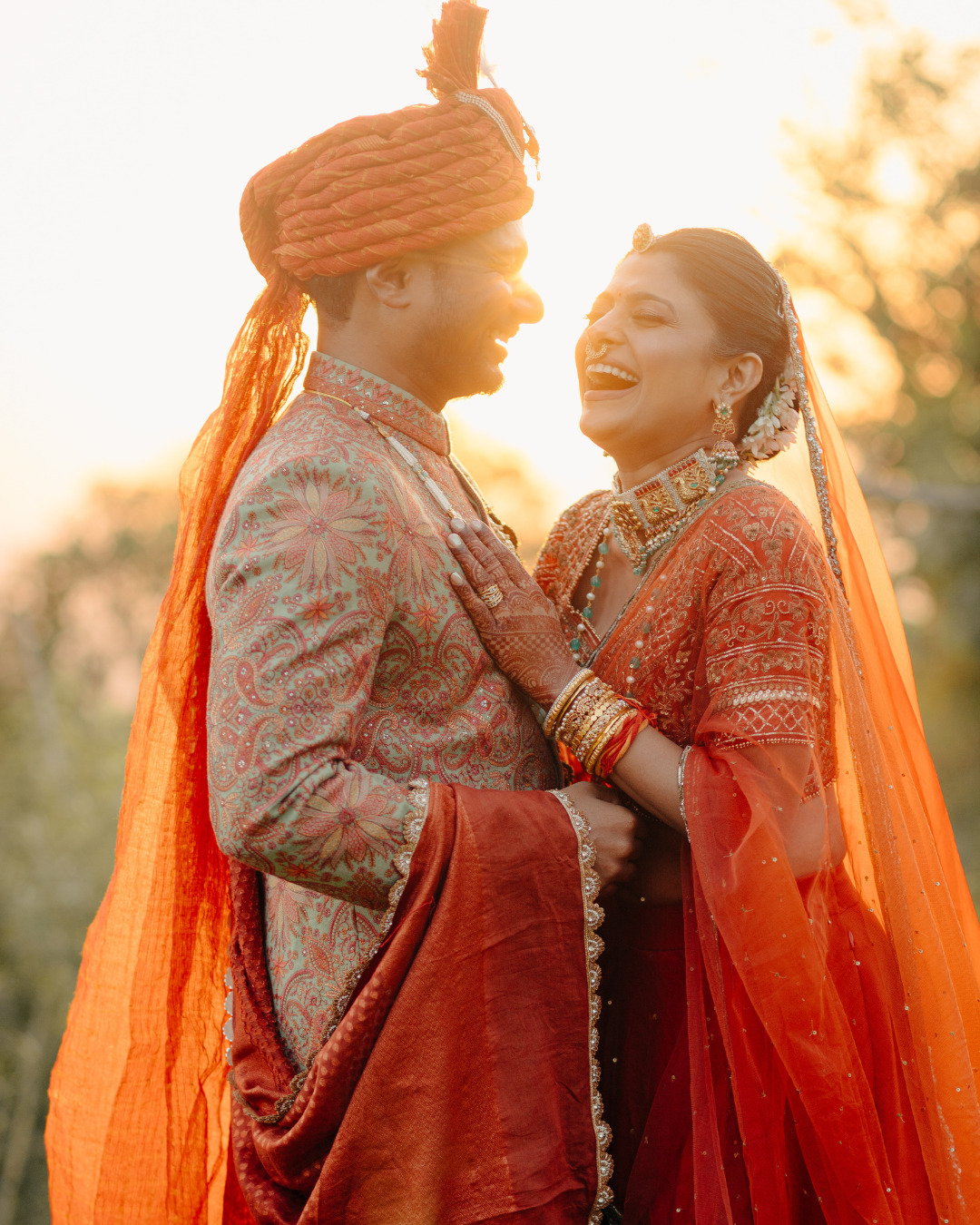
You have said you do not want to be vendors but witnesses who happen to carry cameras. What does a couple have to feel around you before they forget you are even there?
For us, the relationship begins before the camera does. We do not want our couples to feel like they have hired a team that arrives on the wedding day, photographs them and leaves. We want to know them. We want to know their people, their relationships, their personalities and the little dynamics that make their family theirs.
We often say: we do not want to photograph your wedding like typical vendors. We want to experience it like your friends. That means being around for the chaos, laughing with the family, talking to the parents, getting to know the friends and sometimes simply being present without photographing anything.
Because the objective is not really to make people forget that there is a camera. It is to make them forget that they need to perform for one. Once people become comfortable enough to be themselves around us, the photographs begin to change.
A couple stops posing and starts interacting. Friends stop behaving like subjects. Parents stop worrying about how they look. And we get access to something much more valuable than a perfectly posed photograph: a real moment.
For us, that trust is not separate from the photography. It is part of the craft.

Every wedding is choreographed chaos: florists, families, five ceremonies in one day. How do you find the one unguarded second inside all of that?
We do not really go looking for the moment. We try to understand the rhythm of the wedding well enough to recognise a moment when it happens. Indian weddings give you an incredible number of obvious photographs: entrances, rituals, performances, celebrations and portraits. We love photographing those moments too. But at the same time, we are constantly looking beyond them.
Who is watching? Who has suddenly gone quiet? Who has just met someone after years? Who is trying not to cry? Who is completely unaware that something beautiful is happening?
That requires anticipation. You have to be present enough to know that a particular interaction might become important before it actually does. And sometimes you get half a second. No second take, no direction, no opportunity to recreate it. You either saw it, understood it and were ready, or you were not.
For us, documentary photography is less about reacting quickly and more about paying attention deeply.


Tell us about Ananya and Vignesh. Not the headline, the frame. What did you see through the lens that the world did not get to see in the news coverage?
The headline was that Ananya Sawant and Vignesh Krishnaswamy, a couple with Down Syndrome, were getting married. But when we were there, the headline disappeared.
We saw Ananya dancing. We saw Vignesh enjoying himself completely. We saw two families, Maharashtrian and Tamil, coming together. We saw friends celebrating. And we saw parents experiencing a moment that carried years behind it.
Ananya’s mother, Tejaswita, had spent years encouraging her daughter towards independence: teaching her, mentoring her, supporting her education and work and allowing her to experience life with confidence. Vignesh’s family had their own journey supporting his education, training and eventual working life in Dubai. So when we photographed their parents on the wedding day, we were not simply photographing the usual emotion of parents seeing their children get married. We were photographing years of effort arriving at one moment. Years of teaching. Years of patience. Years of love. Years of believing in what their children could become.
That was the story that stayed with us. The news could tell people what the wedding represented. We were fortunate enough to witness what it meant to the people standing inside it.

That wedding has been called path-breaking. For you, was it? Or was it simply love, photographed honestly?
It was certainly path-breaking in its context, and we understood the significance of the moment. But as photographers, we did not want the significance to become the subject. We wanted Ananya and Vignesh to remain at the centre of their own wedding. We did not want to photograph them as a special case. We wanted to photograph them as a bride and groom. As two people who were excited to be together. As two families celebrating. As friends dancing. As parents getting emotional. As two people beginning a life together.
Perhaps that is why the experience became so meaningful to us. The more honestly we photographed the wedding, the more universal it felt. Because beneath everything that made their story unique were emotions everyone understands. Love. Family. Pride. Nervousness. Joy. Belonging.
So yes, their wedding was path-breaking. But for us, it was also something much simpler: it was love, family and a life milestone photographed honestly.

You talk about photographs becoming family archives, the ones a child finds twenty years later and asks, who were these people? What is the weight of knowing you are making something for a person who has not yet been born?
It changes the responsibility completely. When we are photographing a wedding, we know we are making something for the couple today. But we are also potentially making something for their family twenty or thirty years from now. A child might one day look at a photograph and see their parents before they became parents. They might see their grandparents when they were young. They might discover a family member whose voice they never heard. They might notice someone standing in the background who nobody thought was important enough to photograph at the time.
That possibility makes us think differently about what deserves to be preserved. We do not want to make photographs that are only relevant to the aesthetic of a particular year. Trends change. Editing styles change. Fashion changes. But relationships do not become outdated.
So when we are photographing, we are often asking ourselves a slightly different question: will this photograph still mean something when nobody remembers what camera we used or how we edited it? If the answer is yes, that is the photograph we are interested in.

Indian weddings are maximalist by nature: colour, scale, spectacle. How do you stay drawn to stillness inside all that noise?
We do not think stillness has to compete with spectacle. In fact, we think the contrast makes both more powerful. A hundred people may be dancing, and somewhere in the crowd a father may be watching his daughter. The mandap may be filled with colour, while a grandmother quietly observes everything from the side. The room may be loud, while a couple shares a completely private moment within it.
We are drawn to that contrast. We love the visual richness of Indian weddings: the fashion, architecture, décor, colour and scale. But we are equally interested in the human moments happening inside all of it. The spectacle gives a wedding its visual energy. The people give it its emotional meaning. Our job is to find the intersection between the two.

If Immortal Arts had to describe its visual language in three words, what would they be, and what is the one shot you have never quite managed to plan, only receive?
We would describe it as: Observational. Intentional. Human.
Observational, because we believe the most meaningful moments often happen without our intervention. Intentional, because documentary does not mean careless: we are deeply conscious of composition, light, framing, perspective and the visual strength of an image. And human, because ultimately, that is what we are interested in photographing: people and the relationships between them.
The photographs we have never been able to plan are often the ones we value most. A father looking at his daughter when she does not know he is watching. A couple laughing immediately after a carefully directed portrait. A mother quietly observing the celebration. Friends falling into completely unplanned laughter.
You can create the conditions for these moments. But you cannot manufacture them. The camera can be ready. The moment cannot.

Documentary photography demands you disappear. Filmmaking demands you shape a narrative. How do three founders agree on where observation ends and storytelling begins?
Interestingly, we do not think the three of us need to see every frame in exactly the same way. In fact, some of our strongest creative decisions come from seeing something differently. What unites us is not that we always agree. It is that we agree on the question we should ask: does this serve the story?
Documentary gives us what is real. Direction allows us to create something intentional. Filmmaking allows us to connect individual moments into an emotional narrative. We use all three when the story needs them.
As three founders, our different perspectives are actually an advantage. One of us may notice the emotion. Another may notice the composition. Another may think about how that moment will live within the larger film. The final question is always the same: does the image tell us something about these people that we did not know before?
Where is Immortal Arts headed next, as photographers, as filmmakers, and as a studio that continues to find stories bigger than the wedding itself?
We do not see the next chapter of Immortal Arts as simply doing more weddings or making bigger films. We want to go deeper.
As photographers, we want to keep refining the way we observe, compose and interpret people and the relationships around them. As filmmakers, we want to take soulful cinema even further. For us, soulful cinema is not about making a film look cinematic. It is about making it feel alive.
A wedding is never only what happens in front of the camera. There is an entire emotional world underneath it: the years that brought two people to that room, the relationships that shaped them, the things families do not always say out loud, and the version of themselves that people arrive with before everything changes. That is the world we want our films to enter.
We want to look beyond the chronology of a wedding and find its emotional truth: what this marriage means to these particular people, what their families are carrying into that moment, and what makes their story different from anyone else’s. The celebration gives us the spectacle. The people give us the soul. Our job as filmmakers is to find that soul and give it a cinematic language.
As Immortal Arts, we want to build a body of work that becomes more meaningful with time: photographs and films that do not simply tell a couple what happened, but bring them back to who they were, what they felt, and why that chapter of their lives mattered.
Because years from now, we do not want them to watch their wedding film and simply say, that looked beautiful. We want them to feel: that was us.
And ultimately, that is where we see Immortal Arts heading: not just documenting weddings, but creating a visual legacy around the people who live them.
Follow Best List India for the culture, conversations, and ideas worth paying attention to.